February 20, 2014
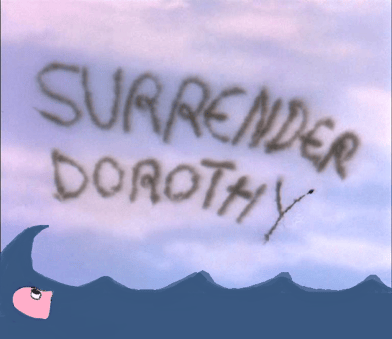
Surrender, Dorothy
*
So this former client moves to Florida, and one day, for the thrill of it, decides to go swimming in the dramatic heavy surf following Hurricane Wilma.
Almost immediately she finds herself sucked out to sea by the riptide. And she panics, and starts to swim harder towards the shore. And very quickly gets exhausted.
This is the end, she thinks.
Then another swimmer nearby calls to her: “Stop struggling. Just float.”
So she just floats.
Her strength returns. Eventually she’s able to make her way back to the blessed beach.
We live in a compulsive, can-do, must-do culture which encourages us to believe we should be in control constantly.
It also teaches us to think of surrender as a species of defeat, failure or weakness.
But sometimes surrender is the only intelligent response to life’s riptide.
Sometimes, surrender is the only way to save yourself.






February 20th, 2014 at 2:31 pm
The swimmer who was struggling may not have made it had it not been for the other swimmer, who offered the advice to float. A lot like therapy, or even group therapy, where we get a different perspective and it changes everything. If we are listening, and open, not closed off by fear. Thanks, Steve, for another great post.
February 20th, 2014 at 3:42 pm
Good point. When possible, swim in pairs. Thanks, Susan. 🙂
February 22nd, 2014 at 2:34 pm
Great post. Surrendering seems like it is giving up on life and fighting on seems like you are fighting for life. Yet as this example shows, it is the opposite. Fighting on is a sure way to lose and surrendering actually gives you a chance to live. It is almost paradoxical. But how does one get past the screaming fear inside that makes you want to fight on even though you can see that it won’t do you much good in that situation?
February 22nd, 2014 at 3:14 pm
It helps to distinguish fear from anxiety.
They feel the same. But fear is a reaction to real danger, while anxiety is a reaction to danger we imagine.
So the two reactions signal two very different problems, which have two very different solutions.
Fear signals a problem outside me (“This riptide may drown me”) that I must solve externally (“I better swim to the beach”).
Anxiety signals a problem inside me (“I’m panicking”) that I must solve internally (“I should stop panicking, and float”).
The swimmer, of course, had both external and internal problems to deal with. But in the end her internal problem was more dangerous.
And, in the end, what saved her life was being reminded of the difference.
February 25th, 2014 at 2:34 pm
This is helpful: distinguishing between the external/real and internal/imagined. And the fact that the swimmer had both really brought the point home. Now, it seems that understanding it is one thing and keeping that understanding in mind and applying it is quite another story.
Thank you Steve and Bert!