
February 22, 2012
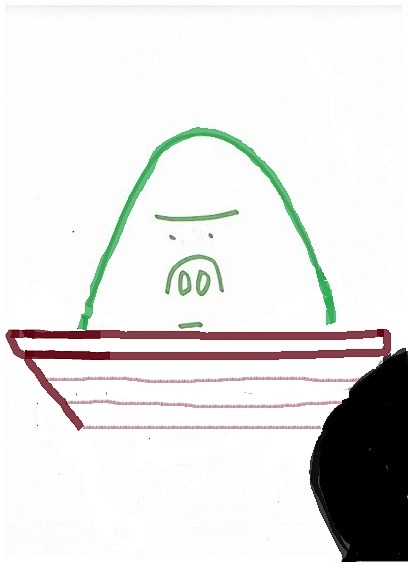
Session 30: Bert’s rowboat.
14 responses to “Session 30: Bert’s rowboat.”
Leave a Reply
Steve & Bert

COMING SOON: An expanded 2nd edition

CLICK HERE TO ORDER MONKEYTRAPS (THE BOOK)

Follow the conversation:
-
-

-
-
BERT’S IN THERAPY. To listen in, click on his nose.


February 22nd, 2012 at 11:46 am
How do we know when the rowboat is empty or when it is purposefully or neglectfully steered into us? What if it’s not empty, how do we not take it personally? I can’t imagine ignoring a personal attack to our rowboat is the answer. So, what do we do? I don’t suppose we’re allowed to sink the other boat?
“When we cannot sufficiently distract or distance ourselves from our pain, we generally turn it into suffering.” What does that mean? Distracting seems like ignoring and distancing… I’m not sure what that means.
Can we at least throw a bunch of stinky, smelly fish heads in the other boat? Or maybe hide a dead fish under the seat in the other boat?
February 23rd, 2012 at 1:07 am
Bert replies:
Sure you can, if you want to.
I remember the urge to throw fish heads. I spent fifty years assuming the damned rowboat wasn’t empty — that it contained gremlins or Nazis or some other malignity. I responded to pain by habitually (a) taking it personally, (b) getting angry, and then (c) looking for someone to blame and some way to retaliate.
I got good at suffering, and spent decades feeling victimized and pissy.
It’s only recently that I’ve come to see suffering as Pain Plus — pain plus some emotional reaction (anger, fear, embarrassment, despair) which makes it hurt more and last longer. And I find that when I can avoid adding the Plus factor — can “detach and distance” myself from my pain — it actually hurts less and leaves quicker.
“Where you put your attention is what grows,” someone said. So now instead of looking for gremlins I look for ways to see the boat as empty. And if in the process I overlook a gremlin or two, well, I figure that puts me ahead, not behind.
But that’s me. You have to do it your way.
Whatever floats your boat. 🙂
February 23rd, 2012 at 11:27 am
Wait…who said anything about gremlins…gremlins are practically monsters! *tosses grenade into boat*
I get a little confused when words like distancing and detaching are thrown about because I have DID. I’m a little too good at detaching sometimes!
But, I read the essay and read all the comments, and I’m thinking suffering seems to be wallowing in the pain -a sort of self-pity. (Please no one get offended… the word self-pity makes me cringe too)
Statements from the essay that stood out for me include:
“By overdramatizing our pain. We make an unpleasantly gripping story out of it,… I hurt therefore, I am.” To me, the word overdramatizing was meant to be taken very literally. Drama is a story. We are writing a story around our hurt, which actually takes us further from the pain.
Harriet, in your friend’s situation, (stepping away from the idea of physical pain) she is likely dying and leaving two small children. That is pain. If I were in that situation, I would likely be desperate for answers, angry, panicked, depressed, devastated. But all of those feelings are actually taking her further away from her pain, which is she may likely die and is leaving two small children motherless.
From the essay, “In the myopic theatrics of suffering, pain itself mostly just stagnates, like an unwanted exhibit in an art gallery. It is not really touched.”
The pain of dying and leaving children motherless is not being addressed or dealt with. How can she make the most of living the life she has left? How can she make the most of the time she has to mother her small children? That is how she can heal the pain of dying and leaving her children.
It’s pain. It still sucks! It is still devastating. It is still not fair. It will still likely cause anger, fear, desperation. (And, I’m guessing therapists have some ways of helping to deal with those emotions) But detaching from that suffering is likely the only way to find a small measure of peace and happiness and enjoyment of the life she is still living.
From the essay: “suffering is unhealthy separation from our pain.”
I was confused by all the talk of detaching and distancing. To me detaching/distancing means ignoring, running away from. But, that isn’t really the goal of detaching/distancing from the pain. It’s basically standing back to have a better, more objective look, which ultimately brings us closer to the pain.
From the essay: “Suffering is, among other things, a refusal to develop any intimacy with our pain.”
Intimacy, relationships… yuck! I don’t like it with people, now I have to do it pain?! To me this seems like a deeper acceptance of the pain. This resonates with me because there are several situations in my life that I have padded with lots and lots of suffering to keep me away from the actual painful reality, truth, situation. I’m not dealing with the pain because I’m too busy suffering.
From the essay: “Awareness upstages suffering, dissolving its grip on us, taking us to the heart, the core, the epicenter, of our pain. And there, in that place of hurt, we meet not more hurt, but more us…”
What happened to me happened. What is happening to Harriet’s friend is happening. But the totality of me is not what happened. It should not define me or control me. But it does because I won’t face it. It hurts. But I hurt (suffer) not facing it. Harriet’s friend is dying, but that is not all she is doing. She is also living and mothering two small children. She is alive.
I don’t know if any of this makes any sense. I don’t know if it’s right or completely wrong. I don’t know if I agree with what I wrote. Tomorrow it’s very likely I’d write something entirely different.
*considers hiding a dead fish under the seat in Steve’s rowboat for causing me to contemplate such stuff*
~rl
February 22nd, 2012 at 12:06 pm
Not sure I agree with this. I have a friend who has been undergoing cancer treatment for the last year and a half, who has been on the brink of dying multiple times, who has experienced procedures and operations that no one could even imagine. She also has 2 small children. She is suffering, and I do not think she is choosing to suffer. Do you think she should distract or distance herself from her pain? Do you think she is overdramatizing her pain? That to me seems extremely invalidating.
February 23rd, 2012 at 1:22 am
Frankly, I question the value of “validating” someone’s chronic pain. If I’m ever in your friend’s place I’d much rather have someone teach me how to more effectively distract or distance myself from it.
Dr. Stephen Grinstead, an expert on pain mangement, writes:
“The psychological meaning that you assign to a physical pain signal will determine whether you simply feel pain (‘Ouch, this hurts!’) or experience suffering (‘Because I hurt, something awful or terrible is happening!’).
“Although pain and suffering are often used interchangeably, there is an important distinction that needs to be made. Pain is an unpleasant signal telling you that something is wrong with your body. Suffering results from the meaning or interpretation your brain assigns to the pain signal.
“Many people irrationally believe that: ‘I shouldn’t have pain!’ or ‘Because I have pain and I’m having trouble managing my pain, there must be something wrong with me.’
“A big step toward effective pain management occurs when you can reduce your level of suffering by identifying and changing your irrational thinking and beliefs about the pain, which in turn decreases your stress and overall suffering.”
Dr. Grinstead’s blog, Addiction-free Pain Management, is here:
http://www.addiction-free.com/blog/pain-vs-suffering-for-effective-chronic-pain-management/
February 23rd, 2012 at 8:46 am
I guess you are talking about physical pain, but what about emotional pain? She is dealing with the pain of the strong possibly of dying and leaving her small children behind. Are you saying she should learn to distract or distance herself from that? I was under the impression that in order to deal effectively with emotions, one has to work through them, allow them to happen. Distracting sounds more like a CBT kind of thing, where you are supposed to change your distorted thinking.
And your response to castorgirl says that invalidating someone’s pain certainly increases their suffering, but your reply to me says that you question the value of validating someone’s chronic pain. Hmmm…..
February 23rd, 2012 at 11:07 am
Fair points, both.
Yes, I was thinking of physical pain (probably because you mentioned procedures and operations) when I said if I had cancer I’d want help detaching from it.
And yes, I believe validating emotional pain is essential to healing it. That’s mainly because expressing emotions tends to reduce their hold over us, while suppression tends to increase it. So if I had cancer I’d certainly want someone to validate my fear, anger, grief, confusion and helplessness.
But here’s where it gets tricky.
Because validating something means paying more attention to it, while detaching means paying less. And if I read Grinstead right (“Suffering results from the meaning or interpretation your brain attaches to the pain signal”), validating my emotional pain might well exacerbate my physical pain instead of relieving it.
Charles Tart offers this equation: S = P x R. Suffering equals (physical) pain multiplied by resistance. “Let’s say you have a pain of 2, rating on a 10 point scale,” he writes. “An actual physical pain of 2. It’s kind of annoying, but not a very big deal as physical pain goes. And you have a resistance of 10 because you hate pain. Your suffering is 20. You are really suffering greatly from what amounts to a small physical discomfort. This happens all the time.” (Tart’s website is here: http://blog.paradigm-sys.com/archives/162)
That’s pretty much how I see it.
But hey, I don’t have cancer. And given the differences between people, there may be no off-the-rack answer to this one. What works best for me might not work for your friend, and vice versa.
If I were you I’d probably ask her which approach she prefers. If you do that, I’d love to know what she says.
February 24th, 2012 at 7:59 am
Thank you for the further explanation. While reading all of these comments I am reminded of Victor Frankl’s experiences that he wrote about in Man’s Search for Meaning – finding meaning in the midst of suffering. It does make sense to me, but it just seems so hard. Plus there are such degrees of pain, losing a friendship can’t compare to the death of a child for example. I guess we start by practicing on the small pains (my job is sucking the life out of me) and then we can move farther on to the larger pains.
February 22nd, 2012 at 12:21 pm
Ouch! Thank you for this, your timing is exquisite. But I want you to know that you are interrupting what was shaping up to be a fine tantrum. 🙂
February 23rd, 2012 at 1:24 am
Oh, have your tantrum, by all means. If it’s a really fine one, it won’t be suffering at all — just self-indulgence.
Enjoy. 🙂
February 22nd, 2012 at 5:08 pm
I’m not sure about others, but I find it really difficult to hear words such as “over-dramatising” when it comes to pain, or suffering. It feels too much like I’m being told that what I experienced was nothing, and therefore seems like the initial pain is being invalidated – which ironically, increases the feeling of suffering…
Having read the entire essay from Robert Augustus Masters, I can see more clearly that it is about looking at the pain in a different way – all I can think of, is to look at it in a mindful way, but I’m not sure that’s quite the right term.
Regards,
CG
February 23rd, 2012 at 1:48 am
Good for you, CG, for reading the whole essay.
Actually I’m not fond of the term “overdramatizing” either, since it seems to imply histrionics or attention-seeking. And I agree that invalidating someone’s pain certainly increases their suffering.
Yet I’ve also known people with long histories of being invalidiated who got fixated on seeking validation over and over. Past a certain point that stopped being helpful and became a sort of stuckness — like keeping a cast on a broken leg too long keeps the leg from healing fully.
It’s hard to generalize about such things, of course, but I suspect that, for most of us, learning to detach from pain is a healthier long-range goal than getting our pain repeatedly validated.
February 22nd, 2012 at 7:45 pm
Thank you for yet another superb lesson on navigating life’s trials and tribulations. How true that we seem to automatically associate and/ or connect suffering with pain without stopping to take a closer look at our situation. Although it sometimes can be said that the element of suffering provides the victim with justification for not doing something, there are definitely traumatic circumstances inflicted on a person without that person’s consent where suffering is very much a natural and normal human response to the pain being felt. Outside those special circumstances, I subscribe to your row boat story.
February 23rd, 2012 at 1:49 am
Thanks, John. 🙂