In session after session I heard uneasy anticipations.
Like
The holidays are coming (sigh),
Or
I’ve got the family coming for Thanksgiving,
followed by an eye roll.
There’s real anxiety here.
For some, it approaches panic.
This happens because, around now, a particular myth takes on a terrible importance:
The myth of the Big Happy Family.
It’s a myth with the power to yank us right out of our comfort zones and twist us into emotional pretzels.
It forces people who normally don’t speak all year to sit side by side in living rooms and pretend to find each other endlessly interesting.
It makes people who secretly fear, hate, or distrust each other pretend to a bond of mutual love and affection.
It’s kind of nuts.
And it can do real damage.
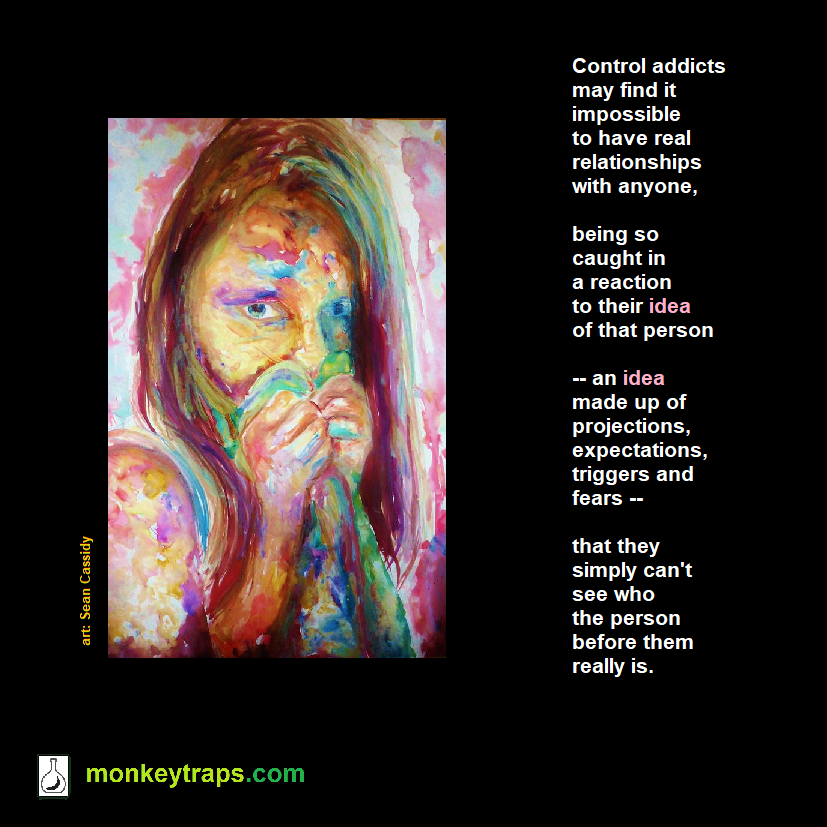
For control addicts (that’s me, and probably you too) the holidays are a setup, a virtual invitation to relapse.
How do we relapse?
Let’s count the ways:
~ We imagine ideal holidays and try to manufacture them.
~ We remember traumatic holidays and try to compensate for them.
~ We notice relationship problems and try to disguise them.
~ We notice feelings that don’t match the holiday mood (resentment, jealousy, anxiety, rage) and judge ourselves for feeling them.
~ We associate with people we really don’t like, then suppress or deny our inevitable discomfort.
~ We use the holidays as a benchmark to measure our progress through life, then try to conceal our sense of disappointment or inadequacy.
~ We mask our awareness of all the above by eating or drinking or drugging or spending too much, then wonder why we end up feeling empty, lonely and mad at ourselves.
The Big Happy Family is an aspirational myth.
Like Santa Claus, Heaven or the United Nations, it describes how we wish things could be.
It’s a lovely aspiration.
But it’s dangerous to take such myths too literally.
Because to do so creates denial of how things really are.
And that’s rarely a good thing.
It stops us from dealing with life on life’s terms.
Makes us ignore our own feelings, needs and preferences.
Tempts us to try to control people, places and things instead.
And that way lies madness.
Or at least holidays that feels like picnics in a minefield.
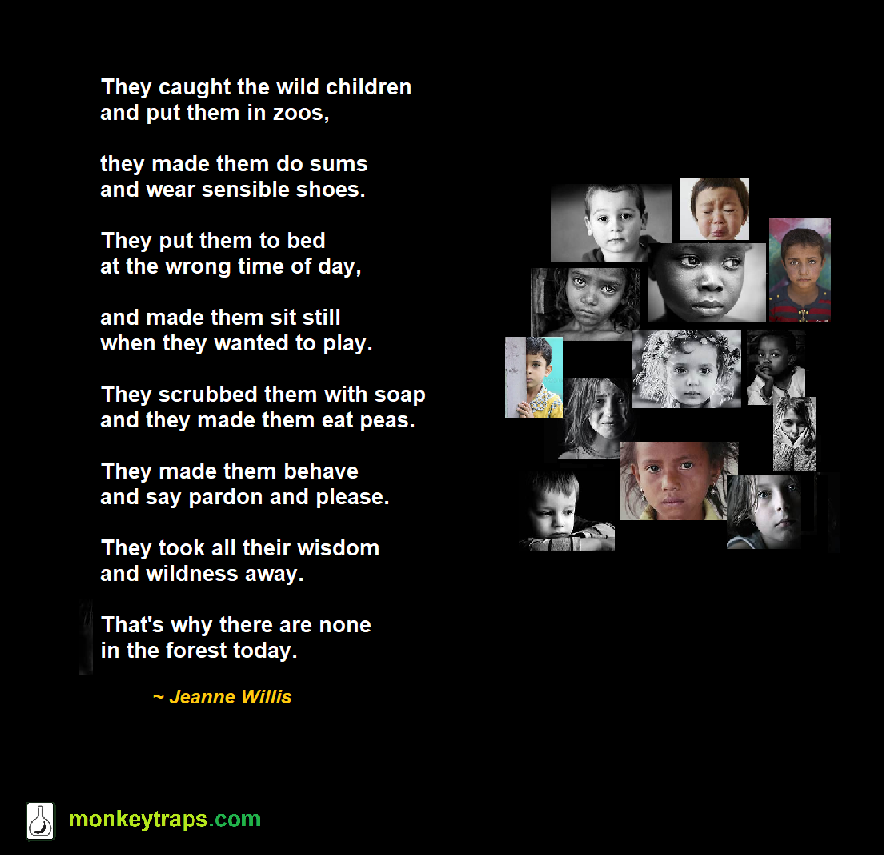
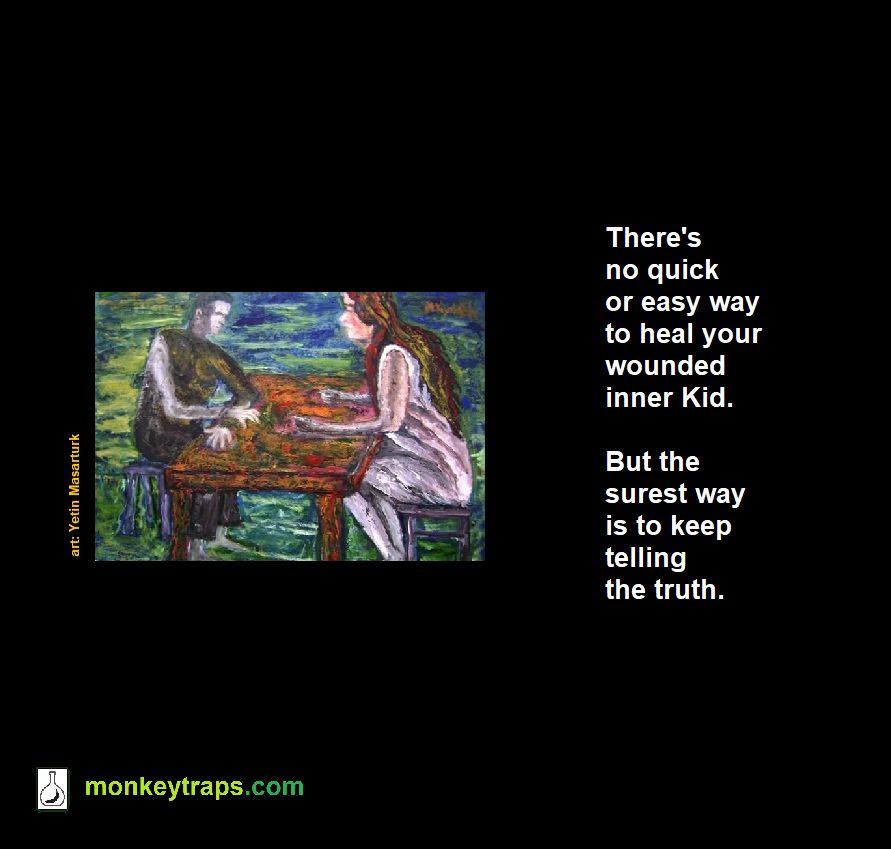
The inner Kid is the part of us that gets driven underground by socialization – the process of being trained to live with other people.
It’s the part that starts getting burdened with do’s and don’ts even before it has language.
It’s the part that gets told
Don’t pee in your pants, use the bathroom,
and
No cookies, it’s almost dinnertime,
and
Get up, it’s time for school,
and
Quiet down, you’ll wake your father,
and
Kiss Aunt Edna, she’d love it,
and
Don’t you take that tone with me,
and
Don’t cry or I’ll give you something to cry about,
and
Why can’t you be more like your big sister?
And so on.
Socialization is necessary, of course. We all have to adapt to our environment in order to survive.
But the process of socialization inevitably creates psychological and emotional wounds.
It basically splits us into two parts: a public part and a private part.
Or more accurately, an adapted part and an authentic part.
This self-splitting is called neurosis, and it’s inescapable.
Jungian analyst James Hollis writes,
Freud succinctly observed that the price of civilization is neurosis. The demands of society, beginning with one’s family of origin, split off psychic contents and the shadow lengthens.
None of us survives childhood without some splitting.
Which means that none of us survives childhood without accumulating unexpressed feelings, unmet needs, unresolved conflicts, and unhealed wounds.
And none of us avoids carrying these wounds into adulthood.
4. It may seem easier to blow all leaves together into one big pile, then blow the big pile where you want it to go. This doesn’t work. Big piles refuse to be blown. Blow one small pile at a time.
5. When leaf blowing, a goal orientation (the leaf-free yard) is bad for one’s mental health. A process orientation (What a nice day. What pretty leaves) is healthier.
6. God made leaves, not leaf blowers.
7. People who really hate leaves can move to a desert. Otherwise
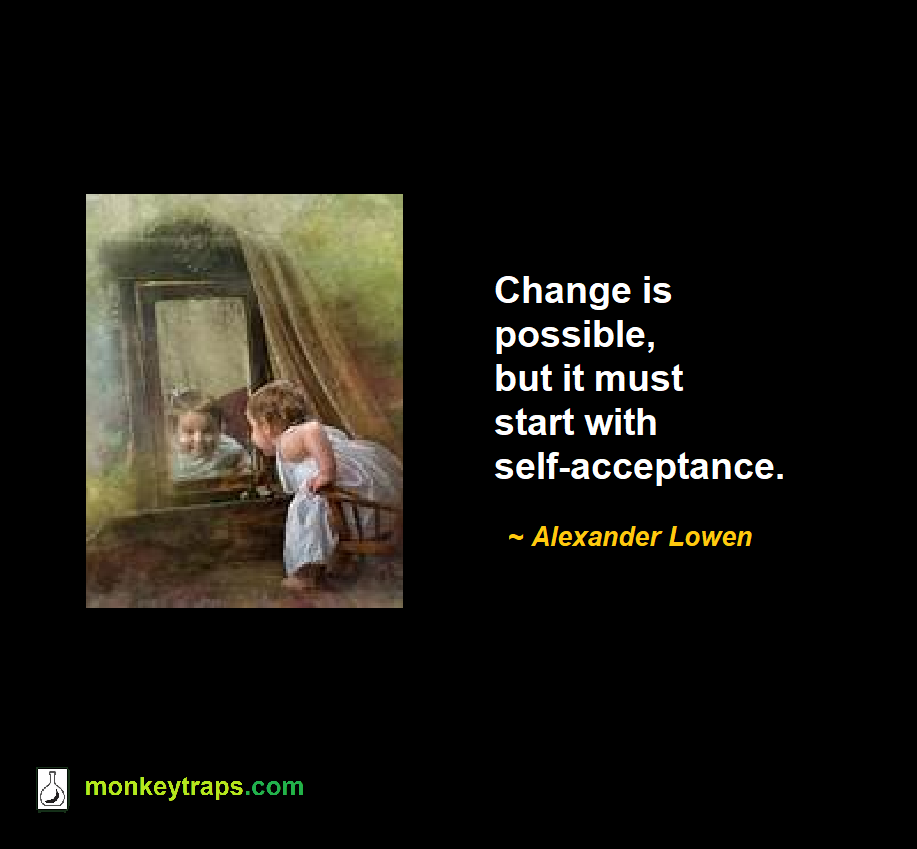
The adjusted American enters [a] hall of distorting mirrors in childhood.
It is not merely that he fails to learn techniques for achieving self-acceptance; he is virtually forced to find himself unacceptable.
The image of an acceptable person which the child learns in the typical middle-class American home is a fraud. It is not and can never be in the image of any existing person. Rather, the image is a figment of middle-class properties in its general outlines and the specific self-deceptions of parents in its details.
The typical middle-class American child learns that an “acceptable” child would not do, or even want to do, certain things. Hurting the baby, biting his mother, playing with excrement, playing with his genitals, playing with his playmates’ genitals — there are a great many things which he is taught are shameful even to think about doing. Yet inevitably he does think about doing such things and…may do them at times. He could have learned that is is not unusual to feel like doing such things, but that in the family — and society — of which he is a member, such things are simply not the custom. Instead he is led to believe that his “nasty” inclinations set him apart from other people as a “dirty” boy.
As he grows older he is taught to believe that a “good” child…would not resent his parents considering all they have done for him and how much they love him Yet the dynamics of childhood are such that any child must inevitably feel a certain amount of resentment toward his parents…. Thus a vicious syllogism is established: only evil children ever hate their parents; sometimes I hate my parents; therefore I am an evil child…..
In short, the child is presented with a phony image of an “acceptable child,” less as a model than as a point of invidious comparison. No one ever seriously thought he could measure up to it, yet somehow he is condemned because he does not.
…By the time a youth has been transformed into an adult, his thirst for approval seems insatiable.
But to borrow a phrase from Hoffer, he can never have enough of that which he really does not need.
He needs self-acceptance, and however much of his talent, energy, and possessions are committed to the struggle to win approval from others, self-acceptance cannot be achieved thereby.