Category Archives: control

Justice

..

.

* * *

.

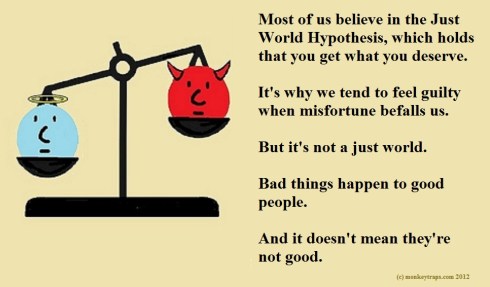
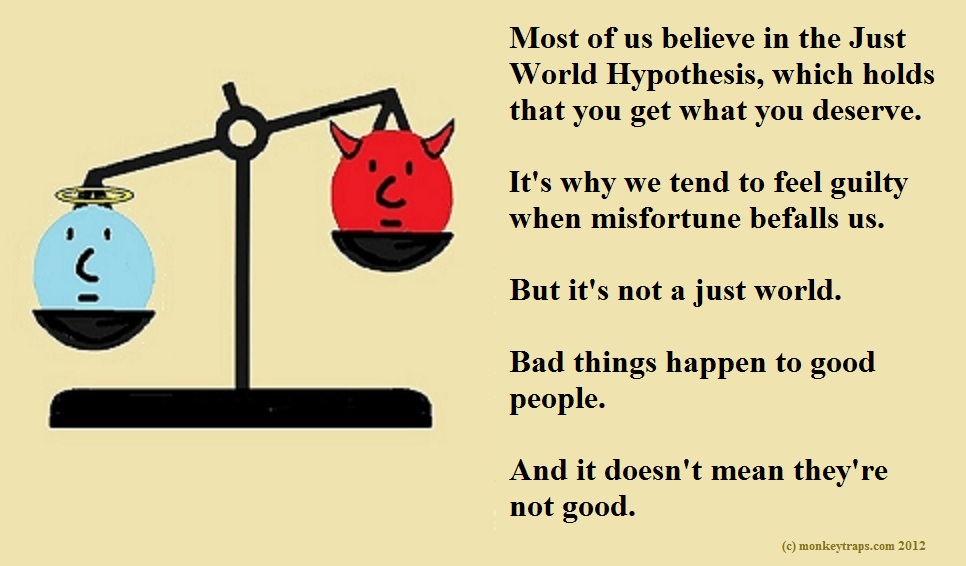
Now, remind me again, good Rabbi, why does crap befall decent folk?

The compassionate author [Harold Kushner], who grieved the loss of his son Aaron, uses the Book of Job to present his case on how suffering happens.

Most readers of Job want to believe three things: that God is all-powerful, that God is just and fair, and that Job is a good person.

But those things can’t all be true. Not for the book to make sense.

~ From “When crap befalls decent people” by Therese Borchard at Beyond Blue.


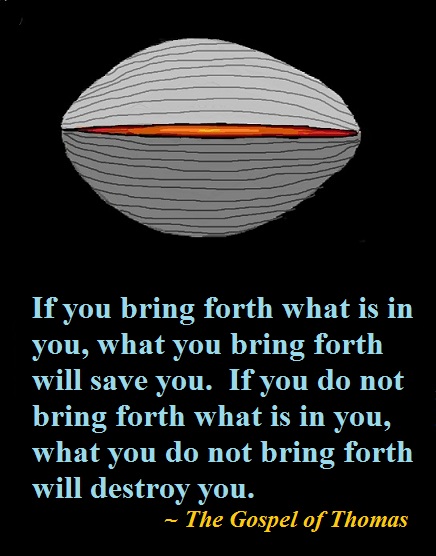
What’s in you

.

.

* * *

.

Be who

you are

and say

what you feel,


because those

who mind

don’t matter,


and those

who matter

don’t mind. 


~ Dr. Seuss

~ From Show your true colors (3:48)


How to constipate yourself

(Bert speaking:)

Therapists, Steve tells me, see depression as the “common cold” of mental illness.

I’ve had my cold for six decades.

I caught it in grade school.  Nobody called it depression then.  This was the fifties.  Not sure if back then anyone even knew that kids got depressed.

All I knew was I always felt sad, shy, nervous, worried.  Different.  Inadequate.  Flawed. 

I preferred being alone.  Preferred books to people.  Preferred tv to real life.

“Moody,” mom called me.  “Difficult” was dad’s diagnosis.

I also felt guilty about feeling crappy.  It must be my fault, I thought.  Teachers were always writing on my report cards could do better if he’d try.  So I decided feeling crappy meant I was somehow doing Life wrong, that I’d feel better if I just tried harder.  I just didn’t know how.

Steve wants to add something.

Self-blame is common among depressed people, who often see their mood disorder not as an illness but as some sort of weakness or failure.

It’s the worst part of depression.  Hard enough feeling bad all the time.  Feeling guilty for feeling bad adds insult to injury.

I felt bad through high school, college, and well into adulthood.  Through courtship, marriage and fatherhood.  Through college, graduate school and starting a professional life. 

Along the way I got some therapy, and some medication, and read lots of books.  I mean lots of books.  The idea of happiness, always mysterious to me, became a preoccupation, then a challenge, then a sort of quest. 

I read everything I could lay my hands on that might cast some light on what had become my life’s central question: How do you feel good about life? 

But it was only after Steve began to work as a therapist that I found an answer.

It was his work with depressed clients that taught me I didn’t get depressed because dad drank, mom was unhappy, or they divorced when I was eight. It wasn’t because I never had as much money as I wanted, or the body I wanted, or wrote the book I always wanted to write.  Or because of anything that had happened to me.

I was depressed because of how I reacted to what happened.

Or, rather, didn’t react.

Steve, explain.

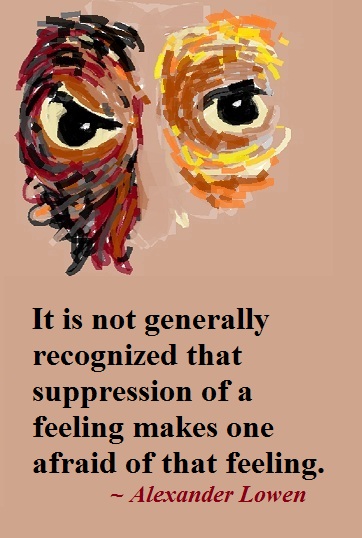
The best book I know on the subject is Alexander Lowen’s Depression and the Body.  Lowen explains that depression is a physical symptom  — an exhaustion that comes from fighting oneself by suppressing feelings that need and want to come out.

Depression, in short, is caused by emotional constipation.

Ever been physically constipated?  Notice how, the longer it lasted, the more uncomfortable you felt?  How the internal pressure and tension came to occupy all your energy, all your attention?

Suppressed feelings affect us in the same way.

It’s no accident that people in recovery use excretory metaphors (“my shit’s coming up,” “get my shit together,” “acts like his shit doesn’t stink”) to describe emotional processes.  Feelings are a kind of waste material, the emotional byproducts of experience, just as feces are the physical byproducts of what we eat.  And just as physical waste must be expelled from the body, feelings must be expressed — not hidden or stored up.

When they aren’t, we get sick, emotionally, physically and spiritually.

Lowen writes,

The self is experienced through self-expression, and the self fades when the avenues of self-expression are closed.

The depressed person is imprisoned by unconscious barriers of  “shoulds” and “shouldn’ts,” which isolate him, limit him, and eventually crush his spirit.

In my family self-expression was no option.  Dad’s drinking and mom’s depression made that impossible.  Neither of them could handle their own feelings; how could I expect them to cope with mine?

So like all kids, I adapted to my parents.  I learned to avoid disappointment,  conflict and rejection — to control their reactions to me — by burying what I felt. 

I moved out of my body and took up residence in my head.  I developed a personality organized around this way of coping.

Now I’m a sixty-two-year-old monkey, and still organized that way.

Yes, despite everything I learned from Steve and his clients, my Plan A isn’t easy to leave behind.  Stuffing feelings is still my first impulse, especially under stress.  I still find it scary to give up overcontrolling myself and others, to surrender to feelings, to be myself without fear.  I probably always will.

But I rarely feel crappy in the old way anymore.  Because now I know I have a choice. 

I can express myself or I can depress myself.

Or, put another way:

I can fight myself and keep losing.  Or I can make room for feelings in my life and relationships.

And, at least some of the time, escape the common cold.

.

* * *
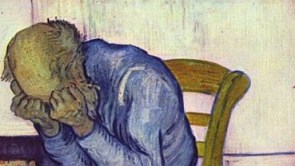
Feeling down from time to time is a normal part of life.


But when emptiness and despair take hold and won’t go away, it may be depression.


The lows of depression make it tough to function and enjoy life like you once did.  Just getting through the day can be overwhelming.


No matter hopeless you feel, you can get better. But first, you need to understand depression.

~ From Understanding depression: Signs, symptoms, causes and help at HelpGuide.org.

* * *

A question for Monkeytraps readers:

Recently one reader wrote to complain that when he tried to leave a comment here, WordPress required him to register, which he found annoying.  As would I.

Has anyone else had that experience here?

If so, please let me know by emailing me at fritzfreud@aol.com.



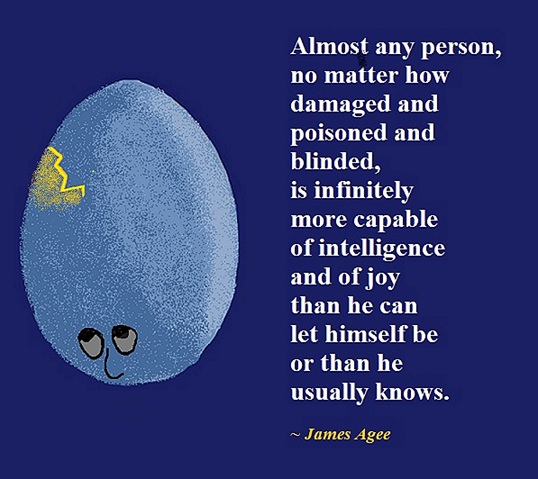
Almost any person


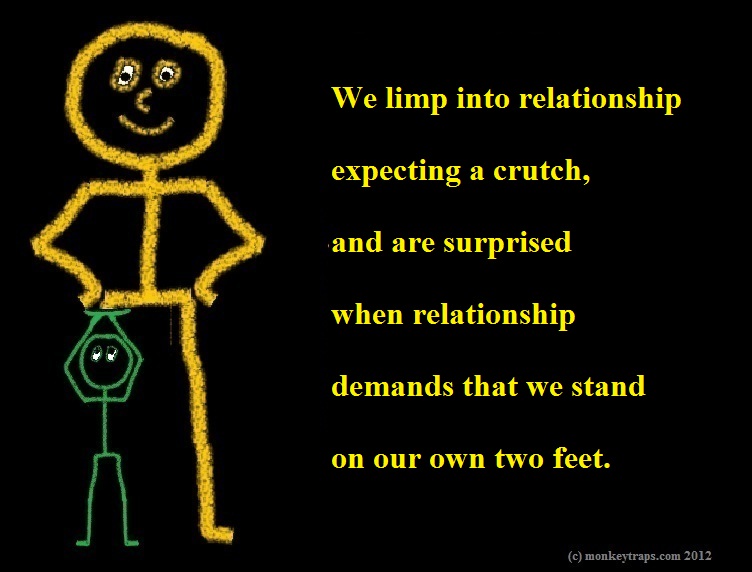
Limp


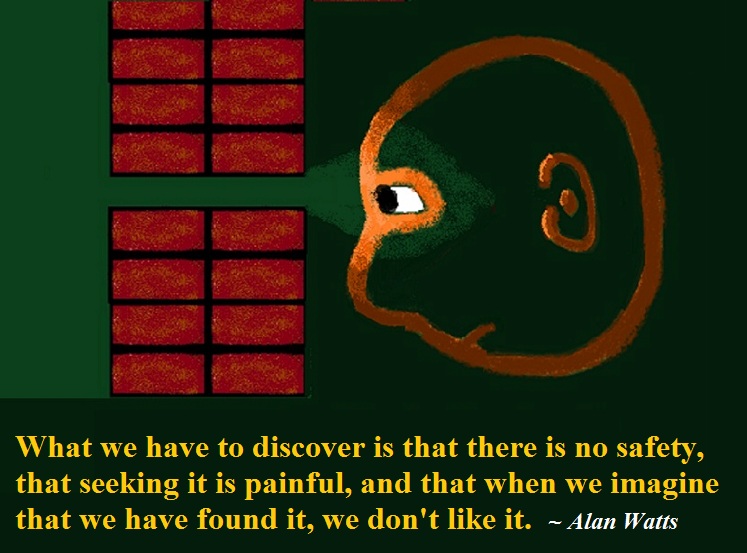
Safety


How to make yourself nervous

(Bert speaking:)

I am one nervous monkey.

Not full-blown panic-attack nervous (though there have been times when I came close).

No, my anxiety is more of the garden-variety, chronic type.  You know, where you go around tense or uneasy, unable to fully relax or enjoy yourself because it feels like something bad’s going to happen, only you’re not sure what.

You know.

I’ve been this way as long as I can remember.  Anxiety has followed me around throughout most of my life, wherever I go, whatever I do, like background music.

It’s taken me a while to figure it out.

What I finally discovered (mainly by eavesdropping on sessions while Steve was teaching clients about control addiction)  is that I have three ways to keep myself nervous.

The first is to 

(1) Try to control the future.

I do this the same way you do it — by thinking about it. 

I anticipate.  Plan.  Worry.  Obsess.  Form expectations.  Insist that my expectations be met.     

In other words, I allow my thoughts to be dominated by monkey mind.

This is a highly efficient system: it keeps anxieties growing like weeds.  The more I worry about the future, the more anxious I get.  The more anxious I get, the more I worry about the future.  And so on.

The second way of staying nervous is to

(2) Try to control other people.

I do this by insisting — secretly, I mean, in the privacy of my own mind — that other people always like me and approve of me and admire me and agree with me and laugh at my jokes.

I actually convince myself that I really need them to behave that way, that it will be intolerable if they don’t.

That’s bullshit, of course.  But it’s not hard to convince myself it’s true.  All I have to do is check in with my Top Dog, who’s always happy to remind me how inadequate I am.  Then monkey mind does the rest.  Sort of  like tag-team wrestling.

How do I control other people?  Mainly by editing myself — hiding the parts I’m afraid they won’t like. 

Which brings me to the third way of making myself nervous:

(3) Bury feelings. 

This one’s sure-fire. 

As Steve explains it, feelings are like shit: waste products meant to be expelled from the body, not hidden or stored up.  Bodies that holds in shit feel constipated.  People that holds in feelings feels anxious.

This, too, is a self-perpetuating method.  The more feelings I bury, the more anxious I get.  The more anxious I get, the more I try to hide my feelings. 

Thus the main symptom of my control addiction is an endlessly repeating cycle: anxiety leads to controlling, which leads to more anxiety, which leads to more controlling, around and around and around.

So.  What to do?

 Two practices 

Some background anxiety is simply the cost of being human — of having oversized brains that worry endlessly, and of fearing rejections which make us feel insecure.

But you can turn down the volume.

I find the two practices that work best for me both involve (surprise) giving up control.

The first practice is taming monkey mind: meditation.   Twice a day I sit at my desk for twenty minutes and try to count breaths.  I rarely get beyond three or four before anxious thoughts interrupt and run amuck.  I push the thoughts aside and go back to counting.  I do this over and over and over.

Yes, it’s hard.  Yes, it gets easier with practice.  Yes, it works.

The other practice is emotional honesty.  This has two steps.  The first is to  notice how often I feel the urge to lie, even in small ways.  (Pleased to meet you.  Ha ha, funny.  No, that dress doesn’t make your butt look big.) 

I face this choice maybe a hundred times a day.  The second step is to try to increase the frequency with which I tell the truth, show myself as I am. 

This too is difficult.  Often, scary.  

This too gets easier with practice.

And when I can do it, this — more than anything else — makes me a less nervous monkey.


Not generally recognized


* * *

What you find is that all the problems a person has are structured in his body.

And the basic problem he has is that he’s afraid to come alive and have feeling fully.

The only way you cut off feelings is to deaden your body.  That’s the only way… 

Dead bodies doesn’t feel.

~ From The energetics of bioenergetics by Alexander Lowen, MD (5:37)


Every conversation


Punish your child


The Second Paradox


“All happy families are alike; each unhappy family is unhappy in its own way,” wrote Tolstoy.

Not in my experience.

In my experience, unhappy families — especially unhappy marriages — are surprisingly similar.

Consider:

~ Heather wants to marry Ian, who’s scared of commitment.  So she pressures him to propose, which scares him, so he backs away. This scares her, so she steps up the pressure (“Why won’t you marry me?”).  Which makes him back away further and faster.  And so on.

~ “He never talks to me,” is Janet’s main complaint about Kenny, who grew up in a family where no one talked to anyone about anything.  The more she begs him to talk, the more inadequate Kenny feels.  The more inadequate he feels, the more silent he becomes.  Which angers Janet, which makes her beg harder.  And so on.

~ Liz is a people pleaser who gets anxious when Mark is unhappy. So she knocks herself out putting his feelings, needs and preferences ahead of her own.  Mark – who enjoys this and doesn’t want it to stop – finds he can keep Liz motivated by remaining unhappy.  The unhappier he becomes, the harder she tries.  The harder she tries, the unhappier he becomes.  And so on.

~ Nan: “If you didn’t drink, I wouldn’t nag you.”  Olivor: “If you didn’t nag me, I wouldn’t drink.”  Rinse and repeat.

~ Patty and Ron both grew up in families that didn’t acknowledge or respect feelings.  Hungry for emotional validation, they now seek it from each other.  Unfortunately each takes the position, “I’ll validate you after you validate me.”  Since neither validates first, no one gets validated. Ever.  So their childhood deprivation continues.  Indefinitely.

Sensing a pattern?

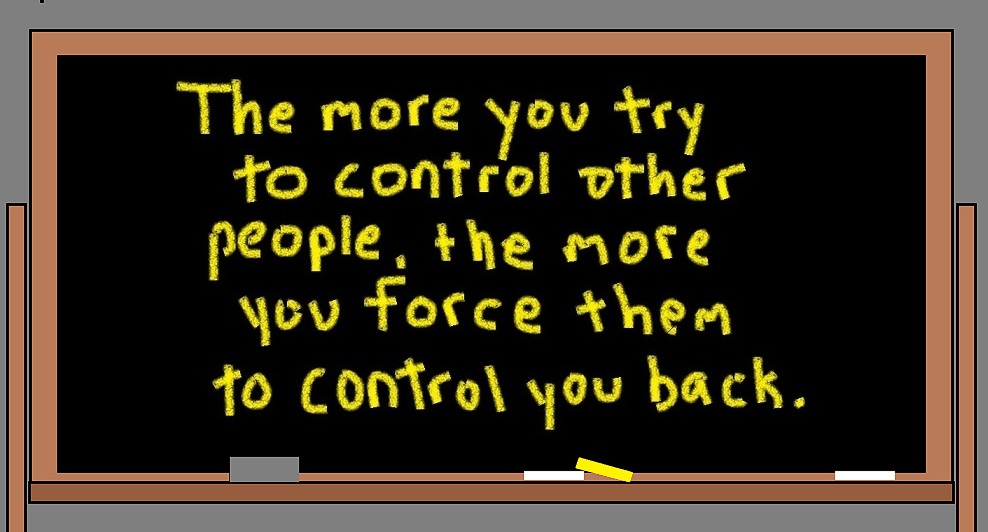
All five examples (and the variations are infinite) illustrate the Second Paradox of Control:

.


.

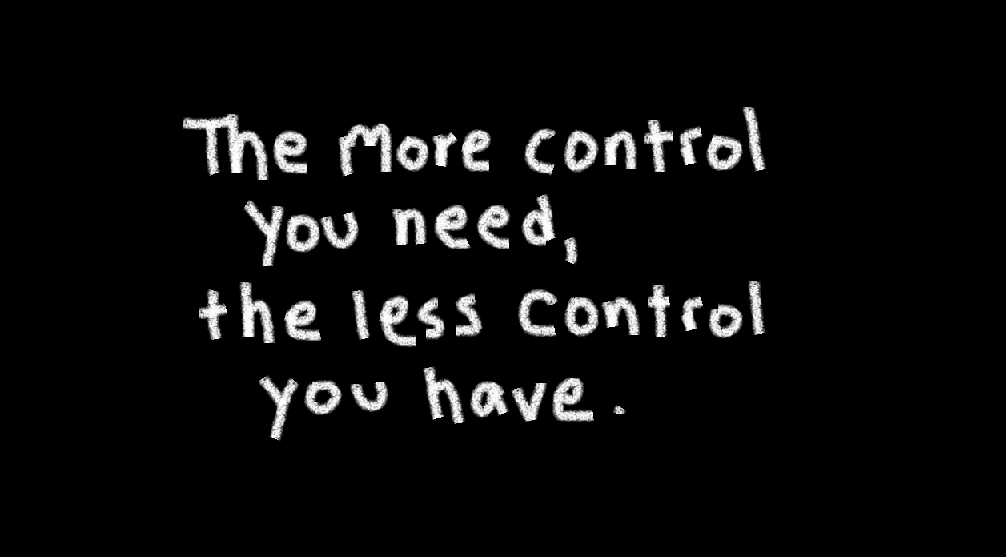
This is the interpersonal version of the First Paradox of Control (“The more control you need, the less control you have”)  explained here last week.

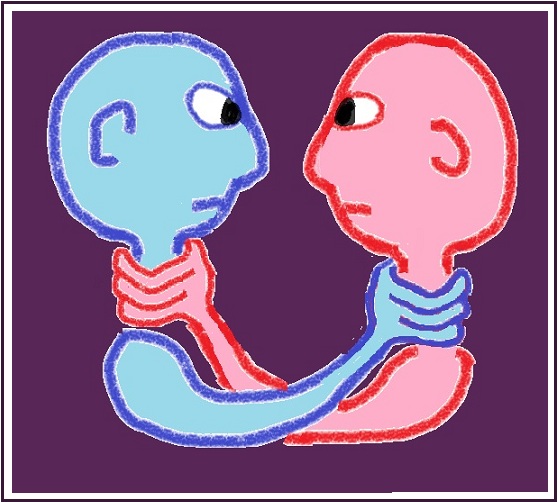
This Second Paradox grows out of an obvious fact of human nature:  We all want control, yet we all resent being controlled by others.

That’s just what is being played out in these examples.  Each of the ten partners is trying desperately (if unconsciously) to transform the other into the partner they want.  And each of the ten is resisting being transformed as hard as they can.

Call it control addiction a deux.

Or you could use the term I sometimes use in my clinical  notes — monkeyships, meaning relationships bent out of shape by control issues.

Some of this goes on in all our relationships, because at some point we all turn monkeyish.

We all try to make the relationship and/or our partner into what we want them to be. 

It has little to do with how much we love the person we’re with. 

It has everything to do with how much control we think we need to feel safe. 

And it continues unless and until we learn alternatives to our monkeyish behaviors.


* * *

There are many signs and symptoms of controlling behavior in a relationship.

But here are just three tell-tale signs that your partner is trying to control you:

1. Your partner tells you what to think…

~ From How to tell if you’re in a controlling relationship (3:01) by Donna Marie Thompson, Ph.D. of bouncingbacknow.com.

.


Driver


The First Paradox

(Bert speaking:)

Once upon a time Steve had a client who made him nervous.

Very very nervous.

Actually, no.  Steve’s a trained professional.  He never gets very very nervous.

(Believe that, and I have a bridge to sell you.)

No, this client made me very very nervous.

She did it by being very very nervous herself.

Her name (let’s say) was Angie.  And Angie was nervous about, well, everything.

She was nervous about money.  And her job.  And her health.  And her kids.  And her marriage.  And her hair.  And her lawn.  You name it.

An hour with Angie would leave me a nervous wreck.

Why?  Two reasons.

Steve, explain the first.

Anxiety’s contagious.  Spend much time with highly nervous people and it’s hard not to start feeling nervous yourself.  Like a bad cold, their unsafety infects you.  Like an overdose of cheap perfume, their uneasiness saturates your senses.

True. 

The second reason, though, had more to do with me than with Angie:

I felt an overwhelming need to fix her anxiety.

Not for her sake.  (Steve’s the therapist, not me.)  Because it made me uncomfortable.  I just wanted to make it go away.

So I pushed Steve to say helpful things and give good advice and communicate acceptance (soothing voice, solid eye contact, all that), all in hopes of calming her down.  So maybe I could calm down.

It didn’t work.  Angie stayed anxious.

And I began to feel helpless.  And I began to hate Angie a little.

But she was doing me a favor.  Because she was teaching me about the First Paradox of Control.

Wikipedia defines paradox as “a seemingly true statement or group of statements that lead to a contradiction or a situation which seems to defy logic or intuition.”

Right.  And the First Paradox of Control goes like this:

. 

The more I needed to control Angie’s anxiety, the more out-of-control I felt.

I didn’t get this until the day I finally got sick and tired of feeling helpless and hating her.  “Screw it,” I thought, and simply gave up.  Sat back.  Just watched.

Guess what happened.

I felt better immediately.  I found I could watch Angie’s nervousness without taking it personally, without experiencing it as a threat or a challenge.  I could relax, and just let her be her usual nervous self.

Oddly enough, not trying to control her it left me feeling in control.

Confusing, no?

Yes, confusing.

But in part this comes from a confusion of language.

We use the word control to describe two very different things. “Control Angie’s anxiety” refers to something external, to somebody else’s emotional state.  “Feel in control” refers to something internal, your own emotional state.  Apples and oranges.  

But — and here’s the interesting part — this confusion of  language leads us into assuming that we need to control something Out There before we can feel calmer In Here.

And it’s not true. 

In fact, more often than not, the opposite is true:

Only when we give up controlling Out There do we begin to feel calmer In Here.

So what the First Paradox means is that the more you try to control external stuff the less at ease you feel internally.

Weird?  I thought so at first.

Then I began paying more attention to my own reactions.

And I noticed that those situations and people that make me most anxious are the very ones over which I’d like more control.

They’re also the ones over which I try to get more control — if not overtly, then covertly.  If not in my behavior, then in my head.  The ones I fantasize (obsess, even) about changing.

Finally, they’re the situations and people I suddenly feel better about when I shift from trying to control them to just letting them be.  From fighting to surrendering.  Like I surrendered to Angie’s anxiety.

At the very least, surrendering’s a lot less work.

Hey you, reading this:

Any experiences with the First Paradox?  Ever stop controlling and end up feeling more in control?

If so, care to share?   I’d really like to hear about it.

* * *

.

.

* * *

Where the hell is Matt?

Matt Harding (aka Dancing Matt) travels around the world and gets people — all sorts of people — to dance with him. 

He’s made five videos of the results, the most recent being “Where the hell is Matt? 2012”

Wikipedia notes,

On July 22, 2008, and again on July 25, 2010, and July 10, 2012, NASA featured Harding’s videos on the APOD (Astronomy Picture of the Day) Web site. 

Text accompanying these videos, under the heading “Happy People Dancing on Planet Earth,” claims that humans worldwide share a common love of dance, stating that “few people are able to watch the above video without smiling.”[20]

Watch “Where the hell is Matt? 2012.  You’re welcome.


Like a teddy bear


Plan B

(Bert speaking:)

Last time I mentioned that Steve created me to get control of his emotional life.

I tried to do that by controlling everything and everyone around me. 

I call this my Plan A.

It included hiding his feelings, wearing masks to impress other people, and reading their  minds – i.e., guessing what they liked or wanted and trying to give it to them. 

It also included sending him to social work school.

Social work didn’t interest me.  I wanted Steve to be a therapist, and that seemed the fastest way.

Why did I want him to be a therapist?

Selfish reasons.

Therapists know stuff civilians don’t.  I saw them as special, something like priests,  possessed of secret knowledge and understanding.  I liked that idea.  I wanted in on that.  

I also thought a therapist’s position allowed him to get really close to other people without exposing too much of himself.  Since people scared me, I liked that idea too.  I liked it a lot.

Finally, I figured if anyone’s in control of their emotional lives and their relationships, it must be therapists. 

What did I know?  I’m a monkey.

So I sent Steve off to social work school.

And he graduated.

And got hired as a therapist.

And began to work.

And discovered (surprise) that he couldn’t follow Plan A and do his job.

At least, not competently.

Steve, explain why.

Because good therapy is all about healthy relationship.  And you can’t create that and seek control at the same time.

You can’t, for example, seek control and have real communication.  Real communication means surrendering control, being honest and real and, yes, vulnerable.  Therapists have to do all that within professional boundaries, of course.  But editing out all realness and  vulnerability leaves a relationship cold, unreal, and sterile.  Which solves nothing and helps nobody.

Nor, I found, can a therapist overcontrol his own feelings and do good work.  It’s feelings that connect us,  allow us to understand other people. When I overcontrolled mine I lost touch with my clients.  When I lost touch, I did bad therapy.

It quickly became apparent that what therapy demanded from Steve was essentially the reverse of our Plan A.  Instead of guarding against feelings, he had to trust them.  Instead of handling people, he had to connect with them instead.

This was disturbing.  I began to think I’d made a terrible mistake. 

Then around this time Steve, suddenly and unexpectedly, burped up a poem.

Steve, describe that.

It came out of nowhere.  I was lying in bed one night and heard the thing writing itself. 

It began, “The truth is like a bear in the house.”  

And it went on to describe how, if you’re trapped in a house with a bear, you have only two choices: run away and wait for the bear to find you, or turn around and hunt the bear.  

At first I had no clue what this was about.

It took weeks to realize that my personal bear is the idea of control.

And so you set out to hunt it.

Right.  I figured the poem was like a telegram from my unconscious.  Part of me sending a message to another part. 

And when I brought bear-hunting to my work, I got another surprise.

I discovered that control isn’t just my bear. 

It’s everyone’s.

I saw that controlling is addictive, its patterns predictable and universal, and that they cause nearly all of the problems people bring to a therapist.

I saw that anxiety, depression, addictions, bad relationships and lousy parenting all stem from someone trying to control something they can’t or shouldn’t control.

And eventually I learned that a day comes — if we’re lucky — when we realize that controlling simply doesn’t work as a life strategy.

That’s the day we shift to Plan B.

Describe that shift. 

We start to notice our own controlling, catch ourselves in the act, learn and practice healthy alternatives.  We stop trying to control life and find ways to accept and cooperate with it.

And a great relief follows. 

That feeling is hard to describe.  It’s like you suddenly find yourself  sanding with the grain, instead of against. 

Or like giving yourself permission to stop swimming against the tide of feelings and events, and letting it carry you along instead.

Friends, consider this an invitation:

Come join the hunt.

.

* * *

“Love is how we ask for peace” 


Dear Friends,
 
Our young friends in Afghanistan, members of the Afghan Peace Volunteers, need our help.
 
Their requests for visas that would enable them to join the U.S.-Mexico Caravan for Peace that is touring the U.S. this summer were denied last Sunday after a less-than-10-minute interview at the U.S. Embassy in Kabul.
 
We are mounting a new campaign to try to convince Consular officials to take another look at their applications. We want them to understand that Abdulhai and Ali have many U.S. supporters, and that they are devoted to their work for peace and nonviolence in Kabul (and so would be eager to return to Afghanistan at the end of the Caravan tour).
 
Please help us by going to the following Roots Action page and adding your signature. If ever there was a time for us to encourage friendship between the youth of Afghanistan and the youth in this country, it is now.
 
And after you do that, would you please consider encouraging others in your network to do the same by forwarding this information?
 
Here is the link to the action page.
 
And here is a link to “Why Afghanistan can’t wait,” the Truthout article that Kathy Kelly and Hakim (mentor to the Afghan Peace Volunteers) recently wrote. 
 
Our new friend in the office saw them first.  “Here come your friends,” she said.  “Rejected,” she added, as we looked at their faces.  She and another Afghan guard listened sympathetically as Ali and Abdulhai described their absurdly brief interviews – they too had spent all but ten minutes of the three hours merely waiting. During those ten minutes, the interviewer had never touched the documents they submitted in their packets.
 
Please take a few moments to read this piece, which captures the true spirit of the work that Abdulhai and Ali and the other Afghan Peace Volunteers are involved in.  
 
As our friends in Kabul say, “Love is how we’ll ask for peace.”
 
We can do this.
 
Thank you,
Susan Perretti
 
PS:  If you want more information about our movement or how you can help, you can email me directly at oceanofjoy129@aol.com.
 

* * *

Steve here:

Afghanistan seems so far away.  Here’s a video (1:34) that brings it closer:

Be one of two million friends

.

***