Maybe it’s coincidence. But Thursday I had my first granddaughter,
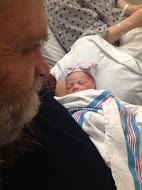
and then yesterday I felt the urge to go update my profile on Psychology Today — specifically, the paragraph describing my Tuesday night women’s group, which now reads:
Most women are trained to be codependent — i.e., to take better care of others than of themselves — as a way of winning approval and love. This group is for mothers, daughters, wives and single women tired of losing themselves in relationships and ready to make their own needs and happiness a priority. We focus on giving up compulsive controlling of other people and replacing it with emotional support, healthy self-acceptance, and realistic self-care.
One benefit/curse of becoming a grandparent is that you take the long view of things. You look at this hatchling, and then you look down the metaphorical road and anticipate what she’ll experience. Projection being what it is (the product more of fear than of hope), I imagine Callie struggling with the same stuff as the women I know, the mothers, daughters, wives and single women trying to grow past their conditioning and give birth to themselves.
After two decades of working with women I’ve decided I hate what we do to them. I hate what we do to men, too. In Monkeytraps (the book) I wrote,
Most men are raised to function as machines. Most women are raised to function as hostages.
Men are taught to sacrifice their emotional selves. Women are taught to sacrifice their independence and autonomy.
Men are expected too be tough, brave, and self-reliant. Women are expected to be endlessly accepting, sensitive and giving.
Men are taught to stuff their feelings and work hard. Women are taught to stuff their feelings and give until it hurts.
It’s a crock of shit, this training.
But it’s so universal and so unconscious that we all get infected by it and grow up emotionally lopsided. Then we spend our lives blaming ourselves for being inadequately machinelike or inadequately giving.
The luckiest people I know have someone in their life telling them (ideally, while they’re young) not to believe the lies. That men and women are meant to be just that, human men and women, not machines or bottomless wells of self-sacrifice.
That it’s our right to not grow up lopsided.
And that, if we have grown up that way, it’s our right to work on undoing our lopsidedness.
If not for our sake, then for the sake of hatchlings yet to come.
3 Comments | posted in control, metaphor for
Now up:
The Monkeytraps Podcast,
Chapter 4: Chameleon (1:37),
Chapter 5: A Controlling Person (2:04),
Chapter 6: Internal and External (2:18),

x
* * *
Missed something, or
want to hear it again?
Visit the
Monkeytraps Podcast’s
homepage on Stitcher Radio
(click on logo)

where you’ll find all previous
and subsequent chapters.
x
Leave a comment | posted in control
 In session, with a couple. He does not want to be here. But she’ll end the marriage unless he comes. I ask questions, make little jokes, try to engage him. But it’s slow going until he finally says out loud how he sees things.
“It’s like we live back to back,” he mutters.
This triggers an earworm. You know, when you get a song stuck in your head and can’t stop hearing it? Except my worm isn’t a song. It’s a bit of nonsense rhyme from my childhood.
Back to back
They faced each other,
Drew their swords
And shot each other.
The worm plays over and over while I listen to them talk.
It plays until I figure out what the hell it means.
Then I do, and the meaning comes all at once. And I interrupt the couple to tell them.
I say,
What you said about living back to back? I really like that.
It’s a great metaphor for marriage.
Because that’s how we all start out:
Living back to back.
Not looking at the person we married.
Where are we looking? Elsewhere.
Maybe at the past, at old relationships or the marriage of our parents. Maybe at the future, what we expect or want or need things to be. Maybe at our own pathology, our anxiety or anger or grief or unhappiness. The stuff we hope the marriage would heal, the way medicine heals illness.
But not at our partner. Not the real person we married, as he or she is right here, right now.
We think we are. But the person we marry is not the the person we dated. And marriage is not the dating relationship, saturated with fun and sex and all sorts of idealizations and projections.
All that’s temporary. And eventually we realize that.
And we realize our partner isn’t who we thought he or she is.
And maybe we realize that we aren’t who we thought we were, either.
That’s where the real marriage begins.
Turning to face the real person we married, and the real person we are, that takes time.
That takes courage.
That takes serious love.
But that, in the end, is the work of marriage.
It’s the work of moving — slowly, patiently, with understanding and acceptance — from living back to back to living face to face.
11 Comments | posted in control, metaphor for
Now up:
Monkeytraps Podcast,
Chapter 3: Pictures (1:48),
x
x
* * *
Missed something, or
want to hear it again?
Visit the
Monkeytraps Podcast’s
homepage on Stitcher Radio
(click on logo)
where you’ll find all previous
and subsequent chapters.
Leave a comment | posted in control
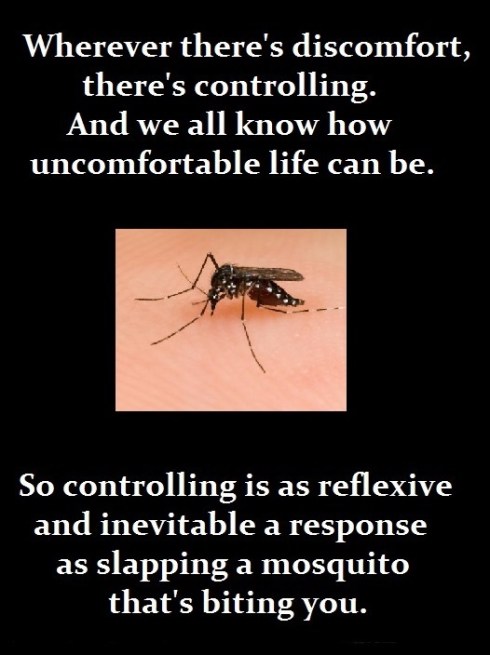

From
Monkeytraps: Why everybody tries
to control everything and how we can stop
by Steve Hauptman.
3 Comments | posted in control
Now up:
Monkeytraps Podcast,
Chapter 2: Controlling (2:19),
Leave a comment | posted in control
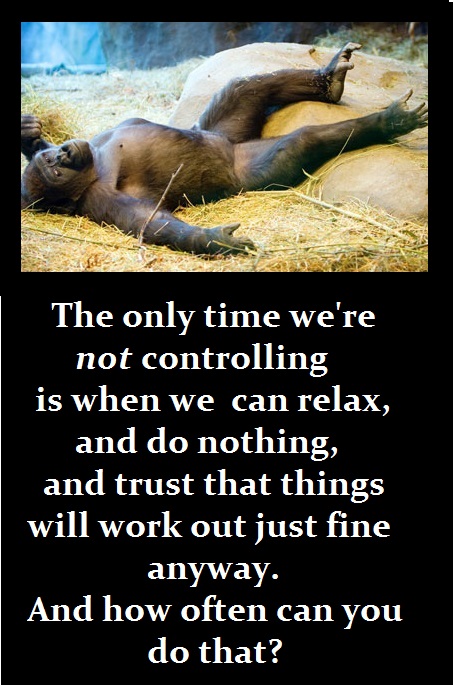
From Monkeytraps: Why everybody tries
to control everything and how we can stop
by Steve Hauptman.
2 Comments | posted in control
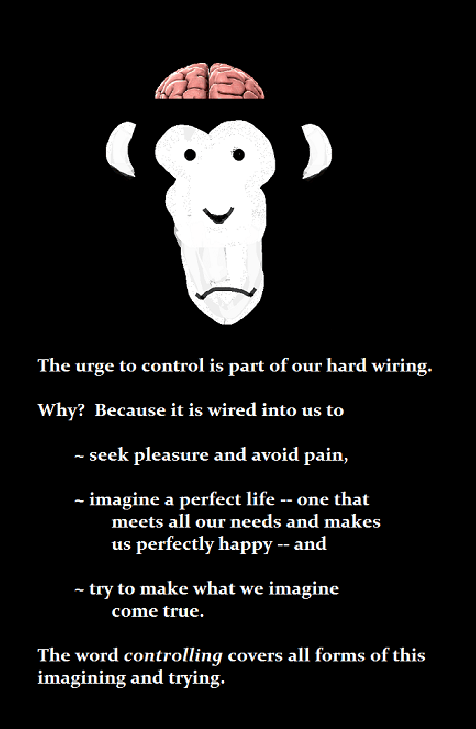
From Monkeytraps: Why everybody tries
to control everything and how we can stop
by Steve Hauptman.
Leave a comment | posted in control
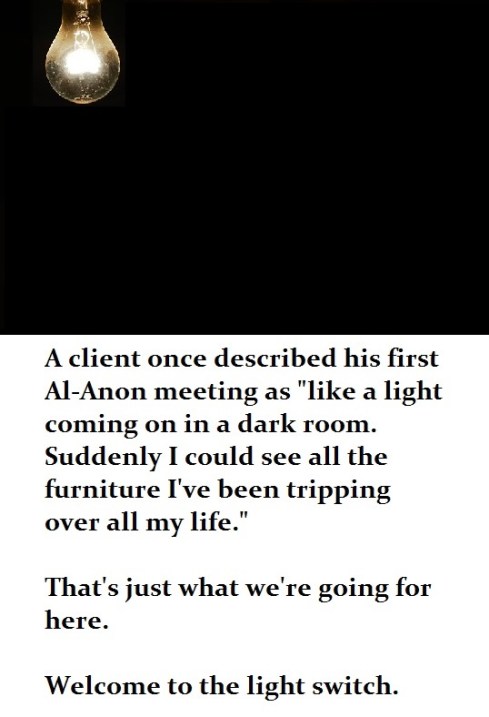
From Monkeytraps: Why everybody tries
to control everything and how we can stop
by Steve Hauptman.
Leave a comment | posted in control
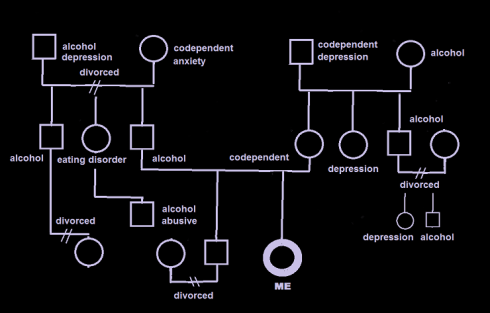 We each have two families.
The first we inherit, the second we create.
The first is where we get wounded, the second where we go to heal.
Sorry. I don’t mean to sound cynical.
But do my job for any length of time and you can’t avoid concluding that, while healthy families exist, they are rare.
Healthy families are those able to meet their members’ needs for attention, acceptance, approval and affection.
Healthy families understand and practice empathy, respect, loyalty, goodwill, trust.
And healthy families make room for everyone. No one gets abused, ignored or sacrificed. No one gets lost.
As I said, such families exist. But for too many reasons to list here, they are outnumbered by the other kind.
And when the first family is inadequate, the second becomes essential.
Some people, wounded in the first family, give up on people. They decide relationship is dangerous, something that hurts or disappoints you, not a place to get your needs met. So they retreat into anger, isolation, intellect, work, materialism or substance abuse. Some try to make do with a hobby, a tv or a cat.
Others keep returning to their dysfunctional first family, hoping against hope that someday, somehow, this dry well will produce water.
The luckier ones realize they need a second family.
They may start with a tentative connection to a therapist, sponsor or recovery buddy. Scary stuff, at first. But as they collect good experiences, their sense of safety and ability to trust grows. Their new family may expand to include friends or classmates, coworkers or colleagues, members of a self-help or a therapy group. Eventually it may include their own partner, inlaws, and/or their own children.
That’s what happened to me.
It’s why, when I published my book, I included this on the Acknowledgements page:
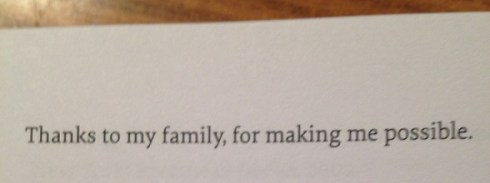
This is no exaggeration.
So yes, first families are unavoidable, often disappointing, even destructive.
And yes, the wounds they inflict can last a lifetime.
But no, they do not constitute our destiny.
Second families are our second chance.
2 Comments | posted in control
*
Attention,
monkeys of the world:
Got 2 minutes?
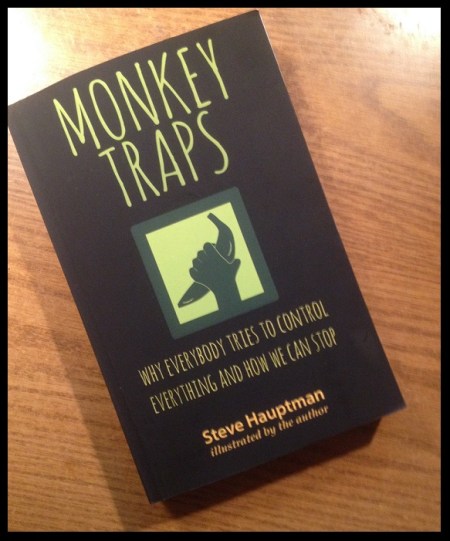
Use them to listen to Chapter 1 of
 *
read by
(More to come in
the weeks ahead.)
Leave a comment | posted in control
 For those of you with dysfunctional families who just survived another painful Christmas, some notes:
~ Congratulations. You didn’t murder anyone. You didn’t kill yourself, either. You’re not in a holding cell or a hospital. Sure, you sustained some emotional wounds. But it’s over now. You survived another one. Congratulations.
~ Forgive yourself. Maybe you failed to make everyone happy. Maybe you weren’t as happy as you hoped to be. Maybe you ate, drank, spent, or something-else too much. Maybe you lost it with someone. Maybe things went off the rails in another way. Fuck it. You did the best you could this year. It’s over. Move on.
~ Make lemonade. A dysfunctional family is a heartless machine; it chews up everyone unlucky enough to get tangled in its gears. It’s nobody’s fault, really. Most of the machine’s victims don’t set out to hurt others. They just do the best they can with impaired understanding and limited resources. The real enemy here is a pathology so complex and subtle it takes therapists years of study to figure it out. What can you do? Make lemonade out of this lemony Christmas. Learn something about why things went wrong. The most important lesson may be to have more realistic expectations next year — of yourself, other people, of the holiday itself. If you can learn that, and go into next Christmas with your eyes wide open, maybe this will be the last really bad one.
Merry Aftermas.
love,
~ Steve & Bert
4 Comments | posted in control
 Bert and I have learned two things about expectations.
The first thing:
1. An expectation is an attempt to control something.
It’s a sort of demand we make on the future.
“It must be like this,” we tell ourselves. “And if it’s not, I won’t be happy.”
Then it’s not. And we’re not.
The second thing is:
2. Expectations are killers.
They kill all sorts of important living things.
Like
Spontaneity. Spontaneity means freedom — being able to express yourself without fear or constraint. But expectations are both judgmental and constraining. (Listen up, future: I want this to happen, and not that.) Expecting A prevents you from accepting and embracing B, or C, or D. That includes what comes to you from your environment and what comes up inside you, your own feelings and responses. Expectations are emotional handcuffs.
Pleasure. However else you define pleasure, it’s certainly a feeling. And expectations generally undermine our ability to feel. They’re born in our heads, while feelings live in our bodies. They’re future-oriented, where feelings occur only in the now. They’re controlling, where feeling (especially the feeling of pleasure) involves surrendering to an experience. And they’re born out of fear (I really don’t want X to happen). And nothing kills pleasure deader than fear.
Love. Real love, the kind we all crave, depends on safety — knowing you can be yourself and not be punished for it. How can you feel that if you’re worried about meeting someone’s expectations? How can they feel it if they’re worrying about meeting yours?
Why write about expectations just now?
That should be obvious.
‘Tis the season to be expecting.
And expectations are the main reason so many people suffer emotionally at this time of year.
We expect to feel a certain way, and usually don’t.
We buy with one eye on what people expect of us, and the other on what we expect of them.
And we compare where we are this December to where we were last December, and to where we’d expected to be by now.
Let’s be realistic, though. Expectations are difficult to give up. No one who reads this is going to suddenly stop expecting.
But you can take note of what you’re expecting.
And you can distinguish the expectations that are really important from the one are just bad habits.
And you can consider tossing out a few of the less important ones.
See how you feel.
Better, I bet.
Lighter. Freer. More accepting. More loving.
Not a bad way to feel heading into a new year.
.
*

*
In an Italian plaza, orchestra and chorus assemble one by one, and perform Beethoven’s Ode to Joy for delighted passers-by.
Take five minutes, watch and smile:
1 Comment | posted in control
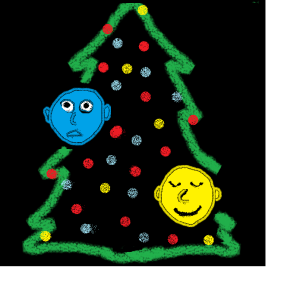 In group. “So the bad news is I still hate them, and they’re coming for Christmas,” says Dennis. “But the good news is, this year I think I can detach. I think I can step back and not let them bother me.”
“Wow,” someone says.
“Not me,” says Emma. “I hate my inlaws too, and they’re coming. But I can’t detach. The best I can do is hate them secretly. You know, bite my tongue and avoid conflict.”
The group looks sympathetic.
“What’s the difference?” asks Frank. “Steve, what’s the difference between detaching and just avoiding conflict?”
“What do you think?” I ask the group.
They frown a collective frown.
“Dennis, what does detaching feel like to you?”
He thinks. “Calm,” he says finally. “Relieved. Like the problem has stopped being a problem.”
“And Emma, when you’re avoiding conflict, how do you feel?”
“Awful,” she says. “Inside I’m scared, angry, self-conscious, confused.”
“Not relieved?”
“Not at all.”
“So there’s one difference,” I say. “Detachment lowers anxiety. Avoiding conflict tends to raise it.”
“But why?” Frank asks.
“Well, controlling behavior usually raises anxiety, and that’s what conflict avoidance is — manipulation, a kind of secret controlling. You can’t see Emma doing it, but inside she’s controlling like crazy: watching, worrying, stuffing her feelings and waiting for something bad to happen. Right?” Emma nods glumly. “Whereas detaching avoids all that internal mess.”
“I’m still confused,” Frank says. “How do I know when I’m doing one or the other?”
“There are two ways,” I say.
“The first is to ask yourself, Where’s my attention? Control addicts focus outside, on the people/places/things they want to control. But to detach is to turn inward, shift attention to our own feelings and needs. It’s like taking our energy back.”
“That’s true,” Dennis says. “When I’m controlling I’m edgy and tired. When I detach I feel relaxed and strong.”
“And the second way?” Frank asks.
“That’s more subtle. Ask yourself, How old do I feel?”
“How old?”
“Right. Remember, control is what kids do. Kids have no power. Kids can’t take care of themselves, can’t even stand up for themselves most of the time. So they have to manipulate the big people around them. But real adults can stop controlling and act in service of their own needs. That’s what I mean by power.
“So if you find yourself feeling powerful, like the grownup you are, you’re detaching. And if you feel like the scared kid you used to be, you’re probably still controlling the way kids do.”
***
* * *
5 Comments | posted in control