Category Archives: metaphor for
She’s a new client, looking around my office.
“I like your pictures,” she says. “But what’s that?”
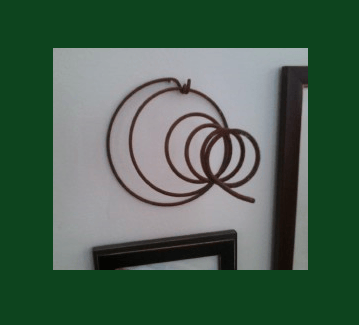
She points to the rusty bedspring on my wall.
“A metaphor,” I say.
“For what?”
“Recovery. It’s the recovery spiral.”
“I don’t understand.”
“Most people think of recovery as a linear process. They think you start off down here, at All fucked up, and 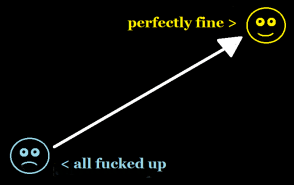 climb straight up to there, Perfectly fine.
“They think there’s a straight line between those two points, and that any deviation from that line – relapses, setbacks, mistakes — means some kind of failure.”
“Doesn’t it?”
I shake my head. “Not if you see recovery as a spiral.”
“Emotional growth means moving in a circle. The points of the circle are the issues or problems we’re working on — parents, money, work, sex, feelings, communication, control, whatever. And you go around and around the same circle, facing the same issues over and over.
“But each time you go around you’re a bit higher on the spiral. Meaning you know a bit more than the last time around. And you’re a little bit stronger. And you have more resources, both inside you and outside.
“And that’s recovery.
“If you’re lucky, there’s no end to it until you die. There’s no There there, no Perfectly fine end point. Just learning and growing as long as you live.
“So when someone comes to me all discouraged and says Oh god, I fucked up or I’m so embarrassed that I’m still struggling with this I show them the spiral and explain what it means.
“And then I ask, ‘What do you know now that you didn’t know last time you were here?’
“And they can usually find something. And then they can think of their relapse as a lesson, not a failure.”
She frowns, looking at my wall.
“Where can I get a rusty bedspring?”
2 Comments | posted in control, metaphor for
x
“I feel like crap,” he tells me.
“Why?”
“I’m a failure.”
“How so?”
“In every way. My wife says I’m insensitive, so I feel like a bad husband. My son’s failing Math and my daughter has social anxiety, so I feel like a lousy dad. I don’t make enough money, so I feel like a bad provider. I don’t have time or energy to fix what needs fixing around the house, so I feel lazy and irresponsible. I’m overweight, so I feel like a physical mess. And you tell me I’m out of touch with my feelings, so I’m even flunking fucking therapy.”
“Wait a minute,” I say. “Let’s do this right.”
I reach under my chair and bring out my hammer.
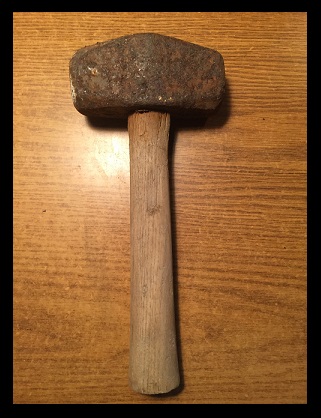
It’s an old hand sledge, five pounds of rusted metal.
“Here,” I say, handing it to him.
“What this for?”
“Give yourself a good whack on the knuckles.”
“Are you crazy? That would break my hand.”
“Probably,” I say. “But the pain would go away, and the hand would heal in about six weeks.
“What you’re doing to yourself now — calling yourself a failure and collecting evidence to back it up — that causes permanent damage. And the pain it creates is endless.”
For anyone who find this parable too metaphoric, let’s be clear:
Beating yourself up should not be mistaken for honesty, or courage, or discipline, or high standards, or determination, or toughness, or personal growth.
It is simple self-abuse.
It consumes energy, kills hope, warps awareness and destroys the spirit.
And those who indulge in it rarely grow into the people they are meant to be.
Leave a comment | posted in control, metaphor for

I’d like to introduce you to my dog.
Please look down.
You’ll find him attached to my ankle.
That’s where he lives, more or less.
Sometimes he draws blood. But mostly he just hangs on, drooling and chewing occasionally, slowing my progress through life from a stroll to a worried limp.
Of course this is a metaphorical dog I’m describing. It represents a part of the human personality we each carry inside us, an internal voice named variously by different psychologies.
Freudians described it as the punitive superego.
Others named it the Inner Critic.
Gestalt therapists call it the Top Dog.
I first read about this guy many years ago, in Fritz Perls’ Gestalt Therapy Verbatim.
The topdog usually is righteous and authoritarian: he knows best. He is sometimes right, but always righteous. The topdog is a bully, and works with “You should” and “You should not.” The topdog manipulates with demands ands threats of catastrophe, such as, “If you don’t, then — you won’t be loved, you won’t get to heaven, you will die,” and so on.
I remember reading that and wondering how Fritz had managed to overhear my darkest thoughts.
As a recovering control addict I’ve spent many hours (years, actually) listening to this voice.
I’ve come to know Dog pretty well.
Here’s what I’ve learned:
Dog means well. He really thinks he’s protecting me by pointing out my flaws, reminding me of my failures, and anticipating all the awful judgments others might render. Expect the worst, that’s his motto. But his warnings don’t make me feel safer. What they do is keep me scared shitless.
Dog’s scared to death. That’s why he scares me. Dog himself operates out of pure fear. (Can you imagine scarier words to live by than expect the worst?) So every word out of him comes from that defensive position. Which explains why the more I listen to him, the scareder I get.
Dog is unpleaseable. No matter how hard I try, he’s never satisfied. In fact trying harder seems to only make him stronger. It took me years to realize that he thrives on attention. So trying to please Dog is like trying to put out a fire with gasoline.
Dog lies. He sounds reasonable, since there’s usually some truth in what he says. But listening to Dog is like looking at myself in a fun house mirror. By focusing on weakness and failures only he presents a terribly distorted view of me. And if I mistake it for an accurate one, I’m basically sunk.
Dog refuses to die. That’s why I can’t satisfy him. He exists to warn and to worry. It’s his reason for being. Should he ever concede that I’m okay as I am, or that everything will probably work out fine, he’d be killing himself off.
So. What to do with a dog like this?
Well, it helps me to remember what I’ve learned about him.
That Dog isn’t me, just the scared worried part.
That he’s unsatisfyable.
And that he lies.
And that he’ll say or do anything to survive.
All this gives me some distance from his voice.
It means when he starts growling I can say “Oh, you again. Hush,” instead of taking him too seriously.
And you? Why should you care about any of this?
Well, check out your own ankle.
Leave a comment | posted in control, metaphor for
 Jack’s sessions have become predictable. He comes in mad at his wife and starts listing her most recent sins.
She’s so disorganized I can’t find anything. This morning I had to go hunting for clean socks. She texts her friends when she should be supervising the kids. She buys stuff we don’t need, leaves dirty dishes in the sink, and there’s always mail piled up for me to go through. She’s home all day and can’t go through the damned mail?
This happen every Monday. Tuesdays I see his wife Jill, with identical results.
He doesn’t talk, he barks. Every word out of his mouth sounds angry. I try hard to make him happy, but there’s always something I haven’t done or that I’ve done wrong. And he overreacts all the time. This morning he couldn’t find his socks and he lost it. The kids are scared of him. I go from scared to angry to discouraged and back to scared again.
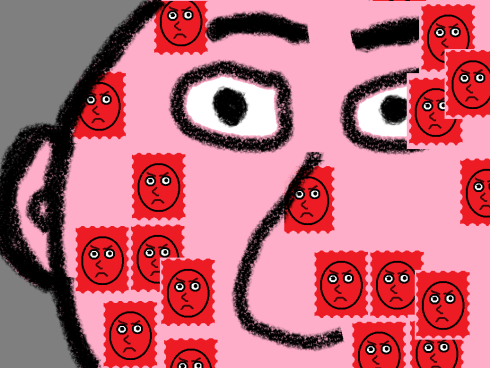
Welcome to stamp collecting.
It’s a metaphor drawn from decades ago, when supermarkets gave out trading stamps. You bought a bag of groceries and they gave you a sheet of little stamps that you took home and pasted into a stamp book. Fill enough books and then trade them in for a toaster or something.
The emotional version of this is a kind of evidence-gathering. People attached to a particular feeling or belief do it as a way of validating their prejudice. Jack and Jill, for example, both carry chronic anger at the other, plus the belief my partner causes my anger. And they spend their days collecting evidence that both the feeling and the explanation are justified.
Three things to remember about stamp collecting.
~ It’s the result of selective attention, and so results in a distorted picture. Jack’s stamp collecting, for example, ignores the things Jill does right and how hard she tries to please him, while Jill’s stamp collecting ignores how stressed Jack is by work and how much he loves his children. But the unconscious payoff for stamp collecting is self-validation, not accuracy or fairness.
~ It’s usually symptomatic of a dandelion fight. Dandelion fights are fights about the wrong thing, fights which ignore underlying issues. Couples scared of addressing questions like “Do we still love each other? Was this marriage a mistake? Have we grown too far apart to repair it?” often fight about finances or parenting or laundry. Stamp collecting perpetuates these battles.
~ The feelings behind it are often outdated. Every partner brings unfinished business into the marriage — unexpressed feelings, unresolved conflicts, unmet needs. (Jack, for example, had an alcoholic mother who left him needy for attention and nurturing, while Jill’s emotionally absent parents left her scared of abandonment and doubtful anyone can love her.) This unfinished business then gets triggered and reenacted again and again. Dandelion fights and stamp collecting keep this business unfinished.
By the way, chronic anger is not the only payoff for stamp collecting, which may be used to validate any feeling, conclusion or prejudice. Many people unconsciously collect stamps to perpetuate feelings of sadness, hopelessness, inadequacy, rejection, distrust or victimization.
But in the end stamp collecting is like collecting pretty stones on the beach.
Each individual stone looks attractive, worth grabbing and stuffing in your pocket.
But do it long enough and you end up overloaded, exhausted, and forever limping.
2 Comments | posted in control, metaphor for, MT FOR COUPLES
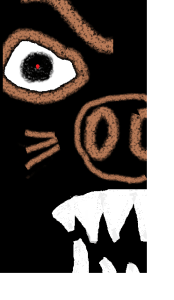 I’d like to introduce you to my dog.
Please look down. You’ll find him attached to my ankle.
That’s where he lives, more or less.
Sometimes he draws blood. But mostly he just hangs on, drooling and chewing occasionally, slowing my progress through life from a stroll to a worried limp.
Of course this is a metaphorical dog I’m describing. It represents a part of the human personality we each carry inside us, an internal voice named variously by different psychologies.
Freudians described it as the punitive superego.
Others named it the Inner Critic.
Gestalt therapists call it the Top Dog.
I first read about this guy many years ago, in Fritz Perls’ Gestalt Therapy Verbatim.
The topdog usually is righteous and authoritarian: he knows best. He is sometimes right, but always righteous. The topdog is a bully, and works with “You should” and “You should not.” The topdog manipulates with demands ands threats of catastrophe, such as, “If you don’t, then — you won’t be loved, you won’t get to heaven, you will die,” and so on.
I remember reading that and wondering how Fritz had managed to overhear my darkest thoughts.
As a recovering control addict I’ve spent many hours (years, actually) listening to this voice.
I’ve come to know Dog pretty well.
Here’s what I’ve learned:
Dog means well. He really thinks he’s protecting me by pointing out my flaws, reminding me of my failures, and anticipating all the awful judgments others might render. Expect the worst, that’s his motto. But his warnings don’t make me feel safer. What they do is keep me scared shitless.
Dog’s scared to death. That’s why he scares me. Dog himself operates out of pure fear. (Can you imagine scarier words to live by than expect the worst?) So every word out of him comes from that defensive position. Which explains why the more I listen to him, the scareder I get.
Dog is unpleaseable. No matter how hard I try, he’s never satisfied. In fact trying harder seems to only make him stronger. It took me years to realize that he thrives on attention. So trying to please Dog is like trying to put out a fire with gasoline.
Dog lies. He sounds reasonable, since there’s usually some truth in what he says. But listening to Dog is like looking at myself in a fun house mirror. By focusing on weakness and failures only he presents a terribly distorted view of me. And if I mistake it for an accurate one, I’m basically sunk.
Dog refuses to die. That’s why I can’t satisfy him. He exists to warn and to worry. It’s his reason for being. Should he ever concede that I’m okay as I am, or that everything will probably work out fine, he’d be killing himself off.
So. What to do with a dog like this?
Well, it helps me to remember what I’ve learned about him. That Dog isn’t me, just the scared worried part. That he’s unappeasable, and that he lies, and that he’ll say or do anything to survive.
All this gives me some distance from his voice. It means when he starts growling I can say “Oh, you again. Shut up,” instead of taking him too seriously.
And you? Why should you care about any of this?
Well, check out your own ankle.
1 Comment | posted in control, metaphor for
Maybe it’s coincidence. But Thursday I had my first granddaughter,

and then yesterday I felt the urge to go update my profile on Psychology Today — specifically, the paragraph describing my Tuesday night women’s group, which now reads:
Most women are trained to be codependent — i.e., to take better care of others than of themselves — as a way of winning approval and love. This group is for mothers, daughters, wives and single women tired of losing themselves in relationships and ready to make their own needs and happiness a priority. We focus on giving up compulsive controlling of other people and replacing it with emotional support, healthy self-acceptance, and realistic self-care.
One benefit/curse of becoming a grandparent is that you take the long view of things. You look at this hatchling, and then you look down the metaphorical road and anticipate what she’ll experience. Projection being what it is (the product more of fear than of hope), I imagine Callie struggling with the same stuff as the women I know, the mothers, daughters, wives and single women trying to grow past their conditioning and give birth to themselves.
After two decades of working with women I’ve decided I hate what we do to them. I hate what we do to men, too. In Monkeytraps (the book) I wrote,
Most men are raised to function as machines. Most women are raised to function as hostages.
Men are taught to sacrifice their emotional selves. Women are taught to sacrifice their independence and autonomy.
Men are expected too be tough, brave, and self-reliant. Women are expected to be endlessly accepting, sensitive and giving.
Men are taught to stuff their feelings and work hard. Women are taught to stuff their feelings and give until it hurts.
It’s a crock of shit, this training.
But it’s so universal and so unconscious that we all get infected by it and grow up emotionally lopsided. Then we spend our lives blaming ourselves for being inadequately machinelike or inadequately giving.
The luckiest people I know have someone in their life telling them (ideally, while they’re young) not to believe the lies. That men and women are meant to be just that, human men and women, not machines or bottomless wells of self-sacrifice.
That it’s our right to not grow up lopsided.
And that, if we have grown up that way, it’s our right to work on undoing our lopsidedness.
If not for our sake, then for the sake of hatchlings yet to come.
3 Comments | posted in control, metaphor for
 In session, with a couple. He does not want to be here. But she’ll end the marriage unless he comes. I ask questions, make little jokes, try to engage him. But it’s slow going until he finally says out loud how he sees things.
“It’s like we live back to back,” he mutters.
This triggers an earworm. You know, when you get a song stuck in your head and can’t stop hearing it? Except my worm isn’t a song. It’s a bit of nonsense rhyme from my childhood.
Back to back
They faced each other,
Drew their swords
And shot each other.
The worm plays over and over while I listen to them talk.
It plays until I figure out what the hell it means.
Then I do, and the meaning comes all at once. And I interrupt the couple to tell them.
I say,
What you said about living back to back? I really like that.
It’s a great metaphor for marriage.
Because that’s how we all start out:
Living back to back.
Not looking at the person we married.
Where are we looking? Elsewhere.
Maybe at the past, at old relationships or the marriage of our parents. Maybe at the future, what we expect or want or need things to be. Maybe at our own pathology, our anxiety or anger or grief or unhappiness. The stuff we hope the marriage would heal, the way medicine heals illness.
But not at our partner. Not the real person we married, as he or she is right here, right now.
We think we are. But the person we marry is not the the person we dated. And marriage is not the dating relationship, saturated with fun and sex and all sorts of idealizations and projections.
All that’s temporary. And eventually we realize that.
And we realize our partner isn’t who we thought he or she is.
And maybe we realize that we aren’t who we thought we were, either.
That’s where the real marriage begins.
Turning to face the real person we married, and the real person we are, that takes time.
That takes courage.
That takes serious love.
But that, in the end, is the work of marriage.
It’s the work of moving — slowly, patiently, with understanding and acceptance — from living back to back to living face to face.
11 Comments | posted in control, metaphor for
 In group. Amy is describing her recent visit to Disney with her four-year-old daughter and her narcissistic husband.
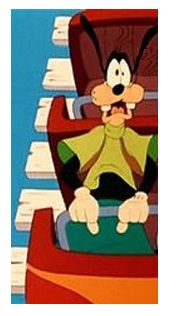
“So he wants to ride the Goofy roller coaster with her,” she says, “but she’s scared of it. Come on, it’ll be fun, he says. Mommy, I don’t want to, she says. Maybe you shouldn’t force her, I say. Damn it, she’s my daughter too, he says. Yes, but she’s scared, I say. It goes on like this for thirty minutes: he’s yelling, she’s crying, I’m trying to keep them both calm.”
“So what happened?” someone asks.
“I finally suggested he ride the Goofy roller coaster himself. So that’s what he did.”
The group laughs, sadly.
“But it was a turning point for me,” Amy says. “I gave up on the marriage that day. Now I just focus on what my kid needs and keep him at a distance.”
“I know,” says Barry, whose wife left him a year ago and whose kids chose to stay with him. “I have that with my ex. She keeps trying to get our kids to see things her way. She doesn’t care what they think or feel at all.”
“Narcissism,” someone mutters.
“Right. And the harder she tries, the harder they resist. It’s gotten so they’re refusing to spend Christmas with her. I felt bad about it – they’re kids, they need a mother – so for a long time I tried to help. I’d tell her what they told me about how they were feeling, and suggested she might try listening to them more. You just want to turn them against me, she’d say. So I’ve given up now. She’s on her own.”
“You got off the Goofy roller coaster,” I say.
He smiles. “I guess so.”
“My brother almost died last weekend,” Cathy says suddenly. “He drank too much and was ambulanced to the ER. My parents were devastated, but I felt guilty that I didn’t feel worse. He’s been drinking and drugging my whole life, and for most of that time I worried and worried, and finally I had to either detach or go crazy. I had no choice. But I feel guilty.”
“But you got off the roller coaster,” I say.
“Good for you,” Barry says.
The others nod.
“It’s a good metaphor, the Goofy roller coaster,” I say, “for engaging with a narcissist.”
“How so?” Amy asks.
“We engage with narcissists thinking we can somehow persuade them to be less narcissistic. We argue, beg, plead and coerce, but nothing ever changes. The ride is always the same. So in the end all we can do is just what you guys did: give up on the bad marriage, back off from the controlling mom, detach from the self-destructive sibling.”
Moral, if you have a narcissist in your life:
Stay off the Goofy roller coaster if you can.
It will only make you scared, angry or nauseous.
It cannot be steered.
10 Comments | posted in control, metaphor for
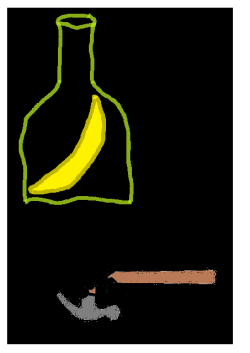 Once upon a time I wrote a post explaining where I got this blog’s title. I described how in the East they put fruit in a weighted jar with a narrow neck and leave the jar where a monkey will find it. The monkey smells the fruit, reaches in to grab it, and traps himself by refusing to let go. I explained that I use this as a metaphor for psychological monkeytraps: situations that trigger us into compulsive controlling, into holding on when we should be letting go.
One reader replied,
Why didn’t the monkeys just break the jar? I get that it was weighted down, but monkeys use tools. Weren’t there rocks laying around?
This led to a conversation with Bert, which is reported below verbatim.
Bert:
Shit. Why didn’t I think of that?
Steve:
Just the comment I’d expect from a control addict.
Bert:
Why? What did I say?
Steve:
You misread the problem.
Bert:
How?
Steve:
You think the jar is what traps the monkey.
Bert:
Sure.
Steve:
But he could escape the jar just by opening his paw.
Bert:
Oh. Yeah.
Steve:
Except he wants the banana more than anything.
Bert:
Wanting the banana is what traps him.
Steve:
Correct. Just as control addicts get trapped by wanting control.
Bert:
How did I miss that?
Steve:
You’re an addict. Addicts respond to a loss of control by thinking, “But I want control. I need control. There must be some way to get it.” That craving distorts their thinking.
Bert:
So instead of letting go we try breaking the jar.
Steve:
Yes. Breaking the jar is a metaphor for seeing life as something we can control. A dangerous illusion.
Bert:
Tell me this part again. It’s an illusion because…
Steve:
There are some bananas we’re not meant to have.
Bert:
Such as?
Steve:
Oh, all sorts of things.
Immortality, for example. We want to live forever, and we can’t.
And control of emotions. We want to feel only happy, safe and contented, and life forces us to feel sad, scared and needy.
And then there’s relationships. Which never go as planned.
Bert:
I noticed. Why is that?
Steve:
Because relationships involve people, and people tend to be hard to control.
Bert:
So there’s no breaking the jar.
Steve:
There’s no breaking the jar. Life’s just what it is. Messy, painful, unpredictable, inconvenient. We have to find some way of making peace with that.
Bert:
And there’s a way to?
Steve:
There are three, actually.
Bert:
What are they?
Steve:
I’ll post about them here tomorrow.
Bert:
No, now.
Steve:
It would take too long.
Bert:
But I want it now. I need it now. There must be some way to get it now.
Steve:
Very funny.
.
7 Comments | posted in control, metaphor for