
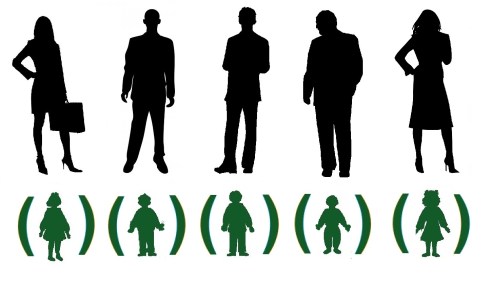
When childhood dies, its corpses are called adults.
~ Brian Aldiss
*
For thirty years I’ve been talking to clients about what I call the inner kid.
Occasionally one asks what I mean by the term.
“It’s that part of you where you store unexpressed feelings, unmet needs, unresolved conflicts and unanswered questions,” I usually say.
They usually nod.
Not one has ever said No, I don’t have one of those.
That might seem odd, given the lack of attention and respect we generally pay to this most secret part of us.
Then again, it doesn’t.
We all know we’re damaged, wounded and crippled in some way.
The inner kid gives us a way of talking about it.
“In every adult there lurks a child,” wrote Carl Jung in 1934,
an eternal child, something that is always becoming, is never completed, and calls for unceasing care, attention, and education. That is the part of the human personality which wants to develop and become whole.
Other writers echoed Jung’s view of the child as the source of all human potential and authenticity:
[The Child is] that part of each of us which is ultimately alive, energetic, creative and fulfilled; it is our Real Self — who we truly are. (Charles Whitfield)
It is who we are when we were born, our core self, our natural personality, with all its talent, instinct, intuition and emotion. (Margaret Paul)
All the people we call ‘geniuses’ are men and women who somehow escaped having to put that curious, wondering child in themselves to sleep (Barbara Sher)
The most potent muse of all is our own inner child. (Stephen Nachmanovich)
Most of the time, though, when we talk about the Kid inside, we define it in terms of how it gets damaged.
In order to survive in our world we have all denied the Child within to one degree or another. And this is also abuse. (Lucia Capacchione)
When the Child Within is not nurtured or allowed freedom of expression, a false or codependent self emerges. (Charles Whitfield)
There is no cell of our body that does not have that wounded child in it. (Thich Nhat Hanh)
That is why we dread children, even if we love them. They show us the state of our decay. (Brian Aldiss)
This view of the Inner Child as a casualty has become nothing less than a cliché, embraced — or at least wrestled with — by hordes of people trying to recover from all sorts of emotional maladies, everything from addiction, anxiety and trauma to depression, spiritual crises and bad relationships.
Why do we discover this essential part of us only through suffering?
Once we’ve discovered it, what should we do with it?
Are the damages done to my inner Kid even repairable?
If so, how can I repair them?
Those are questions I’ll answer here in coming weeks.
I’ll do it by exploring five premises to which twenty-five years of practicing therapy have led me:
1. Everyone carries a kid inside.
2. Everyone’s inner kid gets wounded.
3. Wounded inner kids become what we call adult children.
4. Adult children are addicted to control.
5. By fighting this addiction we can heal the inner kid and start living like grownups.
As I said, the idea of an Inner Kid has become nothing less than a cliche of recovery.
That’s a good thing, I think.
Because it is the single most useful metaphor I know for understanding human beings.
______________________________________
Cappacchione, Lucia. Recovery of your inner child. New York: Simon & Schuster, 1991.
Jung, Carl Gustav. The portable Jung. Ed Joseph Campbell. New York: Penguin, 1980.
Nachmanovitch, Stephen. Free play: Improvisation in life and art. New York: Jeremy P. Tarcher/Putnam, 1990.
Nhat Hanh, Thich. Reconciliation: Healing the inner child. Berekely, CA: Parallax Press, 2010.
Paul, Margaret. Inner bonding: Becoming a loving adult to your inner child. San Francisco: Harper SanFrancisco, 1992.
Sher, Barbara. Wishcraft: How to get what you really want. New York: Viking Press, 1979.
Whitfield, Charles. Healing the child within: Discovery and recovery for adult childre dysfunctional families. Pompano Beach, FL: Health Communications, 1987.





September 2nd, 2018 at 3:45 pm
This is a good metaphor/developmental map/working model. Intrigued to see it unfold.
September 3rd, 2018 at 9:39 am
Thanks, Alex. Me too 😉
September 3rd, 2018 at 10:27 am
Resonates really well with me too.
Feeling vulnerable, helpless and overwhelmed is my main ‘kid’ feeling. It’s been useful to know this because I can then help myself to recover/grow up when I feel those things in particular…