Category Archives: control
 So we’re lying in bed, Hank and I, both half asleep.
And he hears a car in the street or a bird in a tree or a plane overhead.
And he yelps.
Yelps loud.
Scares the crap out of me.
But what happens then is interesting.
I flinch.
I mean, I just flinch.
And roll over and resume dozing.
Interesting because not long ago I might well have reached out and slapped him for yelping.
(Or tried to. He’s fast.)
What’s changed?
It’s not that I’m used to him yelping.
I’ll never get used to his yelping.
It’s that this time I did not take his yelp personally.
I somehow redefined his yelp to
(a) something Hank does
from
(b) something Hank does to me.
I know that sounds silly.
Dogs yelp. They just do.
It’s nothing personal.
But how many times are we frustrated or upset or enraged by things that are nothing personal?
The driver who cuts us off in traffic.
The long line in the bank.
Rising prices.
Rude waiters.
Lying politicians.
Neurotic relatives.
Dysfunctional medical offices.
Taxes.
Covid.
Bad weather.
The thousand natural shocks that flesh is heir to.
This process of redefining such shocks is called detachment.
It’s a mental skill I learned from twenty years of thinking and talking and teaching about our addiction to control.
And an enormously valuable one.
The silver bullet, in fact, of healing control addiction.
Because it allows us to accept discomfort without taking it personally.
To see clearly, instead of squinting through a lens of defensive victimization.
To move beyond suffering to mere pain.
To, in the words of Alcoholics Anonymous, live life on life’s terms.
And to understand what Joseph Campbell meant when he said
Life is this wonderful,
wonderful opera.
It just hurts.
Detachment is what allows us to live in this beautiful, barking world without losing our last marble.

1 Comment | posted in control
Here’s the second law of control:
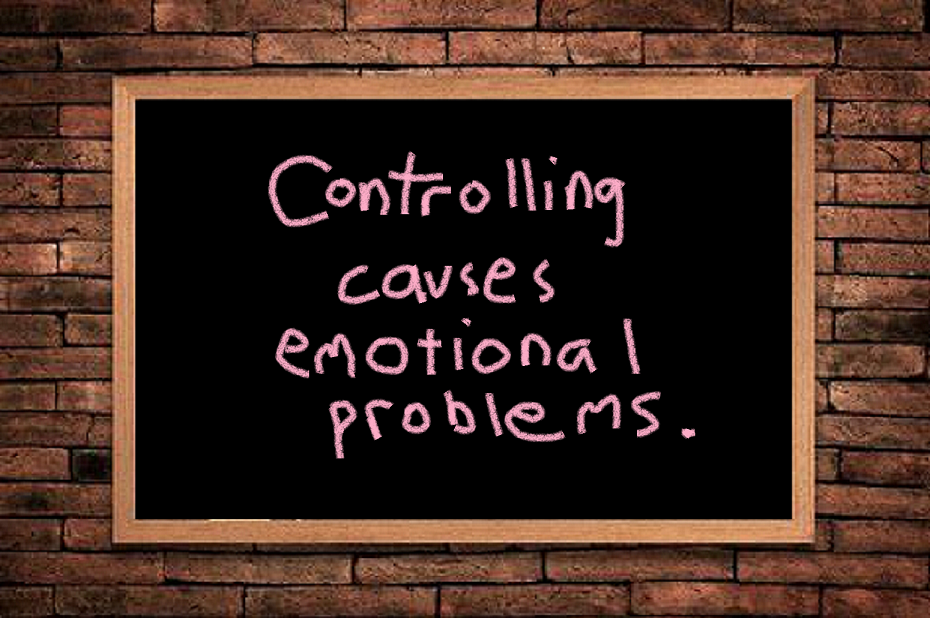
This is the Law of Dysfunction.
Stated more fully, it means that compulsive controlling causes most (maybe all) of our emotional problems.
It builds on the first Law, that we are all addicted to control.
Because only when you see how controlling you are can you start noticing how dangerous controlling can be.
You may notice that overcontrolling your feelings — by hiding them from other people, say — leaves you more anxious, not less.
Or how hiding feelings from yourself — like when you bury them so deeply you forget where you put them — can leave you exhausted and clinically depressed.
Or how attempts to control others by pleasing or impressing them leave you feeling, not more loved and accepted, but more frustrated and alone.
But compulsive controlling is baked into our nature.
It’s every human being’s unconscious default position.
So it can take a long time to see all this.
And most people never do.
Which explains why so many of us go around in emotional pain much of the time.
And how do we respond to this pain?
We try, of course, to control it.
So controlling leads to pain, and pain leads to controlling, which leads to more pain…
Just like in any addiction.
x
Leave a comment | posted in control
There are four laws of control, laws we obey whether we realize it or not.
Here’s the first:
.
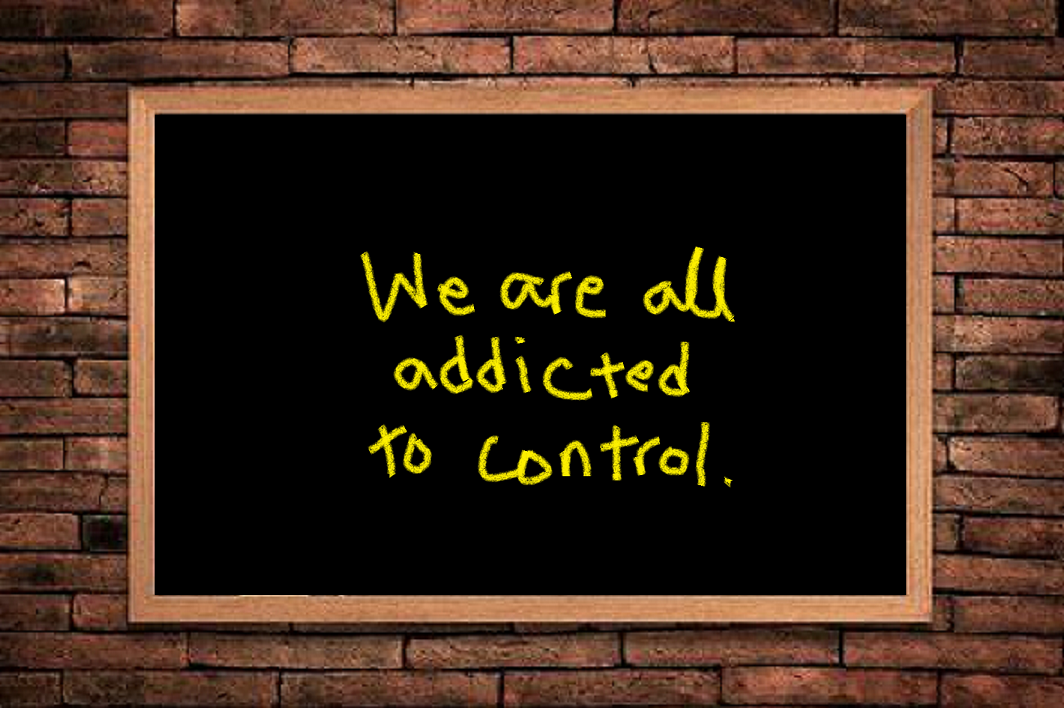
It’s the Law of Addiction.
What does it mean?
Well,
Control means the ability to edit reality — to make people, places and things the way we want them to be,
and
Addiction means the compulsion to repeat a certain behavior in order to achieve a particular gratifying — but ultimately unhealthy — experience.
So a control addict is anyone who
(a) feels compelled, over and over and over again, to edit reality according to their preferences,
and
(b) experiences intolerable discomfort or anxiety when they cannot.
Right.
We are all control addicts.
*
Can’t relate?
Think of it this way:
Moment to moment, we each carry around in our heads a picture of the reality we want.
And we constantly compare that picture to the reality we have.
Anything we do to bring those two realities closer together is what I call controlling.
It’s controlling whether we do it in speech, or behavior, or in the privacy of our imagination.
Our controlling may be obvious or hidden, conscious or unconscious, choiceful or compulsive, creative or destructive, healthy or unhealthy.
Notice how vast a range of human behaviors this description covers:
I’m controlling when I mow my lawn, balance my checkbook, steer my car, swat a mosquito or help my kid do homework.
I’m controlling when I brush my teeth, salt my eggs, change channels, vote in elections or post selfies on Facebook.
I’m controlling when I pursue a goal, a degree, a job, a raise, a sale item, a cure for cancer or a sexual partner.
I’m controlling when I rage at bad weather, slow traffic, dumb commercials, rude waiters or lying politicians.
I’m controlling when I lie, hide my feelings, pretend to agree with you, worry that I’m fat or guess what you think of me.
I’m controlling when I try to get you to agree with me, hire me, understand me, respect me, kiss me, forgive me or do me a favor.
Also whenever I judge, criticize, manipulate, persuade, coerce or abuse you.
Not to mention whenever I anticipate, plan, ruminate, fantasize, worry, project or obsess.
That’s right.
All controlling behaviors.
All stem from the urge to swap my current reality for one I think I’d prefer.
All those and infinitely more.
Our craving for control is inevitable and unavoidable, the mother of all motives, the psychological sea in which we swim.
Perhaps the best way to describe its enormity in human psychology is to describe its opposite:
The opposite of controlling is the ability to
say nothing, and do nothing, and trust that
things will work out just fine anyway.
How often can anyone do that?
How often can you?
Right.
Welcome, fellow control addict.
.
4 Comments | posted in control

Welcome to monkeytraps.com.
Thanks. What’s a monkey trap?
“A cage containing a banana with a hole large enough for a monkey’s hand to fit in, but not large enough for a monkey’s fist (clutching a banana) to come out. Used to catch monkeys that lack the intellect to let go of the banana and run away” (Wikipedia). Other versions use heavy bottles or anchored coconuts to hold the banana.
This is what you’re blogging about? Catching monkeys?
No, it’s a metaphor.
For?
Psychological traps. The sort we all get stuck in.
More specific, please.
A psychological monkeytrap is any situation that pulls you into holding on when you really need to let go.
I know I’m in one whenever I find myself trying to control something that can’t or shouldn’t be controlled.
Such as?
Well, feelings can be monkeytraps.
So can relationships.
So can stressful situations of all sorts.
Anything that scares us or confuses us or makes us uncomfortable.
Seen from this perspective, life itself is pretty much one monkeytrap after another.
That’s cheerful.
That’s realistic.
And you’re writing about this because…
Because not understanding monkeytraps makes people sick.
I’m a therapist. Thirty years of doing psychotherapy have taught me to see just about every emotional problem as rooted in some sort of monkeytrap.
Anxiety, depression, addictions, relationship problems, family problems, problems with parenting —
all of them usually turn out to be caused by someone holding onto something when they really should let go.
Too much control makes us sick?
No.
Too much controlling.
Control itself, that’s usually an illusion.
Excuse me?
I know.
Radical thought.
But consider:
What in your life can you finally, absolutely control?
Um.
Exactly.
We spend our lives grabbing for it anyway.
Control is like a train you chase but never catch.
And most of the time we don’t even know we’re chasing it.
“Ideas we have, but don’t know we have, have us,” James Hillman said.
Control is just such an idea.
Like an addiction.
Exactly like that.
We’re all addicted to control.
I know I am.
How can you tell?
Because the opposite of controlling is being able to accept the reality you have instead of trying to replace it with the one you want.
(The reality you want, that’s the banana.)
It means being able to relax and do nothing and trust that everything will work out okay.
And I know I can’t do that very often.
Can you?
Almost never. Who can?
Nobody I know.
I’ve known people who can do it occasionally.
I’ve never known anyone who could do it all the time.
I doubt any human being can.
We’re the monkeys who simply must control things, or die trying.
(And like most therapists, I’ve known people who did just that.)
It’s one of the reasons I dislike the term control freak.
There’s nothing freakish about trying to control reality.
What’s freakish is being able to stop.
Why is that?
Why is one of the questions I hope to explore in this blog. I have some ideas about it.
I have ideas, too, about how to better understand and deal with this universal addiction. I created monkeytraps.com as a way to road test those ideas.
Road test how?
Unpack them in public, ask readers to think and talk about them.
Start a conversation about all this.
Okay. Anything else I should know?
Yes.
I have a book out about this, and more in the works.
The first is titled Monkeytraps: Why Everybody Tries to Control Everything and How We Can Stop.
You can buy it here.
The next will be Monkeytraps for Adult Children: There I Go Again.
I‘ll let you know when that one drops.
I’ll also be starting a YouTube vlog soon where I’ll be talking about how we can recover from our addiction to control.
And publishing new blog posts, and reposting old favorites.
Leave me your email and I’ll let you know when.
Come back soon.
And bring your banana.
3 Comments | posted in control
 x
x
“Something odd happened yesterday,” she frowns. “I lay down to nap like always, but found I couldn’t because I was too sad.”
“Sad?”
“I don’t know what else to call it. A kind of dull ache around my heart.”
“Sounds like sad,” I nod.
“Right?” she says. “But I don’t know where it came from. Everything’s fine.”
“Everything’s fine,” I repeat.
“Yes. We’re all healthy. Nobody in the family has covid. The kids have adjusted to remote learning. We’re doing fine financially, despite the pandemic. And I’m really happy about the last election. What’s to be sad about?”
“And yet,” I say.
“Right, and yet. What the fuck?”
“I have a theory,” I say.
“Please.”
“You remind me,” I say, “of a guy I worked with once. Came for help with anxiety. He constantly worried about death. Couldn’t stop thinking about it. Couldn’t stop worrying that either he or someone he loved was going to catch something fatal or get into a car accident.”
“That’s awful,” she says.
“It was.”
“What did you tell him?”
“That his anxiety wasn’t really about dying. That he was constipated.”
“Aha,” she smiles.
“You remember?” I ask.
“Sure,” she smiles, and recites. “Feelings are like shit, and when we don’t express them we feel anxious and depressed, in other words, shitty.”
“Exactly. Well, this guy had plenty of feelings he wasn’t expressing, about his marriage and his job and his kids and his parents. I told him that was what was making him anxious. But since he wasn’t aware of it his mind went to work trying to explain this shitty feeling, and it latched onto the fear of death.”
“He misinterpreted the anxiety,” she says.
“Right. I also told him that when he began expressing those feelings in therapy he’d become less anxious and his death anxiety would go away.”
“And?”
“And that’s what happened.”
“Wow. Cool. But what has that to do with my sadness?”
“I think you’re probably constipated too.”
“How so?”
“Think about it. What causes sadness? It’s a reaction to loss.”
“Right,” she says uncertainly.
“And even though you tell me everything’s fine, you experience losses every day. I call them micro losses, and they’re part of the new normal. So like most of us you’ve adapted to them, told yourself they’re no big deal. But they’re losses nonetheless.”
“What kind of losses do you mean?” she asks.
“Little things we used to have or used to be able to do. Like going in to the office, or out to a restaurant or a movie, or taking your kids to the park. Like having people for dinner, or going out with friends for a drink, or to a ball game. When was the last time you went grocery shopping without having to mask up? When was the last time your parents visited their grandchildren? How long since it felt safe to hug anyone you wanted?”
“Right,” she says thoughtfully.
“And then there’s the news. Covid and the election and dysfunctional government. The economy and corruption and racism. Trump and Putin and Kim Jung Un. Black Lives Matter and the Proud Boys and Jeffrey Epstein. I mean, really.”
“The new normal,” she muses.
“Right. And even when we avoid the news it’s impossible to insulate ourselves from all that crap. It chips away at our emotional life.”
“And you think that’s why I’m sad?”
“That, plus the fact that we live in a culture which tells us happiness is okay but sadness is not. It’s not okay to be sad or scared or angry or frustrated or discouraged or hopeless. So we ignore those feelings instead of processing them fully. And they build up in your system. They collect like lint in the pocket of your heart. And then your wonder why you feel….”
“Shitty,” she says. “So what do I do?”
“How are you feeling right now?”
“Like crying.”
“Do that.”
And she did.
2 Comments | posted in control
 .
.
We’ve been talking for thirty minutes, and it’s going fine for a first session, but I can tell something’s bothering him. So I ask what it is.
“How do I know if you’re the right therapist?” he asks.
“Good question,” I say. “Why do you ask?”
“Because you’re the third one I’ve talked to this year,” he says.
“And the others weren’t right?”
“Nope,” he says. “But it took me months to realize it, and I don’t want to go through that again.”
“I don’t blame you,” I say.
“To answer your question, you can’t really know ahead of time if a therapist is right for you. But you can get to where you trust that they are. And there are tests to help you get there.”
“Tests?”
“Yes. You’re probably performing them already, but it can help to put a label on what you’re doing unconsciously.”
“What tests?”
“There are three. The first is for safety.
“Drop down out of your head and ask your stomach: How does it feel to be talking to this guy? Does it feel like I’m being judged? Can I imagine telling him the truth about stuff I usually keep to myself? Do I feel safe disagreeing with him? Questions like that. Trust your stomach’s answers. If it tightens up, that might be a red flag.”
“Okay.”
“The second test is for relief. When therapy works, you should feel better at the end of the session than at the start — calmer, or clearer, or more hopeful, or at least less alone. Not all sessions end this way, but most of them should.”
“That didn’t happen with the other two therapists,” he muses. “But I thought it was my fault.”
“Like I said, trust your stomach. It’s often smarter than your head.”
He nods. “That’s what I finally did when I fired them. Okay, what’s the third test?”
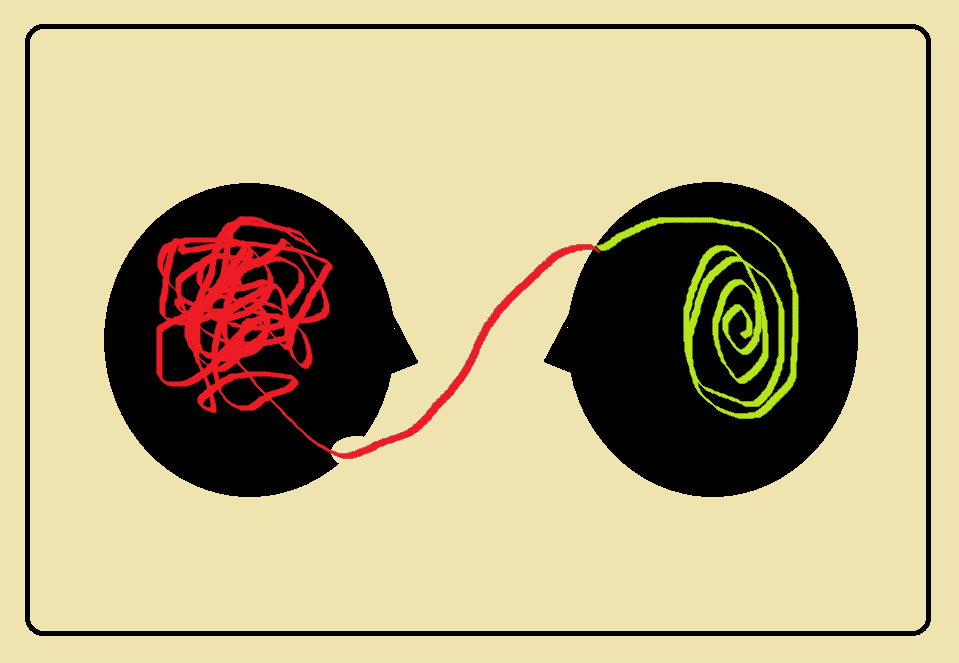
“It’s for what I call resonance.
“The right therapy teaches us things that on some level we already know, even if we can’t articulate them. So the right therapist will say things that resonate — echo inside you, like a shared truth.
“It’s what helps you feel the therapist gets you. It’s also what makes it possible to trust them. Essential, I think, to getting any real work done.”
I pause.
“Did you have that experience with either of the other two therapists you tried?”
“No,” he says. “But I may have just now.”
2 Comments | posted in control
*
This continues a new series of posts excerpted from Monkeytraps in Everyday Life: A Guide for Control Addicts (in press). It’s about psychological monkeytraps: what they are, how they work, and how recovering control addicts can learn to notice when they’ve trapped themselves by trying to control what cannot or should not be controlled. Read the introduction to the series here.
*
 .
.
Trap 11: Child, angry
*
Step 1: I experience discomfort.
I am upset by my child’s angry behavior.
*
Step 2: I misread the discomfort.
“I must make this behavior go away.”
*
Step 3: I try to control the discomfort.
I punish my child for expressing anger.
*
Step 4: My attempt fails.
Punishment makes my child angrier.
*
Step 5: I misread the failure.
“My punishments are not severe enough.”
*
Step 6: I experience discomfort.
My child’s anger and my upset both worsen.
*
Footnote:
Kids and anger
“The truth about rage is that it only dissolves when it is really heard and understood, without reservation.”
~ Carl Rogers
Acknowledging the anger, as well as the more threatening feelings under the anger
If you can keep yourself from getting triggered and acknowledge why your child is upset, his anger will begin to calm. That will help him feel safe enough to feel the more vulnerable emotions driving the anger. Once the child can let himself experience his grief over the broken treasure, his hurt that his mother was unfair, his shame when he didn’t know the answer in class, or his fear when his classmate threatened him, those feelings begin to heal. As those vulnerable feelings begin to fade away, he no longer needs his anger to defend against them — so the anger vanishes.
By contrast, if we don’t help kids feel safe enough to feel those underlying emotions, they will just keep losing their tempers, because they don’t have any other way to cope with the upsets inside them. These kids often seem to have “a chip on their shoulder” because they lug around resentments; a feeling that life is against them. They’re always ready to get angry.

* * * *
Monkeytraps: Why Everybody Tries to Control Everything and How We Can Stop
is available here.
![Monkeytraps: Why Everybody Tries to Control Everything and How We Can Stop by [Steve Hauptman]](https://m.media-amazon.com/images/I/41K013-ukCL.jpg)
2 Comments | posted in control
*
This continues a new series of posts excerpted from Monkeytraps in Everyday Life: A Guide for Control Addicts (in press). It’s about psychological monkeytraps: what they are, how they work, and how recovering control addicts can learn to notice when they’ve trapped themselves by trying to control what cannot or should not be controlled. Read the introduction to the series here.
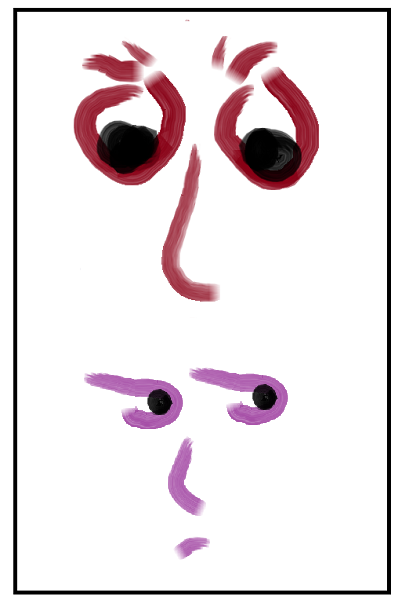
*
Trap 11: Child, dishonest
*
Step 1: I experience discomfort.
I am frustrated and angry that my child habitually lies to me.
*
Step 2: I misread the discomfort.
“I must discourage this behavior that I dislike.”
*
Step 3: I try to control the discomfort.
I punish my child for lying.
*
Step 4: My attempt fails.
Now afraid of me and my reactions, my child’s lying increases.
*
Step 5: I misread the failure.
“I must try harder to discourage this behavior.”
*
Step 6: I experience discomfort.
I am frustrated and angry that my child habitually lies to me.
*
Footnote:
Kids and lying
~ Parents should keep in mind that telling lies is a natural part of child development and that in most cases, children outgrow this behavior.
~ Parents should consider a child’s age, the circumstances and reasons for the lie, and how frequently he engages in this behavior.
~ Some common causes of lying in school-age children include:
-
Wishful imaginative play
-
Fear of punishment
-
A desire to brag to friends/classmates to boost status and impress them
-
To avoid something they don’t want to do (such as clean up toys)
-
A desire to not disappoint parents when expectations are too high
-
Unhappiness with something in their lives
-
An attempt to get attention
~ Do not make kids feel like they cannot come to you. If a child is worried that you will be angry, he may try to avoid telling you the truth at all costs. The important thing is to help your child feel secure, safe, and supported so that he knows he can talk to you without losing your affection and love. In fact, research shows that when you threaten kids with punishment for lying, they are less likely to tell the truth.
* * * *
Monkeytraps: Why Everybody Tries to Control Everything and How We Can Stop
is available here.
Leave a comment | posted in control
It’s Election Week in the good old Dysfunctional States of America, and since so many of us are suffering as a result I thought it might be a good time to repost this reminder of why it is normal for human beings to feel, well, nuts.
Despair not, friends. All things pass. This will too.
x
 x
x
(If you’re new to Monkeytraps, Steve is a therapist who specializes in control issues, and Bert is Steve’s control-addicted inner monkey. That’s the two of us above.
Bert speaking:)
I’m nuts.
Yes, you heard me right.
I’m nuts.
Not embarrassed to admit it, either.
Why?
Because I know a secret.
You’re nuts, too.
How do I know this?
Because you’re human. (Unless, of course, you’re one of the many dogs or cats who enjoy this blog.)
And, being human, you’re a victim of what has been called monkeymind.
What’s monkeymind?
It’s what you hear in your head when your attention isn’t distracted.
It’s the sound of a brain which over millennia has evolved into a sort of top-heavy computer, built for problem-solving, and devoted to finding new problems to solve.
It’s the whispering, worrying, fretting, scolding and mocking that keeps you unhappy and on guard against life.
It’s the sound of a normal human mind at work.
In other words, the most human part of you.
Still not sure what I mean?
Experiment. Take a moment now (when you finish reading this sentence) to sit without thinking for, oh, a minute or so. Just sixty seconds.
(Pause.)
Hear that?
Yup. Monkeymind.
The nuts part.
Steve wants to add something.
What makes it nuts is that it’s so detached from reality. Like a monkey swings from tree to tree to tree, monkeymind swings from past to future and back again, over and over, ceaselessly remembering, anticipating and fantasizing. It’s never still, never focused on the here-and-now — a Now which may actually be perfectly safe and okay. So when you’re in monkeymind you’re having all these feelings — often painful ones, anxiety and anger and such — that have nothing to do with what’s really happening in your life at the moment. It’s like being trapped in a nightmare, unable to wake up.
Speaking as a recovering inner monkey, I would add that there’s one other thing that makes monkeymind nuts.
It really really really believes in control.
It operates on the assumption that if we think and analyze and strategize long and well enough we can solve every problem and bring life under control. That if we could just figure things out, life could be perfect. Perfectly safe, perfectly comfortable, perfectly happy.
I remember a Little Rascals episode in which the kids got their mule to walk in a circle by extending a pole out over his nose with an apple dangling from the end. The donkey kept plodding after the apple endlessly, never getting closer, and apparently never noticing.
Yes. We all chase that apple.
Well, I for one am sick of it.
That’s why I’m a recovering monkey. I’m sick and tired of feeling victimized by my own mind.
Tired of fighting reality instead of accepting it.
Tired of trying to control everything.
Tired of this never-ending plod towards an apple I can never reach.
Tired — so, so tired — of being nuts.
Leave a comment | posted in control
x
“So how do you change ingrained behaviors?” she asks me.
“Good question,” I say. “Why do you ask?”
“I have some I’m sick of.”
I can guess what she’s talking about. But if she wants to generalize for now, fine.
“Generally,” I say, “you start by thinking of the behavior as an answer to a question. Decide what the question is, then find a better answer.”
“Question? What sort of question?”
“It’s usually about something you need. How can I make myself feel safe? How can I avoid conflict? How can I make people like me? Basic questions like that. They all tend to be versions of How can I feel what I want to feel?“
She looks confused.
“Okay,” I say. “Name a behavior you’d like to change.”
She frowns.
“I can’t say No. Whatever people ask me for, I feel compelled to give it to them.”
“And this is on your mind because….”
She sighs. “Last night a mom in my daughter’s class called to ask me to help her put together a holiday party. I wanted to say No, but I said Yes.”
“And why do you think you said Yes?”
“She’s a nice woman. I didn’t want to disappoint her. Didn’t want her to be mad at me.”
“Okay,” I say, “so the underlying question here sounds like How can I get comfortable with this person? How can I make this a pleasant interaction? Something like that?
“I suppose,” she says. “But it didn’t work. I hung up and felt mad at myself. And I do this all the time, and I hate it, but I can’t stop, and I don’t know why.”
“Ever hear of Abraham Maslow?” I ask.
“No.”
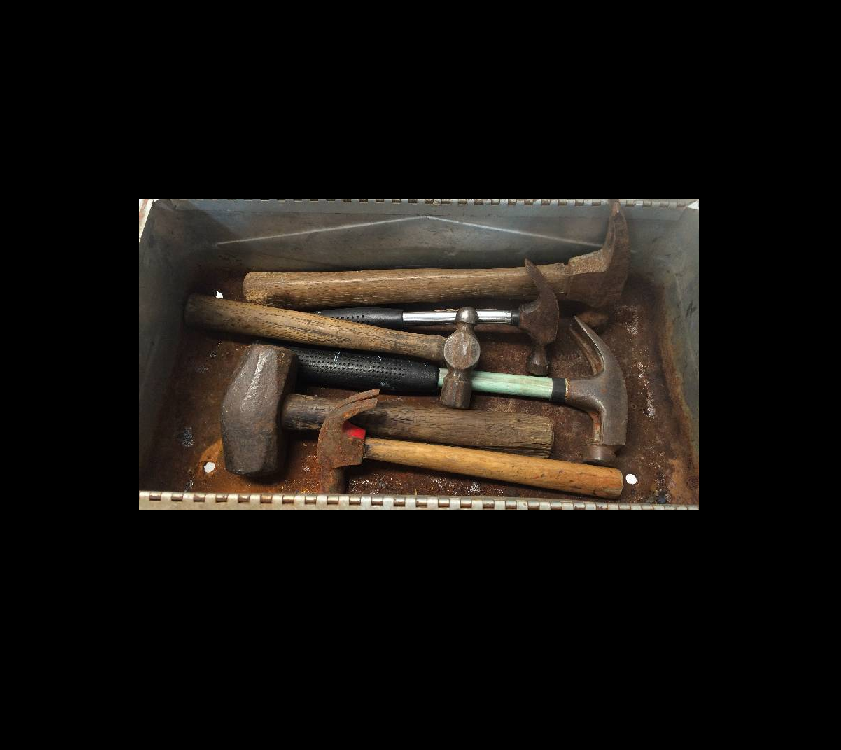
“American psychologist. He said that when the only tool you have is a hammer, every problem starts to look like a nail.
“Your hammer — the one you picked up in childhood and still rely on to solve interpersonal problems — is control. You try to control the people around you, mainly by giving them whatever you think they want. It’s called people-pleasing, and it’s why you can’t say No.”
“People-pleasing? I thought I was just being nice.”
“Yes, that’s how people-pleasers justify what they do. But being authentically nice — compassionate or kind or generous or helpful — is a choice. You do it because it feels good. But people-pleasing is a compulsion. You do it because you’re afraid to do anything else.”
“That’s true,” she says. “I was scared to say No to the party lady.”
“Right. So you answered the question How can I feel like I want to feel? with your old answer: Give this person what she wants. But it didn’t work, because the hammer that helped you survive as a kid in your alcoholic family doesn’t work so well for you as an adult.”
“I get it,” she says. “What can I do instead?”
“Practice detachment.”
“What’s that?”
“An alternative to controlling people. Be yourself, tell the truth, and let the party lady have her feelings.”
“Shit,” she scowls. “That sounds hard.”
“Actually it’s much easier than people-pleasing. But at the beginning it’s scary.”
“I’m not sure I can do it.”
“You don’t have to,” I shrug. “Keep using the old hammer.”
She shakes her head.
“I don’t want to. That thing is getting too heavy.”
Leave a comment | posted in control
*
This continues a new series of posts excerpted from Monkeytraps in Everyday Life: A Guide for Control Addicts (in press). It’s about psychological monkeytraps: what they are, how they work, and how recovering control addicts can learn to notice when they’ve trapped themselves by trying to control what cannot or should not be controlled. Read the introduction to the series here.
*
*
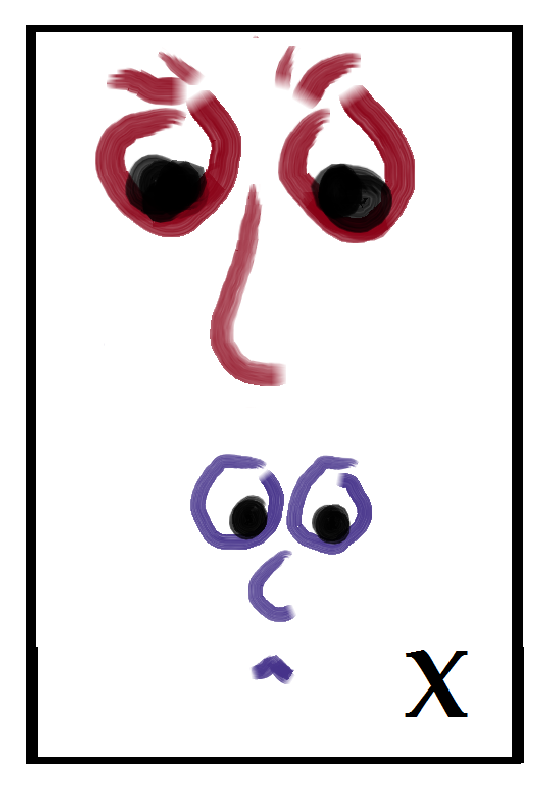
Trap 10: Child, anxious
*
Step 1: I experience discomfort.
I am frustrated and embarrassed that my child is scared of X.
*
Step 2: I misread the discomfort.
“I must push my child to get over this fear.”
*
Step 3: I try to control the discomfort.
I tell my child
Don’t be silly
or Don’t be a baby
or You’re not really scared of X
or That’s nothing to be scared of
or Look at your sister, she’s not scared of X
or You can’t go through life being scared of things,
etc.
*
Step 4: My attempt fails.
My child’s anxiety increases, and now includes me and my “help.”
*
Step 5: I misread the failure.
“I need to push harder.”
*
Step 6: I experience discomfort.
I am frustrated and embarrassed that my child is scared of X.
*
Footnote:
Children and invalidation
Invalidation can happen anywhere, and in any relationship. In this post, I am addressing invalidation in the family which we will define as any pattern of communication or interaction that indicates to another person that their point of view, opinions or emotions are irrational, flawed, unwarranted, worthless, self-centered or even crazy. Simply wrong.
What this means for little Johnny is that he lives in an environment that does not uniquely value him as a person. His environment is bent toward the thoughts and ideals of the invalidating parent. Johnny’s opinions are not allowed to be his own, they must reflect the thinking of his parent. Even worse, Johnny’s emotions are also vetted by his parent. If Johnny says he feels scared about something, he is told that he, 1) is not scared, or 2) should not feel scared. Perhaps an alternative is offered, but it is too late. What Johnny has already learned is not appropriate emotion regulation and expression, but that he is not allowed to have his own emotions, what he genuinely feels is wrong, and that someone else is in charge of his emotions….
Invalidation attacks identity. If a person is consistently exposed to an invalidating environment, their grip on the reality of what they think and feel becomes malleable. You could even consider it a subtle form of brainwashing, possibly even to the point where a mentally healthy person contemplates their own craziness.
* * * *
Monkeytraps: Why Everybody Tries to Control Everything and How We Can Stop
is available here.
2 Comments | posted in control
 *
*
“I function very well,” he tells me.
A bit defensively.
“How so?”
“I do my job. I do it well. I’m a good teacher. My students like me. And I meet my responsibilities. I pay my bills, take care of the house, the dogs. I’m there for my family and my friends and my colleagues. They can come to me for anything, and they all know it. “
“Okay,” I say. “Why are you here?”
He frowns.
“Something’s missing,” he says finally.
“Any thoughts on what it might be?”
“No.”
“How can you tell it’s missing?”
“Just a feeling,” he says.
“Where?”
“Excuse me?”
“In your body. Where do you feel the feeling?”
He thinks.
“Here,” touching his chest.
“Can you describe it?”
“Kind of empty,” he says. “Hollow.”
“Sad?” I ask.
“Maybe.”
“Heart-achey?”
He nods.
“Right. And when you say you’re there for people, does that include you?”
“I don’t follow.”
“It sounds like you’re very sensitive to the feelings and needs of the people around you,” I say. “Are you sensitive to your own feelings and needs as well?”
“Not so much,” he admits.
“Then I know what’s missing.”
“What?
“You,” I say. “You is what’s missing.”
I remind him of what he’s told me about his family of origin. “Kids who grow up in alcoholic or dysfunctional families like yours tend to lose touch with their own emotional life early on. They put their attention on other people instead, what others want or need or expect. It’s a shift into survival mode that allows them to navigate an uncertain and anxiety-producing environment. Do you remember, as a kid, being especially alert to who was unhappy or angry, or when an argument seemed to be brewing?”
“Oh yes.”
“And now?”
“I still do,” he says, looking surprised. “I walk into a classroom or a faculty meeting and immediately spot who’s in a bad mood.”
“And their bad mood makes you uneasy.”
He nods.
“And you keep feeling that way unless you can either change their mood or get away from them.”
“Yes.”
“Sure. You’re reacting like the kid you were, the kid who played defense by overfocusing on other people. Given your family’s dynamics, that was unavoidable. But you need something more now. That’s what the empty/sad feeling means. You need to start paying attention to yourself.”
He frowns. “Not sure how to do that.”
“I’ll teach you. We’ll start by redirecting your attention from outside to inside, like just now.”
He nods, but he doesn’t look happy.
“What?” I ask.
“It’s kind of scary,” he says.
I smile at him.
“Good,” I say. “You’re begun. Where do you feel the fear?”
“My stomach.”
“That’s fine,” I say. “Of course you scared. You’re scared like a new driver who gets behind the wheel for the first time. You don’t know what you’re doing yet. But then you learn, step by step. And before long you can start the car up and shift into drive and take it to the end of the block and not be so scared.”
“Okay,” he says. “And what happens if I don’t?”
“Don’t do this work, you mean?”
“Right.”
“You keep feeling the way you do now,” I say. “Like there’s a hole where your self is meant to be. Like a hostage to the moods and preferences of others. And like a passenger in your own car, instead of the driver.”
“Fuck that,” he says.
We both laugh.
“How your stomach?” I ask.
He smiles.
2 Comments | posted in control
*
This continues a new series of posts excerpted from Monkeytraps in Everyday Life: A Guide for Control Addicts (in press). It’s about psychological monkeytraps: what they are, how they work, and how recovering control addicts can learn to notice when they’ve trapped themselves by trying to control what cannot or should not be controlled. Read the introduction to the series here.
*
*
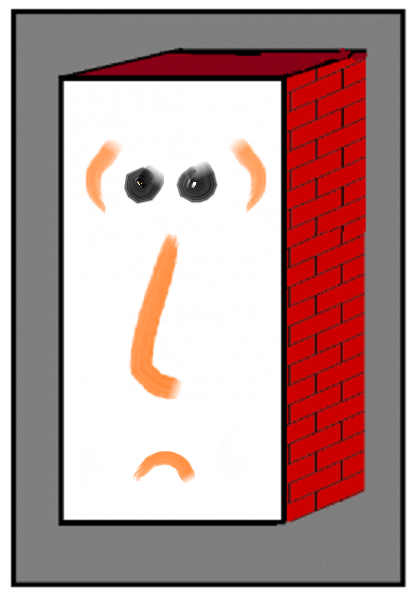
Trap 9: Character
*
Step 1: I experience discomfort.
I feel tired, trapped, and unable to be myself — to be emotionally honest or authentic or spontaneous.
*
Step 2: I misread the discomfort.
“This feeling means there’s something wrong with me.”
*
Step 3: I try to control the discomfort.
I try to fix myself by trying harder to meet the demands of my circumstances and the expectations of others.
*
Step 4: My attempt fails.
My attempt leaves me feeling even more tired and trapped.
*
Step 5: I misread the failure.
“I must try harder to fix myself.”
*
Step 6: I experience discomfort.
I feel tired, trapped, and unable to be myself.
*
Footnote:
Character and control
Once you have a character you have developed a rigid system. Your behavior becomes petrified, predictable, and you lose your ability to cope freely with the world with all your resources. You are predetermined just to cope with events in one way, namely, as your character prescribes it to be. So it seems a paradox when I say that the richest person, the most productive, creative person, is a person who has no character. In our society, we demand a person to have a character, and especially a good character, because then you are predictable, and you can be pigeon-holed, and so on….
The fact that we live only on such a small percentage of our potential is due to the fact that we’re not willing — or society or whatever you want to call it is not willing — to accept myself, yourself, as the organism which you are by birth, constitution, and so on. You do not allow yourself, or you are not allowed, to be totally yourself…. [So] your power, your energy, becomes smaller and smaller. Your ability to cope with the world becomes less and less — and more and more rigid, more and more allowed only to cope as your character, as your preconceived pattern prescribes it.
~ Frederich S. Perls, Gestalt Therapy Verbatim (Real People Press, 1967)
*
Next:
Trap _: __
* * **
Monkeytraps: Why Everybody Tries to Control Everything and How We Can Stop
is available here.
*
Trap 9: Character
Step 1: I experience discomfort
x
Step 2: I misread the discomfort.
x
Step 3: I try to control the discomfort.
x
Step 4: My attempt fails.
x
Step 5: I misread the failure.
x
Step 6: I experience discomfort.
x
Footnote: Character & control
(Perls on character)
*
Next:
* * *
*
Monkeytraps: Why Everybody Tries to Control Everything and How We Can Stop
is available here.
Leave a comment | posted in control