Category Archives: control

x
I ask Rachel how she made out with her new nurse practitioner.
“I fired her,” she grunts.
“Why?”
“She was a Plan A person.”
We’ve developed a verbal shorthand over the years, so I know what she means.
“You could tell?” I ask.
She sighs. “From the moment we met. She kept me waiting twenty-five minutes, and when I finally got in I was frustrated. She saw it and her back went up. That was strike one.”
I nod.
“Then I asked if she’d gotten the note you faxed over about my diagnosis and treatment. ‘Yes, I think I saw something like that,’ she said, ‘but I tossed it.’ “
“Gee.”
“Yeah. Strike two. Then about thirty minutes into the meeting I was asking why she was recommending one med over another, and she was evasive — you know, handling me like a patient. So I questioned her harder. Guess what she said?”
“No idea.”
“She said, ‘Are you getting short with me, Rachel?'”
“No.”
“Yup.”
“What did you say?”
“I stood up and said, ‘I’m sorry, but you won’t do,’ and I left.”
I laugh. “Rachel, I think I love you.”
Bernie Siegel writes,
The thing you see in survivors is that they express feelings. I won’t say some of the things they tell their doctors, when doctors tell them they’re going to die in six months. Boy, do they let the doctor know how they feel about that statement.
Siegel is a surgeon who noticed a correlation between cancer and codependency — burying feelings, people-pleasing, avoiding conflict, deferring to authority. He also noticed that the patients most likely to survive cancer were those who learned to replace their codependent coping with honesty, assertiveness and authentic expression. He created support groups designed to teach them these life-saving skills, and called the people who attended them “exceptional patients.”
I call them Plan B people.
Plan B people are those who outgrow the Plan A we all learn as children. Plan A is control addiction, a fear of rejection that leads t0 self-doubt, emotional constipation, image management, and compulsive attempts to get other people to react to us in the way we want.
It’s Plan A that lies behind our tendency to take others’ feelings personally, wall off instead of opening up, and defend instead of communicating — the things Rachel noticed in the nurse practitioner.
She spotted it because she’d done it herself for years.
And she fired the nurse because she’d learned, through her own struggles with anxiety and depression, that Plan A is bad news.
That addiction to control can’t coexist with emotional or physical health.
That it’s not just ineffective, it makes you sick.
And that it’s the opposite of loving and taking care of yourself.
Or as Bernie Siegel puts it,
One’s attitude towards oneself is the single most important factor in healing and staying well.
Leave a comment | posted in control
 I came to know that blocks are the price of avoiding surrender, and that surrender is not defeat but rather the key to opening out into a world of delight and nonstop creation.
One of the great traps at times of blockage is that we may accuse ourselves of a deficit of concentration and focus, a deficit of discipline. We then take a paternal or militaristic attitude toward ourselves. We will force ourselves to work, we will go on a schedule, we will take vows. The most dangerous trap is to get into a contest of strength between “will power” and “won’t power.” Discipline is crucial, but we do not attain it by stiffening up. We attain it by sitting still and penetrating the emptiness within, making of that emptiness a friend rather than an adversary or bogeyman.
When you are stuck, meditate, free associate, do automatic writing, talk to yourself and answer yourself. Play with the blocks. Stay in the temenos of the workplace. Relax, surrender to the bafflement; don’t leave the temenos, and the solution will come. Persevere gently….
Like the rules of the universe, the whole matter of personal creativity is baffling and paradoxical. To try to control yourself, to try to create, to try to break free of the knots you yourself have tied is to set yourself up at a distance from that which you already are. It is like looking around this way and that for your own head.
1 Comment | posted in control

.
We have the strange idea, unsupported by any evidence, that we are loved and admired only for our superb strength, our far-reaching powers, and our all-knowing competency. Yet in the real world, no matter how many relationships may have been initiated by strength and power, no marriage or friendship has ever been deepened by these qualities. After a short, erotic honeymoon, power and omnipotence expose their shadow underbellies and threaten real intimacy, which is based on mutual vulnerability. After the bows have been made to the brass god of power, we find in the privacy of relationship that same god suddenly immobile and inimicable to conversation. As brass gods ourselves, we wonder why we are no longer loved in the same way we were at our first appearance. Our partners have begun to find our infallibility boring and, after long months or years, to find us false, frightening, and imprisoning….
We have an even stranger idea: that we will finally fall in love with ourselves only when we have become the totally efficient organized organism we have always wanted to be and left all of our bumbling ineptness behind. Yet in exactly the way we come to find love and intimacy with others through vulnerability, we come to those same qualities in ourselves through living out the awkwardness of not knowing, of not being in charge.
~ From Crossing the Unknown Sea: Work as a Pilgrimage of Identity
by David Whyte (Riverhead Books, 2001).
2 Comments | posted in control
x
Bert and I do a lot of reading, and we often come across ideas or writing too good not to share. So we’ve decided to do that, in a series called Noted With Pleasure.
Here’s the first entry, from a novel my wife is reading. A mom and daughter are talking about marriage.
“I don’t think I’ll find anyone better than Mark. If I’m going to get married, I guess he’s the one. But all of a sudden, it feels so…I don’t know. Arbitrary. Dangerous. I don’t see how anyone can ever feel completely convinced that marrying someone is the right thing to do, I don’t see how anyone can not be consumed by doubt. Did you feel absolutely sure about marrying Pops?”
Dorothy has felt absolutely sure about being pregnant, that’s what she had felt. But Hilly doesn’t know that. So she says, “Course I wasn’t sure. I was full of doubt, too. I think almost everyone is. You have to be. Who can possibly subscribe to the notion that there’s only one person in the world for you? No. But you find someone you care for, that you think you might be able to build a life with, and then you just go for it.”
“And then you get divorced,” Hilly says bitterly.
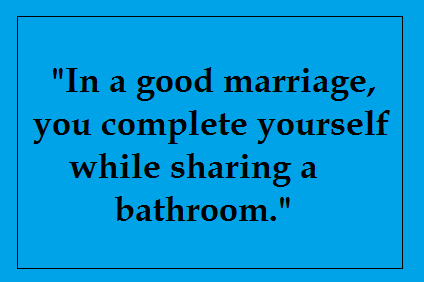
Dorothy speaks more carefully now. “No, now, Hilly, you know that’s not true. Some people have very happy marriages. I think the biggest problem is people’s expectations are so high. And so wrong. People think marriage is going to be so romantic and fulfilling. They think the other person is going to complete them. But that’s not what happens. In a good marriage you complete yourself while sharing a bathroom. You go through life with company, rather than alone, and humans seem to need company. And… You remember in Carousel, when the doctor tells the high school graduating class not to worry about others liking them, that they should just try to like others?”
“I love Carousel,” Hilly says, sighing. “I still love it. Everybody makes fun of me, but I still love it. We used to watch it and eat caramel corn and dill pickles.”
“I know,” Dorothy says. “But do you remember that part?”
“Of course.”
“Well, that’s it. That’s what you need to do in your marriage. You need to give what you want. And don’t expect so much. That only sets you up for disappointment. If you expect anything, expect that marriage will be hard, that it will be work. And expect that the pleasures will be erratic and often small, but they’ll turn out to mean more than you know.”
by Elizabeth Berg (Ballantine, 2010).
x
1 Comment | posted in control

The most stubborn addiction is one everyone shares,
and of which most human animals stay unaware,
one behind everything we think, do and say,
and from which no one gets entirely away,
one we usually notice most when it’s gone,
one rooted in fears birthed the moment we’re born,
one beneath and behind most of our sorrows,
that keeps us trapped in our yesterdays and tomorrows,
one you see in me before you see it in you,
and to which we both cling until our brain cells turn blue.
We’re addicted to a thought, a wish, an idea,
an assumption we almost never see clear:
that life can and should belong to us,
that we should be drivers and reality the bus,
that relationships, like suits, should be altered to fit,
and that fears, tears and pain should be treated like shit,
like nasty waste that is best flushed away
instead of messages about who and where we are today.
I suppose what we really want is to be God.
It’s the most human of all fantasies, and one that dies hard.
But as long as it lives inside us we’re hooked,
jonesing for control wherever we look,
unable to rest, trust, surrender or play,
Or be who we are in what we feel, do and say,
and fated to find that, finally, no control can relieve
the ache of hands too grabby to receive.
~ Steve Hauptman
4 Comments | posted in control

hi guys,
Just a note to let you know I’m about done with my second book.
Titled Monkeytraps in Everyday Life, it describes 51 ways we unconsciously control our way into trouble in both our heads and our relationships.
I’ll publish it this summer.
If you’d like to receive updates about this and other Monkeytraps projects — like several new ebook releases and my new newsletter, MONKEYNOTES — please click here:
.
.
Of course I’ll never share your information with anyone. (It’s a control thing.)
Talk soon,
~ Steve
.
PS: Bert says hi.
2 Comments | posted in control

It’s supposed to go like this:
We’re supposed to grow up in a good-enough family, one strong and healthy and nurturing enough to provide adequate supplies of the 4 A’s: attention, acceptance, approval and affection.
The 4 A’s are the components of love.
If we get enough of these components, we fill up in childhood, just like kids fill up with good food.
And we enter adulthood feeling reasonably solid, reasonably valuable and lovable and confident in our dealing with others.
But if we grow up in a not-good-enough family — one burdened by abuse, or addiction, or mental illness, or parents who dislike each other or their children — several things happen:
~ We enter adulthood emotionally hungry, with unmet needs that appear as holes in our confidence and self-esteem.
~ This hunger is so painful that it forces us to try and fill those holes by getting our needs met by others.
~ For the most part we do this unconsciously, unaware of why we feel how we feel or do what we do.
~ We also do it covertly, hiding our true motives from ourselves and others, trying to control and manipulate other people into feeding us what we didn’t get as kids.
~ Others may sense our hidden agenda — even if they don’t understand it — and respond defensively by rejecting us or distancing themselves.
~ The rejection and distancing increases our hunger, triggering another round of unconscious controlling and manipulation, often followed by more distancing and rejection.
~ All this tends to continue until we see what we’re doing and learn better ways of getting our needs met.
I’ve known many, many people like this.
I’ve been one myself.
There’s no shame in it. Emotional hunger is more common than anyone realizes.
But if I’ve learned anything about this whole business, it’s this:
We cannot get fed until we identify our hunger and understand how we keep ourselves hungry.
4 Comments | posted in control
 In group, and she looks exhausted, pinched and pale.
She’s talking about how hard she’s been working, and all the people she worries about and takes care of.
And I’m getting angry.
“I have feedback,” I tell her.
She looks surprised. Feedback is a statement of personal feelings, and I don’t usually give those.
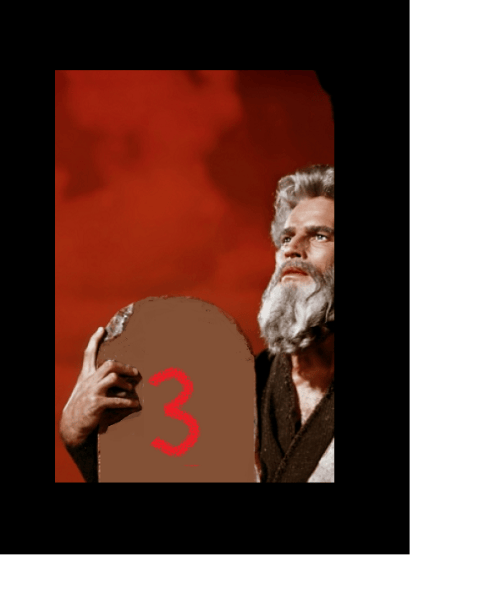
“Here goes,” I say. “When you (A) talk about all these people you care about and take care of, I (B) get mad, because (C) you’re breaking my Three Commandments.”
She looks puzzled.
“I know,” I say. “I didn’t know I had Three Commandments either. But apparently I do, because I find myself mad at you for breaking them.”
She smiles. “What are they?”
“What I usually talk about,” I say. “And everything we work on in group:
1. You must respect your feelings.
2. You must listen to your body.
3. You must collect relationships that feed you, not deplete you.”
“Yes,” she sighs. “Sounds familiar.”
“She’s breaking all three, right?” another member asks.
“I think so. She certainly looks like someone who is.”
“What do I look like?” she asks.
“Like someone to whom self-care is an alien concept. Who’s so caught up in trying to control people, places and things that she’s running on empty. And doesn’t realize it. And needs people who love her to tell her to stop.”
“Stop,” says another member.
“Please,” says another.
She smiles sadly. “I’m not sure I know how.”
“That’s okay,” I say. “We’ll help. The most important thing now is wanting to stop.
“Everyone who comes into therapy needs to learn these commandments,” I say. “It’s hard at first, because most of us were trained to believe exactly the opposite: Disrespect your feelings, ignore your body, and Lose yourself in relationships.
“But those who learn them, and can obey them at least some of the time, always end up feeling better.”
“Always?” she asks.
“Always,” I say. “It’s as close to a guarantee as you’ll get in therapy.”
Leave a comment | posted in control
“I have a job interview,” she tells me.
“That’s good,” I say.
“I’m scared shitless.”
“That’s not.”
She’s never had a job interview that didn’t make her sick beforehand. The interviews themselves go fine. But the days and hours leading up to them are torture.
“I imagine everything that could go wrong, every mistake I could make, every question I can’t answer. I imagine the person will think I’m stupid or unattractive or unqualified. I play it over and over and over in my head. I usually can’t sleep the night before, and I go in there looking like death on a cracker.”
“But the interview usually goes okay?”
“It does,” she sighs.
“Okay,” I say. “I think I can help. When’s the interview?
“Friday.”
“Good. Today’s Monday. Go buy yourself a small notebook and carry it with you. I want you to listen to yourself, catch yourself projecting, and write each projection down.”
“What’s projecting again?” she frowns.
“Inventing scary stories,” I say. “There are two types. One produces stories about the future — I’m going to screw up the interview, I’m going to get fired, My blind date will be a disaster, and so on. I call that fortunetelling.”
“That’s what I’m doing now.”
“Correct. The other type involves stories about the contents of other people’s heads — She’s mad at me, He thinks I’m fat, They’re laughing at me behind my back, Nobody will think I’m qualified for this job — that sort of thing. I call that mindreading.”
“I do that all the time too,” she muses.
“I know you do,” I say. “And there are two things to remember about projections.
“First, they feel absolutely real, the way a nightmare does. You just know bad things are happening or going to happen, right?”
“Absolutely.”
“Second, they rarely come true. That’s because projections grow out of anxiety — our very worst fears — not any accurate reading of reality. For example, despite how you feel before interviewing, you usually end up getting the job, don’t you?”
“Yes.”
“Yes. The thing is, when our worst fears don’t come true, we don’t learn our lesson. We don’t stop and think Wow, I just scared myself unnecessarily. We just roll on to the next projection.
“That’s where the notebook comes in. Between now and Friday you’ll list every negative projection, every moment of fortunetelling or mindreading, however small or silly. And at the end of each day you’ll look at your list and see how many of your awful projections came true.”
“I think I know what I’ll find,” she smiles sheepishly.
“Me too. Do it anyway.”
*
I got an email from her today.
Hey Steve. I bought the notebook and did what you said. The first two days I filled eight pages. I had no idea what I was doing to myself. But on the third day I began to calm down (half a page only), and by Friday I was almost relaxed. (Almost.) Anyway, I got the job. Thanks. 🙂 See you Monday.
Leave a comment | posted in control
x
“I feel like crap,” he tells me.
“Why?”
“I’m a failure.”
“How so?”
“In every way. My wife says I’m insensitive, so I feel like a bad husband. My son’s failing Math and my daughter has social anxiety, so I feel like a lousy dad. I don’t make enough money, so I feel like a bad provider. I don’t have time or energy to fix what needs fixing around the house, so I feel lazy and irresponsible. I’m overweight, so I feel like a physical mess. And you tell me I’m out of touch with my feelings, so I’m even flunking fucking therapy.”
“Wait a minute,” I say. “Let’s do this right.”
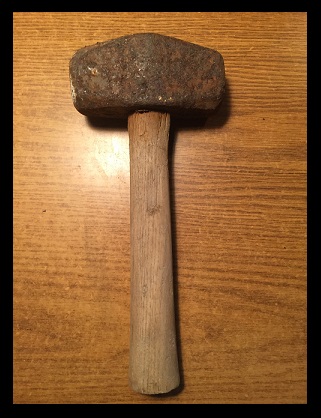
I reach under my chair and bring out my hammer.
It’s an old hand sledge, five pounds of rusted metal.
“Here,” I say, handing it to him.
“What this for?”
“Give yourself a good whack on the knuckles.”
“Are you crazy? That would break my hand.”
“Probably,” I say. “But the pain would go away, and the hand would heal in about six weeks.
“What you’re doing to yourself now — calling yourself a failure and collecting evidence to back it up — that causes permanent damage. And the pain it creates is endless.”
For anyone who find this parable too metaphoric, let’s be clear:
Beating yourself up should not be mistaken for honesty, or courage, or discipline, or high standards, or determination, or toughness, or personal growth.
It is simple self-abuse.
It consumes energy, kills hope, warps awareness and destroys the spirit.
And those who indulge in it rarely grow into the people they are meant to be.
Leave a comment | posted in control, metaphor for
 For months she has been miserable in a relationship with a man she describes as needy, smothering and manipulative.
“I feel like I’m his mother,” she tells me.
“So end it,” I say.
“I can’t,” she frowns. “He says if I do he’ll kill himself.”
“You believe him?”
“I’m scared to take the risk,” she shrugs helplessly. “He cries and begs and I feel like a heartless person.”
She looks at me. “Am I? Heartless?”
I answer by telling her, as best as I can remember it, the story of the dangling man.
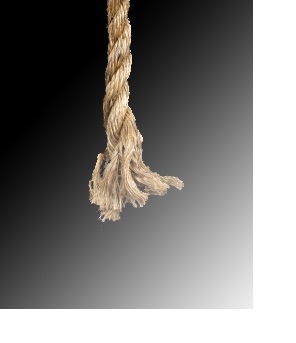
A guy’s walking across a bridge one night and hears a faint cry for help. He looks over the railing and finds a man dangling from a rope.
“Help me,” the dangling man gasps.
The guy reaches over and grabs the rope, which comes free in his hands. Now he’s the only thing keeping the man from falling.
“Save me,” the man begs.
The guy tries to pull the man up, but cannot.
“You’re too heavy,” he says. “You’ll have to climb.”
“Don’t let go,” the man begs.
“Okay, but I can’t hold on forever,” the guy says. “Start climbing.”
“Just don’t let go,” the man says again.
The guy looks around for help, but he is alone on the bridge. He looks for somewhere to tie off the rope, but finds nothing.
He feels his hands weakening.
“I’m getting tired,” he tells the man. “What do you want me to do?”
“Help me,” the man repeats. “Save me.”
“But I can’t,” the guy says.
“Just hang on,” the man says. “If you let go, I die. I’m your responsibility.”
Time passes. The guy feels his hands weakening, the strength slowly draining from his body, and the impossibility of his situation.
Finally he takes a deep breath.
“Listen carefully,” he tells the man, “because I mean what I’m about to say. I can’t help you if you won’t help yourself. So I’ll hold on, but only if you start climbing. I’ll even help by pulling up from my end. But if you don’t start climbing, I’m going to let go.”
“You can’t mean that,” says the dangling man. “How could you be so selfish? How could you live with yourself afterwards? I need you. I’m your responsibility.”
“No,” says the guy, “I don’t accept that. I’m responsible for me, and you’re responsible for you. I’m willing to help, but the final choice here is yours.”
“Don’t do this to me,” the man begs.
The guy waits. Nothing happens. There is no movement, no change in the rope’s tension.
“I accept your choice,” he says, and frees his hands.
_______________________________
* Adapted from Friedman’s Fables by Edwin H. Friedman (New York: Guilford Press, 1990).
2 Comments | posted in control
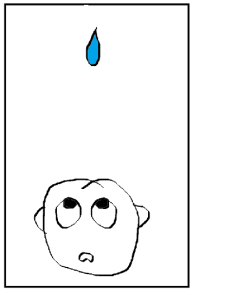 I tell my friend about my broken water heater and how for a week I’ve been bathing in the sink.
“Why don’t you take a cold shower?” he asks.
I smile, thinking
Because I’m not batshit crazy.
Later, though, when I recall the conversation, I realize that a more honest answer to his suggestion would have been
Because I’m a big fat baby.
As I age I notice I get more and more attached to comfort. It becomes harder to exercise, harder to diet, harder to skip meals or sit down on a cold toilet seat.
Sure, I still slip occasionally into workaholic overdrive (like ten-hour writing sessions). But mostly I seek out the easy way, the path of least resistance.
After five decades of chronic guilt and codependent self-criticism, I kind of like this way of doing life.
And I kind of don’t.
The reason I don’t is that I have a theory about why we do things that sees a craving for comfort as problematic. The theory holds that we’re all addicted to control, that this addiction causes most (maybe all) of our emotional problems, and that all our controlling is driven by wanting to control how we feel.
Which means, in practice, that the less discomfort I am able to tolerate, the more compulsively controlling I become.
I’m writing a book about this now. It’s about how we hate discomfort, how in avoiding it we walk into emotional traps, and how one way to escape is to develop more tolerance for discomfort, which I call an emotional shock absorber .
Since life is full of discomforts, a life without this shock absorber would be essentially unlivable. You’d be horribly vulnerable to everything from an empty belly to a full bladder, from traffic jams to heat waves to crying babies — never mind big stuff like abuse, illness, disability, unemployment or loss of a loved one. You’d simply go mad.*
This vulnerability is what I don’t like about my craving for comfort.
So I decide to take a cold shower.
*
I approach it in stages.
Stage 1: Like any good codependent, I start by seeking support for my decision.
I pray to the Great God Google.
Are cold showers healthy? I type.
God answers my prayer with a cluster of articles, one of which informs me that there are multiple health benefits to cold showers — strengthened circulation, immunity, metabolism, breathing and mood. Who knew?
But this is what sells me:
Big goals require discomfort to achieve. The difference between making a good impression, standing your ground, and being successful could be altered by getting used to discomfort….
Conditioning your brain to accept, survive, and embrace discomfort is one of the practices that can greatly impact the rest of your life. It isn’t about the cold water. It’s about the discomfort associated with cold showers, which you can overcome every day towards greater goal in life.*
Thanks, God.
Stage 2: I meditate. Well, it’s not really meditating, because all I can think about is the shower I plan. I picture it in my mind: undressing, crouching in the tub with my hand on the faucet, turning the faucet, the water hitting my back, counting one two three before shutting off the tap. I picture this over and over, hoping to fan my tiny ember of courage into a flame.
Finally I’m ready. I go to the bathroom, trying hard to think of nothing at all.
I follow the procedure I rehearsed. I strip, crouch, turn, wait.
Holy Mother of Christ Jesus.
*
Afterwards I feel wonderful. Not just strangely proud of myself (though there’s that) but physically exhilarated, as if the cold water triggered some chemical change in my body, some delicious flood of endorphines or dopamine or something.
It feels almost spiritual.
(Thanks, God.)
I go to work and babble happily to my therapy group about my cold shower. They look at me oddly.
I don’t care. I feel childlike, giggly.
Happy.
PS:
That was three days ago.
I’ve showered coldly each day since then.
I can count up to ten now.
______________________
* Monkeytraps in Everyday Life: 51 Ways We Self-Sabotage, due in 2017.
** “7 reasons to take colder showers and 1 that really matters,” by Mansal Denton, writing for The Hacked Mind (http://www.thehackedmind.com/7-reasons-to-take-cold-showers-and-1-that-really-matters/)
13 Comments | posted in control
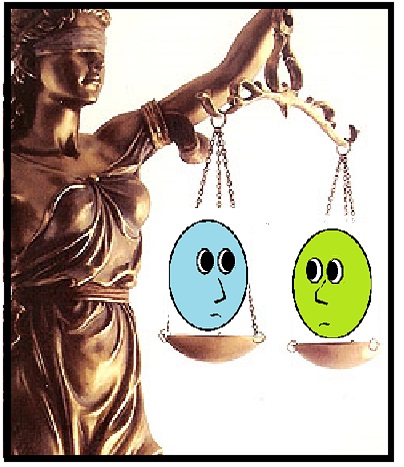
The greatest stumbling block in true communication is the tendency to play lawyer.
~ Muriel Schiffman
Last week I talked to two lawyers.
One was an actual attorney, the other an amateur.
Both struggle with relationships for the same reason:
They want it their way, and they’re pretty determined.
The first (actual) lawyer tells me she’s mad at her new boyfriend because he adopted a puppy without consulting her. “I’m a cat person,” she explains. “He knows this. And if we end up living together I’m going to be very unhappy.”
The second (amateur) lawyer tells me everything’s been going great with his girlfriend of six months: they like the same food and music, they laugh a lot together, and the sex is terrific. “Still, there are red flags,” he frowns. “She’s bad with money. She spends too much time on Facebook. And I don’t like her mother.”
I asked each of them two questions.
“Have you talked to your partner about this stuff?” is the first.
Both answer No. They’re upset, but neither wants to rock the boat.
“How do you feel when you’re with this person?” is the second question.
Both smile and answer, “Happy.”
“Okay,” I say to them. “I hear three problems here.
“The first is a boundary problem. Yours are fuzzy. You’re not clear on what is your business and what isn’t.
“The second is a communication problem. You need to share your feelings with your partner. Not as a complaint or a demand, but as information. They need to know what you like and don’t like, what pushes your buttons. How can you communicate and reach agreement with someone who doesn’t know what’s going on inside you?
“The biggest problem, though, is a control problem. You’re looking for a level of control you can’t have.
“I understand why. You’ve been hurt in past relationships. You don’t want to get hurt again.
“But you can’t indemnify yourself against hurt or disappointment or frustration with some sort of emotional contract. You can’t list your demands and expect your partner to sign the dotted line. That’s unrealistic and frankly, disrespectful. How’d you feel if someone made you sign such a contract?”
“Anyway, it’s just bad for relationships. A relationship is a living thing. We can’t control it; we have to care for it, the way you care for a flower. You water it with attention, you feed it with communication and patience, and you let it grow in its own way and at its own pace.
“Trying to edit it according to your expectations is like cutting it and putting it in a vase.
“Sure, a cut flower is pretty. But you know what happens to it.”
4 Comments | posted in control
 He’s twenty-six, and every night after work he goes home and locks himself in his room.
“It’s the only place I feel safe,” he tells me.
“How long have you felt this way?” I ask.
“Since I was little. Dad would drink and start yelling, and mom would yell back, and one of them would kick something or throw a plate, and I’d go to my room and shut the door and try not to hear it.”
“Scary,” I say.
“Sure. But I’m a man now, and dad’s dead six years, and mom and I get along fine. And I’m still hiding out. What the hell is wrong with me?”
“You’re cursed,” I say.
“Cursed?” he says. “Like by…”
“A witch?” I say. “No, not like that. Your curse is a false belief you absorbed in childhood, and have carried unconsciously ever since.”
“False belief.”
“Yes. There are three main curses. Kids tend to grow up believing that…
The world is a dangerous place, or
People are not to be trusted, or
There’s something wrong with me.
He frowns. “I believe all three. What causes it?”
“Childhood experience,” I say. “Grow up in a family like yours, where you never feel safe, it’s pretty hard to believe the world outside is any safer. So the whole world comes to feel dangerous.
“And if your parents are violent or unpredictable or abusive, if they reject or criticize or abandon you — and these are the people who are supposed to love and protect you — well, how do you trust anyone after that? So all people come to feel untrustworthy.”
“Finally, if your family treats you badly — or even if bad things happen that have nothing to do with you, like divorce or money problems or someone dying — you tend to conclude that the bad stuff was your fault, that there’s something wrong with you.”
“But why?”
“Because that’s how kids think. Bad stuff makes them feel helpless, and helplessness is terrifying. So they convince themselves they caused the bad stuff. They trade helpless for guilty. And they usually grow up to be adults with what’s called free-floating guilt. Whenever anything bad happens in their vicinity they feel somehow responsible.”
“That sounds like me too,” he says glumly. He is quiet. Then he looks at me.
“So I’m fucked?” he asks.
“No,” I say. “All this is pretty common. Most of my clients are cursed. Actually, so are most of the people I know. Me too.”
“Yes?” he smiles. “What do you do about about it?”
“Well, I went to therapy, and my therapist taught me to trust her, and that helped break the can’t-trust-anybody curse. And she helped me to see how the bad stuff that happened to me was mostly beyond my control, and that helped with the something-wrong-with-me curse. And the first curse…”
“Dangerous world?”
“Right. That one I’m still working on.”
“How?”
“Oh, mainly by taking risks — new places, new people, stuff I’m scared to do — and finding out that almost everything I’m scared of is imaginary.”
“That sounds hard,” he says.
“Sometimes,” I agree. “Still better than living cursed.”
Leave a comment | posted in control