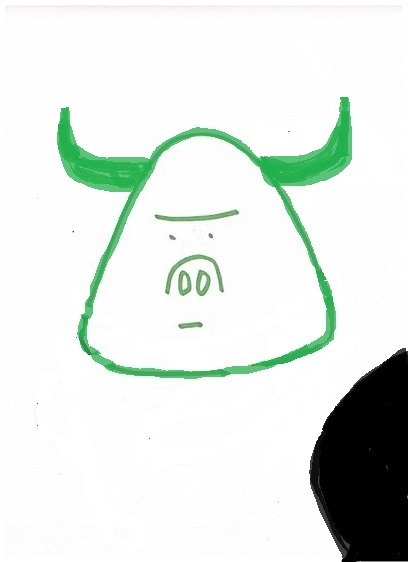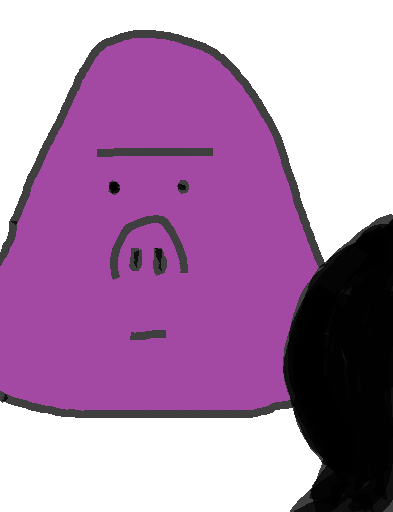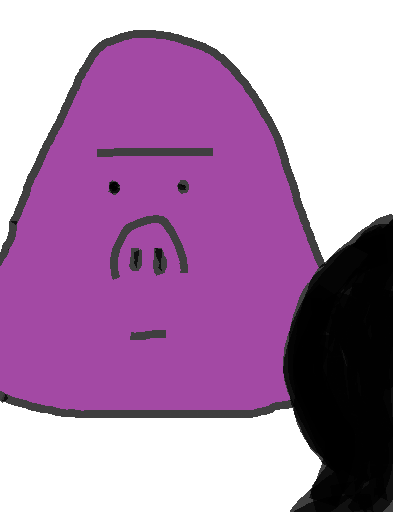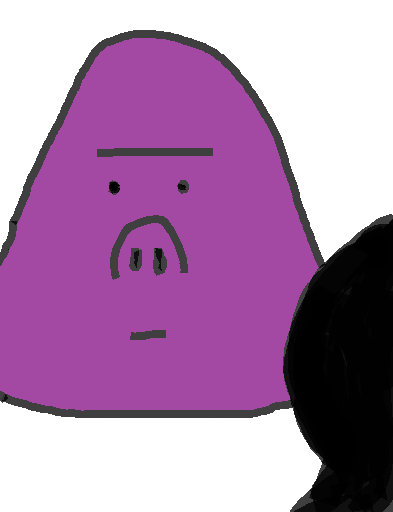
Category Archives: pathologies of control

Session 22: Bull (part 2)

bert

1

2

3

4

Remember when I complimented you on developing some empathy?

1

2

3

4

Yeah.

1

2

3

4

I may have spoken too soon.

1

2

3

4

What the hell is “empathy,” anyway?

1

2

3

4

Awareness of another person’s feelings.

1

2

3

4

And I lack that.

1

2

3

4

Apparently.  But it’s not your fault.

1

2

3

4

bert.

1

2

3

4

You’re a man.  Most men are trained to be emotional dunderheads.

1

2

3

4

“Dunderhead”?

1

2

3

4

Emotionally stupid.

1

2

3

4

How does that happen?

1

2

3

4

Well, we teach men to ignore or hide their feelings…

1

2

3

4

bert

1

2

3

4

…so they can go to war and go to work and do other stuff that feelings tend to interfere with.

1

2

3

4

Because big boys don’t cry.

1

2

3

4

Exactly.

1

2

3

4

bert 10

1

2

3

4

And once you lose touch with your own feelings…

1

2

3

4

bert (11)

1

2

3

4

…it’s hard to be sensitive to anyone else’s.

1

2

3

4

Like a wife’s.

1

2

3

4

Yes.

1

2

3

4

So she’s right.  I am insensitive to her feelings.
1

2

3

4

So it would seem.

1

2

3

4

Now I feel like a jerk.

1

2

3

4

I wouldn’t say that.  Just think of yourself as…

1

2

3

4

bert (15)

1

2

3

4

…a bull in a china shop.

1

2

(To be continued.)

x

x

* * *

Want more?

Having spent half his life trying to find fulfillment outside himself, he awakens to discover that it has not worked. For the first time in his life, a man may turn inward for answers.

He may begin to realize that his unhappiness is not caused by his failure to find the right woman or the right career, but by who he is and the way he is living his life.

Rather than blame others, he may ask, “How have I caused this to happen? Perhaps I need to change and develop greater self-awareness before I can have a healthy relationship or a satisfying career.”

This is a very difficult and courageous step for a man to take. Having successfully mastered his life on the outside, he is now forced to acknowledge that he needs help to explore difficulties encountered in his inner life.

From Real men do therapy by Jerry Magaro.

* * *
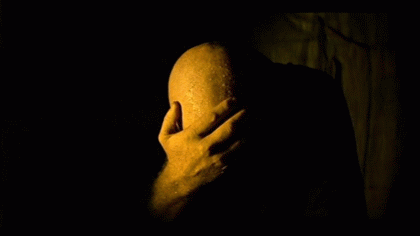
Most men grow up with an emptiness inside them.  Call it father hunger, call it male deprivation, call it personal insecurity, it’s the same emptiness.
When positive masculine energy  — a male mode of feeling — is not modeled from father to son, it creates a vacuum in the souls of men.  And into that vacuum demons pour.

Among other things, they seem to lose the ability to know how to read situations and people correctly.

Richard Rohr, in From wild man to wise man: Reflections on male spirituality.

Session 17: Guilty

Bad day at work.

1

2

3

4

What happened?

1

2

3

4

Boss yelled at me.

1

2

3

4

And how do you feel?

1

2

3

4

Guilty.

1

2

3

4

Why’d the boss yell?

1

2

3

4

Having a bad day, I guess.  He’s like that.

1

2

3

4

So why do you feel guilty?

1

2

3

4

I don’t know.

1

2

3

4

That’s not guilt you’re feeling.   

1

2

3

4

It’s not?

1

2

No.  It’s anger.  Internalized anger often feels like guilt.

1

2

3

4

It does?

1

2

3

Sure.  Anger’s like poison.  If you don’t spit it out at the person who hurt you, it eats away at you and feels like guilt.

1

2

3

4

I don’t know about that.  I’ve always been a pretty guilty person.

1

2

3

4I see.  Tell me, what’s your boss like?

1

2

3

4

He’s an asshole.

1

2

3

How big an asshole?

1

2

3

4

Big.

1

2

3

4

Big?

1

2

3

4

Enormous.

1

2

3

4

And how’s it feel, working for an enormous asshole?

1

2

3

4

I hate it.  I hate him.  I hate my job.

1

2

3

4

th12

1

2

3

4

Hate hate hate hate hate hate hate hate.

1

2

3

4

therapist (13)

1

2

3

4

bert (14)

1

2

3

4

How you feeling now?

1

2

3

4

Better.  Much better.  Not guilty at all.

1

2

3

4

th

1

2

3

4

Does that always work?

1

2

3

4

When the guilt comes from internalized anger, pretty much.

1

2

3

4

bert (17)

1

2

3

4

By the way, how’s your marriage going?

1

2

3

4

bert (18)

1

2

3

4

* * *

1

2

3

4


Session 15: Predictable

bert 1

1

2

3

4

So, you’re married?

1

2

3

4

Yes.

1

2

3

4

And her name’s Felicia, you said.

1

2

3

4

That’s right.  But I call her Babe.

1

2

3

4

Bert and Babe.  Cute.  And you have a son?

1

2

3

4

Yes.  Bud.

1

2

3

4

And a daughter?

1

2

3

4

Brittany.

1

2

3

4

Sensing a pattern here.

1

2

3

4

We have a dog, too.

1

2

3

4

Named…

1

2

3

4

Bonzo.

1

2

3

4

Of course.

1

2

3

4

Excuse me?

1

2

3

4

Just curious.  Favorite color?

1

2

3

4

Brown.

1

2

3

4

Favorite sport?

1

2

3

4

Baseball.

1

2

3

4

Favorite music?

1

2

3

4

Blues.

1

2

3

4

Composer?

1

2

3

4

Bach.

1

2

3

4

Holiday?

13

4

My birthday.

1

2

3

4

Favorite meal?

1

2

3

4

Burgers.

1

2

3

4

Favorite coal?

1

2

3

4

Bituminous.

1

2

3

4

(Sigh.)

1

2

3

4

What’s wrong?

1

2

3

Has anyone ever described you as predictable?

1

1

1

1

Bite me.

* * *


(Bert’s therapy) Session 2: Felicia


So.  Your wife sent you.


…………….

[1]

[2]

[3]

Yes.


Why? 

……….


[1]

[2][3]…………………………………………………………………………………………………………………………………………………………………………………………………………………………………………………………………………………………………………………………………………………………………………………………………………………………………………………………………………………………………………………………………………………………………………………………………………………………………………………………………………………………………………………………………………………………………………………………………………………………………………………………………………………………………………………………………………………………………………………………………………………………………………………………………………………………………………………………………………………

.


She says I have control issues. 


What’s she mean?


[1]

[2]

[3]


 I have no idea.


She doesn’t say what bothers her?


……………………….

[1]

[2]

[3]

 Nope.  She’s a bit crazy, my wife.


 I see.  What’s her name?

….


[1]

[2]

[3] 


Felicia.


Maybe we should ask Felicia in to tell us herself.

……………………….

…..

[1]

[2]

[3]


How would you feel about that? 


[1]

[2]

[3]


 . . . . .


[1]

[2]

[3]

  I’ll tell you everything.


Control isn’t power (part 2)

 (If you’re new to Monkeytraps, Steve is a therapist who specializes in control issues, and Bert is Steve’s control-addicted inner monkey. That’s an early photo of Bert at left, feeling powerful.

If you missed Part 1 of this post, you can read it here. 

Bert still speaking:)

Last time we called control a train you can chase but never catch, and power a muscle that grows stronger as you exercise it.

So how do you build that muscle? How does a person become more powerful?

My adventures in recovery have taught me seven ways:

(1) Refocus. You begin by shifting your focus from outside — people, places and things — to inside — your own needs, thoughts and feelings. Happiness is an inside job, and most of the answers you need are in there.

(2) Detach. Then you let go of what you can’t control anyway. It may be a situation, or a person, or that person’s behavior. Ask yourself, “Can I really control this?  Have I ever been able to before?”  If the answer is No,  let go of it.  If it’s a person you care about, you can detach with love, as they say in Al-Anon. Detaching doesn’t mean you stop caring about them. It just means you acknowledge your limitations. And when you do that, an enormous relief often follows.

(3) Take care of yourself. This one’s important:  You stop treating yourself like a machine. Listen to your body instead, and start respecting the messages it sends you. Hungry? Eat. Tired? Sit down. Maybe take a nap. (Naps are great.) Lonely? Seek out safe people. (More on this below.) Angry? Scream (into a pillow, maybe, so you don’t scare the neighbors). Sad? Let yourself cry. It’s how the body naturally relieves tension, and it helps.

(4) Educate yourself. You’re not crazy.  Your pain, whatever it is, means something. Your job is to figure out what it’s trying to tell you. Education takes many forms, from Googling codependency to reading self-help books (start with Melody Beattie’s Codependent No More or Adult Children of Alcoholics by Janet Woititz — even if you don’t think of yourself as “codependent” or as coming from an alcoholic family), or listening to tapes (try the library), or talking to a friend, or finding a good therapist, or attending a self-help meeting. After his first Al-Anon meeting one client told me, “It was like a light coming on in a dark room, and suddenly I could see all the furniture I’ve been tripping over.” Why live in the dark any longer than you have to?

(5) Get some support. No one gets through life alone. (Even if you could, why would you want to?) Seriously consider checking out a self-help program, like Al-Anon or Nar-Anon or CODA. You’re probably scared of that first meeting. That’s okay.  Everyone is. Go anyway. It won’t kill you, and you can’t know beforehand what you’ll hear. A good meeting can save your life, not to mention your sanity.
(6) Listen to feelings. This is another big one. Most of us hide our feelings, even from ourselves. But feelings are essential. You need to reclaim them. Find people who are trying to recover their feelings, and who can support you while you’re trying to recover yours.  Who’s the person you feel most free to be yourself with?  Spend time with them.  If there’s no one like that in your life, see it as the problem it is.  Then correct it.  Hire a therapist, visit CODA or Al-Anon, or at the very least find a chat room online where you can listen to feelings and begin to express some yourself. 

(7) Have faith. Develop your spiritual life. No, you don’t need to join a church. You don’t even need to believe in God. You do need to believe in something bigger than you, some truth you trust even when you don’t understand it. Call it Nature. Call it The Force. Al-Anon calls it Higher Power, but you can call it what you like. Steve wants to add something here.

When I hit adolescence I rejected the idea of God, whom I’d always visualized as some huge version of Charlton Heston in a bathrobe riding a cloud.  But I always believed in psychology. Then I heard Scott Peck suggest on a tape that it’s not unreasonable to replace the word God with the word unconscious.That permanently reframed the idea of God for me. I realized there was some intelligence inside that I could listen for and which could guide me if I let it. I might doubt the existence of a God, but who can doubt the existence of that voice? That part that Knows Better?  And if that intelligence could exist inside me, why not in the world at large? 

Hey, we all need some invisible support.  We all need to carry around inside us some version of that experience described by the Ojibwe poet who wrote,

Sometimes I go about in  pity for myself,

 and all the while

a great wind carries me across the sky.

*

Okay, your turn.  Talk back to us. 

What do you think of the distinction between control and power as we’ve described it? 

Do you see yourself as mainly controlling or powerful? 

Where’s your power come from?

And what sorts of power would you like to develop? 


Parable

Two monkeys meet in the mountains at sundown.

Each is alone, having been separated from his tribe.  Both are tired from trudging for days through the rocks.

But monkeys are wary beasts.  So for a long time they stand motionless, eyeing each other suspiciously.

Finally the tireder of the pair gets tired of this too. 

“Oh, screw it,” he says, and sits down in the dirt.

The other watches him for a moment, then sits down as well.

They look around at the dirt, the rocks, the huge sky, the sinking sun.  Finally their eyes meet.

“What’s your name?” asks the first monkey.

The second monkey scowls.

“What’s yours?” he replies.

They fall silent.

The sun’s lower edge touches the horizon.  The air chills. 

The first monkey reaches into his knapsack and pulls out a cigarette lighter.  He scratches together a tiny pile of twigs and pushes the lighter into the center of it.  The twigs catch.  A small flame appears.

“Got anything to burn?” he asks.

The second money is leaning towards the flame, but the question stops him.

“Do you?” he answers.  He places a protective paw on his knapsack.

The first monkey sighs.

The sun sinks below the horizon.

Now it is dark.  Dark in the mountains is especially dark.

“Oh, screw it again,” says the first monkey.  He reaches into his knapsack and brings out a small lump of something wrapped in cloth. 

“This is a secret,” he tells the other.   “I never show it to anyone.  It’s embarrassing.  But I guess it’s better than freezing to death.”

He unwraps a stinky old fish head. 

A rotten smell fills the clearing.  First Monkey swallows hard, then lays the fish head carefully atop the pile of twigs like an offering.  

It catches fire.  Flames leap up. 

The smell disappears.

Second Monkey now looks embarrassed.

“That’s not so bad,” he says finally.  “I can beat that.”

He reaches into his knapsack and comes out with a medium-sized lump, also wrapped in cloth.

“Really?” First Monkey smiles.

Second Monkey nods, unwraps his fish head, swallows hard and lays it on the fire.

Again a bad smell fills the clearing.   The second head catches fire.  Again the smell goes away.

The monkeys inch closer to the flames.  They reach out their paws.  Overhead the moon starts its climb across the sky.

“You got more, I hope,” Second Monkey says.

“I do if you do,” replies First Monkey.

Both giggle.

And so the night passes, hour after hour, fish head after fish head, each larger and more fragrant than the last, until both knapsacks are empty and the fire burns on without feeding and the sun peeks up over the mountains in the east.

“I’m Sid,” mutters Second Monkey suddenly.

“I’m Barry,” replies First Monkey.  “Pleased to meet you.”  

Moral:

Nobody on this bus but us monkeys.


Bert’s therapy

Finally the heat broke, so I went out for a walk. 

It was the sort of day that reminds you of summers in childhood, of how life felt without the permanently clenched fist in your midsection.  Lawns bright with sunlight.  A solid blue sky you want to swim in.  Breeze like a kiss.

So I’m walking along, enjoying all this, listening to the Corrs through my earphones, and I feel a tap on my shoulder. 

Bert sidles up next to me.

I need some therapy, he mutters.

I sigh.  For just one hour I’d have liked to have skip the whole neurotic thing.

But your monkey’s your monkey.

“Sure,” I tell him.  “Walk along with me,” and I pull out my earphones. 

* * *

What’s up?

I’m discouraged.  Depressed, maybe. 

How come?

You know.

Tell me anyway.  Part of the therapy.

Well, I’m really tired.  That heat wore away at me like sandpaper. 

I know.

And I’m sick to death of this insurance audit.  What’s it now, six months?      

Something like that. 

I’m sick of not having money.  Or a vacation.  It really hurt to skip Vermont again this year.

I know.  For a day or so I thought you might lose it.

Me too.

What else.

The house is a mess.

As usual.

Still bothers me.

I know.  What else.

The block’s back.

Yeah, I noticed.   What’s up with that? 

I got discouraged by the lack of comments.

Hm.

What’s that mean?

Nothing.  I’m listening.   Go on.   Is there more?

Well.

What?

I’m sixty.  (Sighs.) 
Yes, we are.

Sixty fucking years old.

I know.

Thought it’d be easier by now.

I hear you.  I feel you, as the kids say. 
So.  What would you tell a client like me?
Good question.  Let me think.

You get people like me?

All the time. 

So what do you tell them?

Well, first I guess I try to reframe things.  Help them see what they’re not seeing.

And what am I not seeing?

How lucky you are.

Excuse me?

Your marriage works.  Your kids love you.  You’re a pretty good therapist. 

Am I?

You help most of the people who come to you.  

I guess.

You like what you do for a living.  You own your own home.  You’re not sick, or crippled, or divorced, or in Afghanistan.

True. 

You worry about money, but your bills get paid. 

Eventually.

Right.  The house embarrasses you, but it’s your house.  Remember what renting was like? 

True.

And you have options.  Writing is still an option.  You’re a step closer to writing for money than you’ve ever been.    And you managed to start Monkeytraps in the face of all this other crap.

That’s true too.  So why don’t I feel better?

Oh, that’s easy.  You’re tired.

That’s it?

It’s important.   “Fatigue makes cowards of us all.”

You and your quotes.  Who said that?

Vince Lombardi. 

So what do I do?

Rest.

How?  I have work to do.

Find a way.

That’s what you’d tell a client?

Pretty much, yes. 

Sounds too simple.

Simple, yes.  Easy, no.  For one thing, it takes courage.   You’d have to give up controlling all the crap you just mentioned.

(Silence.)

You’d have to let go of the bills and the practice and the house and the blog.  In your head, I mean.  And have faith that the sky won’t cave in.   

(More silence.)

And you’d have to act like you deserve a rest.  Which you’re not at all sure that you do. 

No, I’m not. 

I know you’re not.  Do it anyway.

How can I?

No choice.  You have to save yourself.  If you don’t, who will? 

Hmpf.  

Too late to get parented.  It’s all your job now.

(He frowns.  I wait.  He scratches his head.  I wait some more.  Now his eyes open.  He looks at me.)

Hey.  I know why I hate this.

Why?

It’s an AFGO.

Yes, it is.

Another fucking growth opportunity.

Yep.

I hate them.

Yeah.  Me too.  Anything else?    

(He squints at me, like he suspects a trick question.  Shakes his head.  Leaves.)

(I put on my earphones, turn up the Corrs, and resume trying to swim up into the solid blue sky.)


A gazillion dandelions

Bert’s on my case about the blog. 

“Too theoretical,” he sniffs.   “Too metaphorical.  You should write about real life.”

“I’m doing the best I can,” I reply.

“I know,” he sighs. 

Then brightens. 

“Hey, give me a turn.  I could tell stories.”

“Not sure I’m ready for that.”

“Come on.”

“No.” 

“Who’s the coward here, anyway?”

“Not yet.”

“Okay,” he sighs.  “But if you’re not careful you’ll lose them.”

“Shut up, Bert.”

“I’m just saying.”

Then this morning something happened and I decided maybe he was right and I should give him his chance.

So here it is, Bert’s first post: 

It’s 94 today and humid.  Went walking anyway.  Have to, heat index notwithstanding.   I need to get my weight under control.

So I’m walking down the street, heat rising off it in waves, and a cop car passes and pulls to the curb fifty yards ahead of me.  Then a second cop car arrives from the opposite direction and does the same thing.

Two cops get out in their blue uniforms and their heavy black belts.

Poor guys, I think.  In this heat.

They cross the street to where a couple stands on a lawn, arguing.

The guy is yelling at the woman.  The woman yells back, waving her arms.  Two little girls stand under a tree in pink sleeveless tops, holding hands and crying. 

Inside me thoughts and impulses spring up, boink boink boink, like cartoon dandelions invading a summer lawn:

(1) I want to about-face and walk back down the street.  Avoid upset.  Reduce anxiety. 

(2) I can’t about-face.  What if someone notices.  What’s his problem?  

(3) I want to go to the two kids.  Sit on the grass.  Calm or distract them somehow.  They stop crying, I’ll feel better.

(4) Can’t do that either.  Dad might punch me.  Mom might scream.  Cops might whip out their handcuffs.   

 (5) I hear my own thoughts.  I get mad.  Handcuffs?  Steve.  Chickenshit.  Seriously.

(6) I get mad at whoever called the cops.  (In full projection mode now.)  Mind your own business, Sir or Madam.  Leave these people alone.  Also, I’m trying to take a walk here.

(7) It occurs to me Sir or Madam is probably scared too.  Why they called.  Calling’s just their version of the about-face I wanted to make.  Officers, please remove this.  Now I regret I got mad at them.

(8) I think of the cops.   What’s it like, standing there, trying to calm angry people in this heat?  Are they trained for this?   How?  Instruction manual?  Rehearsal in a steam room?  And are they screened adequately?  Do more people get shot by police in the summer? 

(9) I notice I’m writing all this down in my head.  Make them see what a control addict sees.

(10) I about-face, walk home to type it out before the heat melts what I’m thinking.

Moment to moment control issues bloom, boink boink boink, like a gazillion dandelions.


Red thread

                                                                                                                                                               My last post described my workshop epiphany, how on the brink of public humiliation I discovered something I didn’t know I knew: that what self-help books call codependency is actually addiction to control.

Here’s the rest of the story:

After the workshop I go back to doing therapy with clinic clients.  Mine is a typical outpatient caseload, filled with the sorts of problems every therapist faces: anxiety, depression, addictions, bad relationships, parenting problems.

But something’s different now.

Have you ever bought a new car — say, a Honda — and take it out on the road, and wherever you drive you see other Hondas?  Suddenly the world is filled with Hondas you never noticed before.

This is happening to me.  Suddenly my caseload is filled with control addicts.

The clients haven’t changed, I have.  It’s like I put on new eyeglasses.  My vision has refocused or sharpened or something, and now I can’t help seeing how relentlessly, compulsively and self-destructively controlling they all are.

They? I mean We. Everyone.

Controlling, I find, is the universal addiction.  It’s everywhere I look.  Not just in my codependent clients, but every client.  Not just in clients, but in colleagues, and friends, and family, and on the nightly news, and in whatever I read or watch on tv or in the movies.  And, of course, in myself.  (I’ve discovered Bert.)  Like a red thread in a carpet, the idea of control snakes through every problem, every motive, every personality, every life.

Why is this?  Originally I’d assumed that dysfunctional families create codependency.   But now I find the red thread running everywhere, which must mean either that (a) all families are dysfunctional (which is arguable) or (b) the urge to control is  hardwired into us, rooted in some deep part of our brain that can’t help rejecting what life hands us and trying to replace it with what we prefer.  Or (c) both.  Or (d) something else entirely.  I don’t know.

I spend the next fifteen years studying the idea of control.

I hunt for books on control (there aren’t many), then for books on related ideas like desire and addiction and power.  I buy lots of books.  I start reading everything with a highlighter in my hand, scribbling big yellow Cs alongside the parts that relate to control.  Half my books start to look pee-stained.  I buy more books.  I start typing out control-related passages I like and collect them in a computer file which as of today runs to 117 pages.   I become interested in Buddhism, which turns out to be all about control addiction.  (Buddhists call it attachment.)  I try meditating.  I hate it.  Well, not hate it exactly, but resist it like hell, to the point I’m unable to sustain a regular practice.  (Thanks, Bert.)  I buy books on discipline.  Also more highlighters.

I reshape my approach to therapy around the idea of control.  I teach my clients to notice when they’re monkeytrapped and how to escape.  I write articles for them about control addiction and ways to recover from it.  (We teach what we want to learn.)  The therapy seems to work, for some at least.  I am struck by how many clients tell me, as they become less controlling, “It’s so much easier.” 

I decide to write a book.

I get blocked.  My own control addiction prevents me from writing about addiction to control.  (Thanks again, Bert.)  The block lasts for months, then years.  I buy books about writing and the creative process, which turns out to have lots to do with (surprise) surrendering control.  Some of the books are wonderful.  I learn a lot.  The block continues.

But I am able to use what I’m learning to help my clients, parent my kids, manage my marriage, cope with a monkey-driven culture, and understand myself a bit better.  (I’m not always thrilled with what I understand.  Still. Better to know than not know, I figure.)  I still project and worry, but now the worrier in me has an Off switch which actually works, oh, maybe half of the time.  Unfortunately not the time I spend writing.  I finally start this blog in hopes that daily writing and feedback from readers will jump-start the book.

What have I learned from all this?

Well, my view of control remains a work in progress.  But I have reached four pretty firm conclusions:

(1) We are all addicted to control.

(2) This addiction causes most emotional problems.

(3) Behind all controlling is the wish to control feelings.

(4) There are better ways to handle feelings than control.

Since they seem true of everyone I meet, and seem to operate pretty invariably, I’ve come to think of these conclusions as the four laws of control.

Soon I’ll start writing here about what they mean and how they operate.


Corduroy

I  got interested in control accidentally.   I was giving a talk and suddenly realized I didn’t know what I was talking about.

I was a new social worker, six months out of grad school, working for a clinic attached to a rehab on the end of Long Island.  My new boss decided I was the best one to run the weekly Family Education Series, basically a crash course in alcoholism and how it screws up families.  And tonight the topic was codependency.

I knew the topic well enough.  I’d worked as an alcoholism counselor and treated hundreds of codependents.  I could diagnose one in the first five minutes of a conversation. 

But when it came time to prepare this talk I found I couldn’t define the word.  At work we talked about codependency without ever stopping to explain what we meant.   And when I looked into my half-dozen books on the subject I found each defining it in a different way.  One was:

A specific condition characterized by preoccupation and extreme dependence on another person, activity, group, idea, or substance. [1]

Another:

An  emotional, psychological, and behavioral condition that develops as a result of an individual’s prolonged exposure to, and practice of, a set of oppressive rules. [2]

A third:

A multidimensional (physical, mental, emotional and spiritual)condition manifested by any suffering and dysfunction that is associated with or due to focusing on the needs and behavior of others. [3]

A fourth:

A recognizable pattern of personality traits, predictably found within most members of chemically dependent families, which are capable of creating sufficient dysfunction to warrant the diagnosis of Mixed Personality Disorder as outlined in DSM-III [4],

which sent me off to yet another book to learn what the hell that meant.

Finally I came to codependency maven Melody Beattie, who explained that a codependent is simply

a person who has let another person’s behavior affect him or her, and who is obsessed with controlling that person’s behavior. [5]

Fine definition.  Until I noticed it describes just about everyone.

Having no idea which definition would be best to offer my workshop, I cleverly decided to present them all.

So here I am, having just done that.  I’ve distributed a handout with the five definitions on it, and read them aloud, and am now looking at a roomful of confused faces.

A man in a brown corduroy jacket raises his hand.  I nod back.

“So what the hell is codependency?” he asks.

Everyone laughs.

I laugh too.  (Inside I’m thinking Shoot me now.)  Then I shrug and hear myself say, “Addiction to control.”

I am surprised at myself.  I’ve never thought of it this way before. 

But Corduroy starts asking questions, and I find I have answers, and it’s all making a new sort of sense.  I explain that I see codependents as traumatized people convinced their survival depends on controlling the effects of “their” alcoholic’s illness.  So they do things like hide booze and avoid dad at certain times of the day and lie to his boss about why he missed work or to the neighbors about why he fell asleep in the driveway.  From all these experiences they come to depend on control as a way of coping generally, and set about applying it to everything and everyone in their lives, to the point where it makes them sick. 

“Sick how?” Corduroy frowns. 

Mainly anxious and depressed, I tell him.  But also worried, and tense, and irritable, and unable to relax or have fun, or identify and express feelings, or trust anyone, or like themselves.  And self-medicating with food or work or helping other people or whatever else they can think of. 

And now Corduroy is nodding thoughtfully, and so are others in the room, and I know I’m onto something.

(To be continued.)

___________________ 

[1] Sharon Wegscheider-Cruse, ChoiceMaking: For co-dependents, adult children and spirituality seekers (Health Communications, 1985).
 
[2] Robert Subby, Lost in the shuffle: The co-dependent reality, quoted in Whitfield (see below).
 
[3] Charles Whitfield, Co-dependence: Healing the human condition (Health Communications, 1991).  
 
[4] Timmen Cermak, Diagnosing and treating co-dependence (Johnson Institute, 1986).
 
[5] Melody Beattie, Codependent no more (Harper/Hazelden, 1987).


Me and my monkey

Before I go any further with this blog thing I should introduce my co-author and research assistant. His name is Bert.

Bert is my inner monkey.

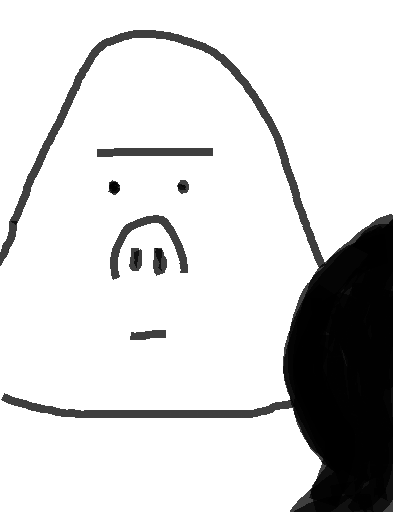
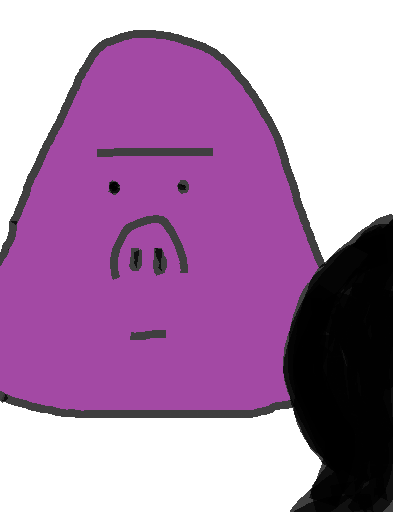
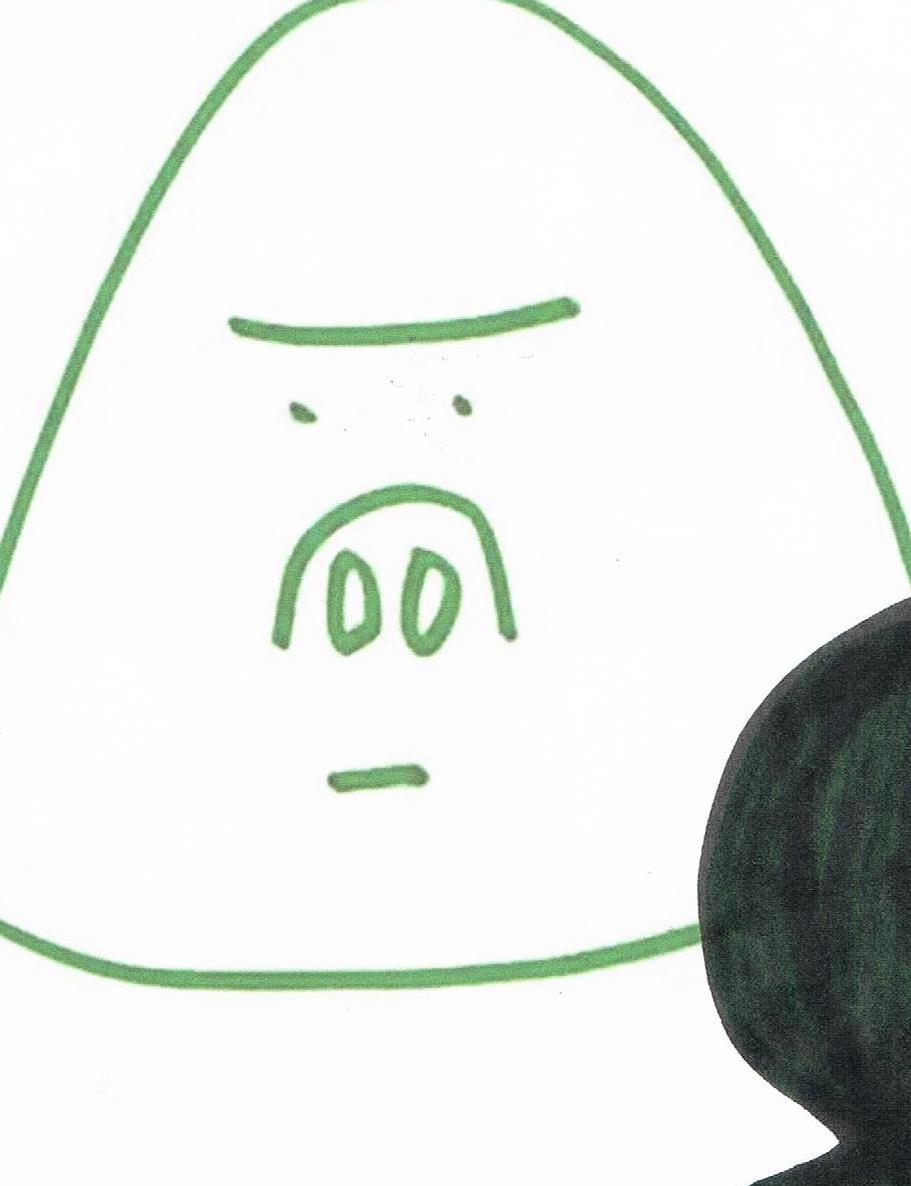
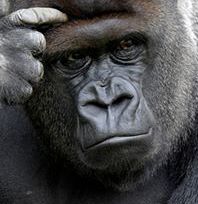
< (A recent photograph.   I know, he looks more like a gorilla.  But Bert is a monkey of many moods.  Today he feels gorillaesque.) 

We’ve lived and worked together for decades, Bert and I, but it’s only in the last few years that I began to notice him.  He’s unhappy about that.  He prefers I not notice him at all.  (In fact right now he’s sitting next to me, poking me with his monkeyfinger and trying to get me to stop writing this.  Attention inhibits him, he says.   Tough shit, Bert.)

How shall I describe him?

Well, Bert’s the part of me that

~ Tried to talk me out of writing this blog (because I’ve never done it before and have no idea what to expect).

~ Stops me from writing anything (because he’s scared of what people will think of what I think).

~ Does the same thing over and over, hoping for different results.

~ Avoids new places and new people.

~ Dislikes change (because it leads to feelings).

~ Dislikes feelings (because some are uncomfortable).

~ Loves numbness (especially the sorts induced by tv and sugar). 

~ Dwells in the dark twisted jungle of Worst Case Scenario.

~ Feels, when confused or scared, just like a six-year-old.

~ Regresses, at such times, into narcissism.  Even at his best he tends towards self-centeredness.  When confused or scared he tends not to give a rat’s ass about what anyone else is needing or feeling.

~ Is self-conscious, often about silly things. (Right now he’s wondering how you reacted to rat’s ass.)

~ Pushed me into private practice (because he can’t stand having supervisors).

~ Wants to be a writer (because on bad days he can’t stand clients).

~ Stops me from writing my book (because he’s scared of readers).

~ Can’t relax.

~ Creates To Do lists that stretch beyond the horizon.

~ Loves driving tiny nails into my brain.  Fat.  Lazy.  Undisciplined.  Cowardly.  Nail-driving is his favorite hobby.  He learned it when I was a kid and had it perfected by the time I hit puberty.  It’s taken most of six decades to get him to at least occasionally put down the fucking hammer.

~ Wonders how you reacted to fucking. 

~ Is never here, now.  That is, he spends most of his time is caught up in either memories (mostly bad ones) or projections (usually scary). 

~ Wants.  Endlessly. 

~ Wars with life.  That is, tries to replace whatever reality life hands him with the version he carries around in his head.

All of which amounts to a long way of saying that Bert

~ Believes in what I call the illusion of control: that if he tries hard enough long enough he really will be able to change people, places and things into what he prefers.

I call him my co-author, but in fact Bert’s role in this blog has yet to be determined.  For a while he’ll probably try to stop me from writing it.  Then he’ll try getting me to write as little as possible, and/or only safe stuff that won’t embarrass me or my family.  Eventually I expect he’ll settle for drooling on my shoulder and telling me what a shitty job I’m doing.  

Anyway, Bert and I welcome you to Monkeytraps.

PS: Bert says Hi, and please don’t come back.


Hey. You. With the banana.

Welcome to monkeytraps.com.

Thanks. What’s a monkey trap?

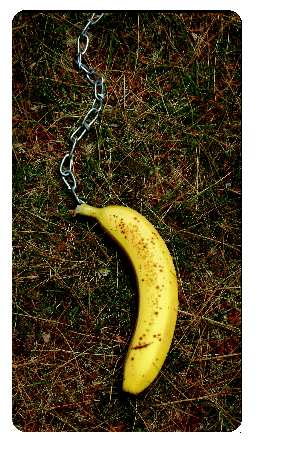
Wikipedia defines it as “A cage containing a banana with a hole large enough for a monkey’s hand to fit in, but not large enough for a monkey’s fist (clutching a banana) to come out.  Used to catch monkeys that lack the intellect to let go of the banana and run away.” A bit harsh towards monkeys, but you get the idea.  Other versions use heavy bottles or anchored coconuts to hold the banana.

And this is what you’re blogging about?  Catching monkeys?

No. It’s a metaphor.

For what?

Psychological traps.  The sort we all get stuck in.

More specific, please.

A monkeytrap is any situation that pulls you into holding on when you really need to let go.  I know I’m in one whenever I find myself trying to control something that can’t or shouldn’t be controlled.

Such as?

Well, feelings are monkeytraps.  So are relationships.  So are stressful situations of all sorts.  Anything that scares us or confuses us or makes us uncomfortable. Come to think of it, life itself is pretty much one monkeytrap after another.

Cheerful.

Realistic, I think.

And you’re writing about this because?

I’m a shrink.  Twenty years of doing therapy have convinced me that just about every emotional problem is rooted in some sort of monkeytrap.  Anxiety, depression, addictions, relationship problems, parenting problems, all of them usually turn out to be caused by someone holding onto something when they really should let go.

Too much control makes us sick?

No.  Too much controlling.  Control itself, that’s usually an illusion.

Beg your pardon?

I know.  Radical thought.  But think about it.  What in your life can you finally, absolutely control?

Um.

Exactly.   We spend our lives grabbing for it anyway.  Control is like a mirage that vanishes when you walk up to it, or a train you chase but never catch.  Most of the time we don’t even know we’re chasing it.   “Ideas we have, but don’t know we have, have us,” James Hillman said.  Control is just such an idea.    

Like an addiction.

Exactly.  We’re all addicted to control.  I know I am.

How can you tell?

Because the opposite of control is the ablity to accept the reality you’ve got instead of trying to replace it with the one you want.   (The reality you want, that’s the banana.)  It means being able to relax, and do nothing, and trust that everything will work out okay.  I’m not able to do that much.  You?

No.  Who is?

Nobody I know.  I’ve known some people who could do it occasionally.  I’ve never known anyone who could do it all the time.  I doubt any human being can.  We’re the monkeys who simply must control things, or die trying.  It’s one of the reasons I avoid the term “control freak.”   There’s nothing freakish about controlling.  What’s freakish is being able to stop.  

Why is that?

Why is one of the questions I hope to explore in this blog.  I have some ideas about it.  I have ideas, too, about how to better understand and deal with this universal addiction.  I created monkeytraps.com as a way to road test those ideas.

Road test how?

Unpack them in public, ask readers to think and talk about them.  Start a conversation about all this.

Okay.  Anything else I should know?

Lots.  But I’m trying to keep these things bite-sized, and I just passed my 500-word limit.  So come back tomorrow.  (Or whenever I do this next.  Sign up below, I’ll let you know).  Bring your banana.