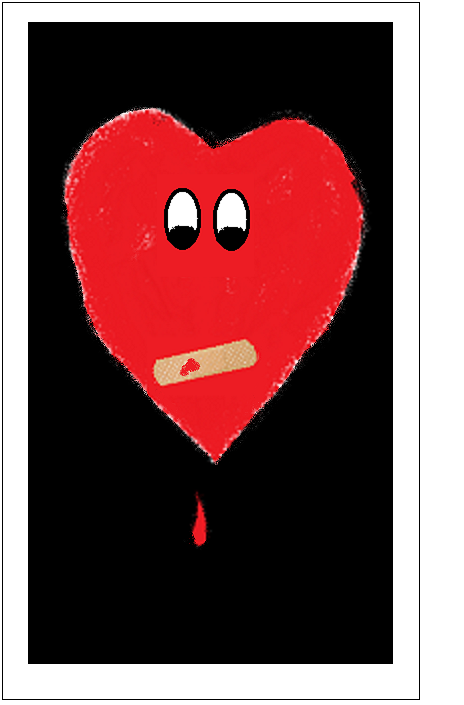
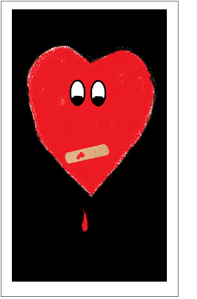
 Love is a wonderful terrible thing.
Wonderful because it connects us to others in the ways we most need to be connected.
Terrible because that connection leaves us horribly vulnerable.
You can’t love someone and protect yourself emotionally. Not really.
Real love means hurting when the other person hurts, and being subject to all sorts of doubts and disappointments, disillusionments and frustrations.
And yet many people I know try to make love safe.
They try to control the other person’s feelings, or viewpoint, or behavior.
They operate out of their heads, hoping to keep their feelings buried and beyond danger.
Or they hedge their bet, limiting their emotional commitment in the hope this will keep their vulnerability manageable.
These tactics always fail.
Because you can’t love someone and protect yourself emotionally.
And because you can’t protect yourself without the person you love noticing.
And because, by its nature, love is a wonderful terrible thing.
And because, by its nature, love is a wonderful terrible thing.
* * *
Now on YOUTUBE:
the new trailer for
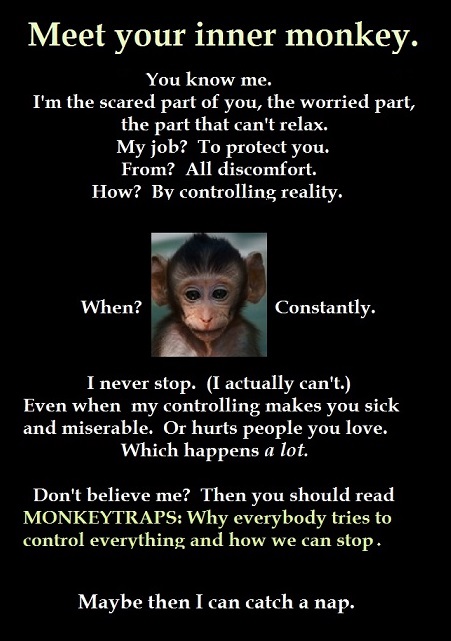
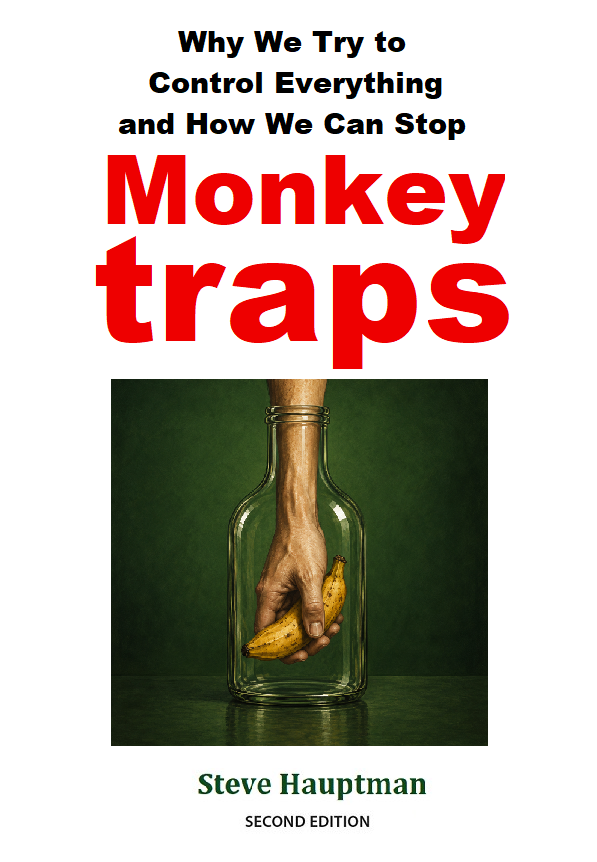
MONKEYTRAPS (THE BOOK):
Leave a comment | tags: addiction to control, compulsive controlling, pathologies of control, relationship | posted in codependency, compulsive controlling, control, controlling behavior, dysfunctional controlling
When the only tool you have is a hammer,
every problem starts to look like a nail.
~ Abraham Maslow
Occasionally a client gets discouraged about escaping control addiction.
This sometimes happen after we’ve spent hours discussing their narcissistic family, or their abuse as children, or the ravages of socialization, or how inevitably all of us get split into two neurotic pieces.
“What’s the point?” they may say. “If all these factors push us into compulsive controlling, and everyone ends up addicted to control, what hope is there for me?”
It’s at this point I give my little talk about problem redefinition:
There are two ways to see any problem.
We can define it as the situation we’re facing.
Or we can define it as our response to that situation.
Often there’s not much we can do about the first.
But there’s a lot we can do about the second.
Control is the only tool most people have.
It’s essential in some situations, of doubtful use in others, and sometimes it’s downright destructive.
The job of the recovering control addict is not to give up all controlling – that’s impossible – but to learn when to use the hammer of control, and when to put it down and seek alternatives.
Or put another way:
Recovery is the process of learning to distinguish control from dyscontrol — controlling that is compulsive or destructive or counterproductive.
Key to this distinction is a deep understanding of the real reasons we seek control.
Which is the subject of the next section of this book: Emotion.
* * *
xxx
Thanks for reading this far.
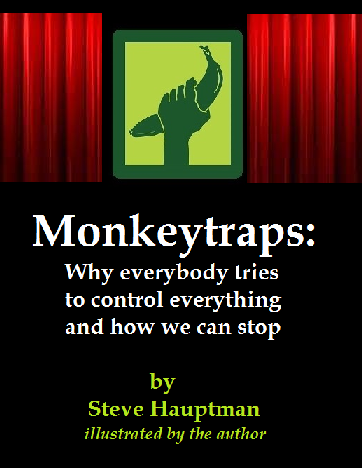
The complete book —
Monkeytraps:
Why everybody tries to
control everything
and how we can stop
— is being finalized for publication
in December, 2015.
Also coming: a podcast version
of Part I: Addiction
and Part 2: Dysfunction.
Watch this space for links
and further announcements.
As always, questions and feedback
are always welcome.
You can leave them here as comments
or email me directly: fritzfreud@aol.com.
And thanks, guys,
for your interest in
and support of this project.

4 Comments | posted in control
*
*
Of course paranoia is an extreme form of craziness. Paranoids believe the whole world is out to get them. I’ve worked with paranoids. They were scared most of the time, unable to trust anyone, led lives of confusion, uncertainty and occasionally panic.
But then, so do control addicts.
~ From “War with reality.”
Read the rest here.
Leave a comment | posted in control