Tag Archives: addiction to control
Perhaps most importantly:
Controlling may be either functional or dysfunctional.
Functional controlling is in some way necessary, appropriate or need-satisfying.
Dysfunctional controlling — a.k.a. dyscontrol — is none of those things.
Distinguishing the two can be tricky. Dysfunctional control often seems, in the moment, to be an effective way of coping.
Remember the list of controlling behaviors I offered in Chapter 7? Do you ever lie? Go along to get along? Hide your true thoughts and feelings? Most of us find it impossible to never engage in some of that stuff.
But eventually all forms of dyscontrol fail.
That’s because, where functional controlling represents an attempt to face and solve a problem, dyscontrol is a fear-based response whose main goal is to avoid anxiety or discomfort.
We’ll examine specific examples of this in Part 2: Dysfunction. They include anxiety, depression, addiction, and most relationship problems.
For now it’s enough to define dyscontrol as any controlling that ends up frustrating needs instead of meeting them.
Even Edith Bunker came to recognize this. Eventually she saw she needed to stand up to Archie, to stop appeasing him and simply say No.
(Haven’t seen that particular episode? Please do.* And notice the studio audience’s reaction.)
________________________

*All in the Family, Season 6, Episode 8: “Edith Breaks Out” (YouTube)
https://www.youtube.com/watch?v=X-Q0IYPJiFM
Jump to 12:00.
Leave a comment | tags: addiction to control, compulsive controlling, illusion of control, pathologies of control | posted in compulsive controlling, control, dysfunctional controlling
Controlling is hard to spot, and even harder to talk about.
Several reasons for this:
(1) It’s automatic and unconscious, like blinking or the beat of a heart. You can make yourself aware of your own controlling, but it takes effort.
(2) It’s normal. You do it all the time. Everyone around you does it all the time. So controlling behavior fades into the background of awareness, like a chameleon blends into its surroundings.
(3) We use stunted language to describe it. We apply the verb control to wildly different behaviors, to our handling of everything from feelings to finances, foreign trade to cholesterol, termites to acne. We almost need to construct a new language in order to adequately describe this chameleon we’re looking for.
Let’s try to do that, then.

We’re forming two online study/support groups for readers who want to explore these ideas with me in real time; one is for therapists who want to integrate these ideas into their clinical work. Both groups will be small, six members at most, and meet weekly. Fee is $50 per session, and group members may purchase Monkeytraps (The Book) at half price. Interested? Write me: fritzfreud@aol.com.
2 Comments | tags: addiction to control, compulsive controlling, control, control - idea of, pathologies of control | posted in addiction to control, adult children of alcoholics, codependency, codependency, control, control addiction, definition of control, meaning of control, personal development, personal growth
 You may not think of yourself as controlling.
Well, you are.
You just don’t see it.
Consider this view of how we operate:
From moment to moment, each of us carries in our heads a picture of how we want reality to be.
And we constantly compare that internal picture to the reality we have.
Everything we do to bring those pictures closer together — whether we do it out in public or in the privacy of our most secret thoughts — is what I mean by controlling.
See it yet?
Add this, then:
Discomfort of any sort – physical, mental, emotional, spiritual, everything from agony to an itch – amounts to a signal that the two pictures don’t match.
And we respond to that signal automatically.
So wherever there’s discomfort, there’s controlling.
And we all know how uncomfortable life can be.
Controlling, in short, is as reflexive and inevitable a response as slapping a mosquito that’s biting you.
See it now?
x
We’re forming two online study/support groups for readers who want to explore these ideas with me in real time. One group is for therapists who want to integrate these ideas into their clinical work. Both groups will be small, eight members at most, and meet weekly. Fee is $50 per session, and group members may purchase Monkeytraps (The Book) at half price. Interested? Write me: fritzfreud@aol.com.
4 Comments | tags: addiction to control, compulsive controlling, control, monkey mind, unconscious controlling | posted in addiction to control, codependency, control, control addiction, definition of control, meaning of control, personal development, personal growth
The ability to dictate reality.
That’s how I define control.
It’s not a definition you’ll find in any dictionary, and probably not how you define it.
But it’s essential to understanding everything that follows.
Dictate means rearrange or edit according to our preferences. Reality means, well, everything — everything outside us (people, places and things) and inside us (thoughts, feelings, behavior) too.
Defined this broadly, the wish for control stands behind just about everything we do consciously.
Plus most of what we do unconsciously (feel, fantasize, worry, dream) as well.
We seek control in order to get reality to behave as we want it to.
We seek control because we want to make the world adjust itself to us, instead of vice versa.
We all want control in this sense.
Not just want, either.
We crave it.
Control is the mother of all motivations.
Every human ever born has craved it and chased it.
Because it’s a craving that is literally built into us.
x
We’re planning an online study/support group for readers who want to explore these ideas with me in real time. Also coming, a group for therapists who want to integrate these ideas into their clinical work. Both groups will be small, eight members at most, and meet weekly. Fee is $50 per session, and group members may purchase Monkeytraps (The Book) at half price. Interested? Write me: fritzfreud@aol.com.
2 Comments | tags: addiction to control, compulsive controlling, control, control - idea of, craving for, definition of control, meaning of control, motivation and, unconscious controlling | posted in addiction to control, codependency, control, control addiction, definition of control, laws of control, personal development, personal growth
Want to trap a monkey?
Try this:
(1) Find a heavy bottle with a narrow neck.
(2) Drop a banana into it.
(3) Leave the bottle where a monkey can find it.
(4) Wait.
The monkey will do the rest.
He’ll come along, smell the banana, reach in to grab it.
Then find he can’t pull it out, because the bottleneck is too small.
He can free himself easily. He just has to let go.
But he really, really wants that banana.
So he hangs on.
He’s still hanging on when you come to collect him.
And that’s how you trap a monkey.
.
.
Want to trap a human?
Try this:
(1) Place the human in an uncomfortable situation.
(2) Wait.
The human will do the rest.
He or she will try to reduce their discomfort by controlling the situation.
The harder they work to reduce their discomfort, the more uncomfortable they’ll get.
The harder they try to escape their discomfort, the more trapped they’ll feel.
And that’s how you trap a human.
This is a book about control in general, and psychological monkeytraps in particular.
A psychological monkeytrap is any situation that temps us to hold on when we should let go — to control what either can’t or shouldn’t be controlled.
The world is filled with monkeytraps.
As is the emotional life of every human being.
I learned this from practicing psychotherapy.
Therapy also taught me four truths:
1. We are all addicted to control.
2. This addiction causes most (maybe all) our emotional problems.
3. Behind this addiction lies our wish to control feelings.
4. There are better ways to manage feelings than control.
I call these the Four Laws of control, and they structure the four parts that follow:
Part 1: Addiction is about the idea of control, and how it structures our lives and choices.
Part 2: Dysfunction is about the most common ways control addiction makes us (and those we love) sick and miserable.
Part 3: Emotion is about the real reason we try to control people, places, things, and ourselves.
Part 4: Alternatives is about moving beyond control addiction to healthier ways of responding to discomfort.
I plan to publish the first two parts online for free. Then I’ll offer the entire book for sale in spring 2015.
Since this is a new way of looking at people and their problems, chapters will be kept bite-sized and spaced out, to give you a chance to chew on each idea as it emerges.
Chapters you want to reread will be archived on the page titled Monkeytraps (The Book).
Feedback and questions are always welcome.
.
.
Finally:
You may be used to thinking of control as a solution, not a problem.
Fine. Read on.
You may not think of yourself as a controlling person.
Also fine. Read on.
You may never have tried redefining your emotional problems as rooted in your wish for control.
Terrific. Read on.
A client once described his first Al-Anon meeting as “like a light coming on in a dark room. Suddenly I could see all the furniture I’ve been tripping over all my life.”
That’s just what we’re going for here.
Welcome to the light switch.
* * *
We’re planning an online study/support group for readers who want to explore these ideas with me in real time. Also coming, a group for therapists who want to integrate these ideas into their clinical work. Both groups will be small, eight members at most, and meet weekly. Fee is $50 per 90-minute session, and group members may purchase Monkeytraps (The Book) at half price. Interested? Write me: fritzfreud@aol.com.
8 Comments | tags: 4 laws of, addiction to, addiction to control, control, idea of, meaning of control, pathologies of control | posted in (1) law of addiction, (2) law of dysfunction, (3) law of emotion, (4) law of alternatives, codependency, codependency, control, control addiction, personal growth
The Third Paradox of control:
.
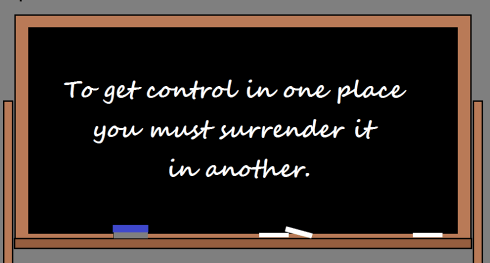
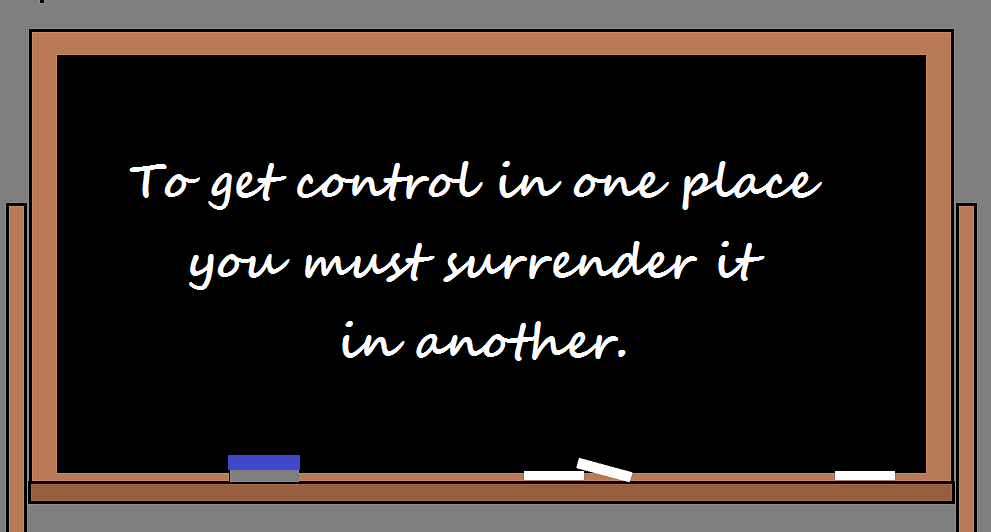
Controlling boils down to a tradeoff.
Gain control here, lose control there.
Think of the original monkey trap:
To hold on to the banana, the monkey surrenders his freedom. To regain his freedom, he must let the banana go.
It also explains all garden-variety codependent interactions:
To control you (make you like, love or accept me) I must surrender control of something else — like my ability to be honest, or spontaneous, or emotionally expressive.
Conversely,
Taking control of my emotional life — especially how I feel about myself — means surrendering control over how you react to me.
It also applies to New Year’s resolutions, not to mention all goal-setting:
To reach a particular goal (like writing my book) I must surrender control of others (like spending time with my family, or on chores that absorb my energy and attention).
To gain control of my weight I must surrender control (i.e., limit my choices) of what I put in my mouth.
To control my social anxiety I must detach from how other people see me and practice being myself.
And so on.
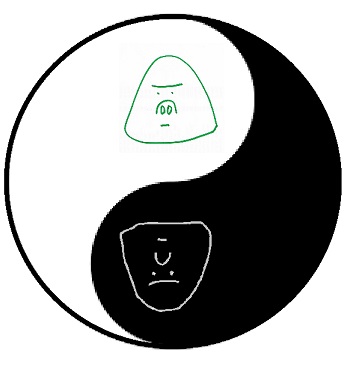
So control and surrender are two sides of the same coin.
And getting control of anything means losing control of something else.
To win A, you must sacrifice B.
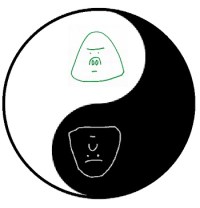
Tradeoff.
Balance.
Yin-yang.
Fill your bowel to the brim
and it will spill.
Keep sharpening your knife
and it will blunt.
Chase after money and security
and your heart will never unclench.
Care about people’s approval
and you will be their prisoner.
1 Comment | tags: addiction to control, anxiety and control, control, control - alternatives to, control - detachment vs, control - idea of | posted in addiction to control, anxiety, control, control addiction, paradoxes of control, personal development, personal growth, recovery, surrender, Third Paradox
.
How are your holidays going?
Thought so.
Bert and I guessed you could use this refresher:
.
In Asia they trap monkeys by placing bait in a heavy jar with a narrow neck. The monkey smells the bait, reaches in to grab it, and traps himself by refusing to let go.
A psychological monkeytrap is any situation that triggers you into compulsive controlling — into holding on when you really should let go.
And how can you tell when you’re at risk of entrapment?
Three tips:
.
Tip 1:
Notice where you’re uncomfortable.
We’re controlling whenever we need or want to change some piece of reality instead of accepting it or adapting to it as is. And we’re most likely to want to change realities that make us uncomfortable. So it makes sense that our discomfort zones are where we’re most likely to get monkeytrapped.
![[] bert panel (print for edit)](https://monkeytraps.com/wp-content/uploads/2014/04/bert-panel-print-for-edit.jpg?w=490) Bert: Me, I hate rejection. So I’m most controlling with people I think might reject me. I hide feelings I think will upset them, pretend to agree when I really don’t, laugh at stupid jokes, avoid confronting behavior I dislike, try to read their minds, and so on and so on. Keeps me busy.
Bert: Me, I hate rejection. So I’m most controlling with people I think might reject me. I hide feelings I think will upset them, pretend to agree when I really don’t, laugh at stupid jokes, avoid confronting behavior I dislike, try to read their minds, and so on and so on. Keeps me busy.
.
Tip 2:
Notice where you’re stuck.
Stuck as in not learning, healing or growing — struggling with the same damn problem over and over. You know you’re monkeytrapped whenever you find yourself doing what you already know doesn’t work.
Bert: All that controlling I just described traps me because it (a) stops me from being myself, which (b) prevents me from ever getting accepted as myself, which (c) keeps me chronically scared of rejection, which brings me right back to (a). Like riding an endless merry-go-round.
.
Tip 3:
Notice where you’re scared.
Like all addictions, compulsive controlling is anxiety-driven. We stay monkeytrapped because we’re scared to do anything else. Often even the thought of giving up control in such situations is enough to scare us silly.
Bert: Took me a long time to see that controlling doesn’t work. Or it does, but only for five minutes. Then another scary thing comes along and I have to control that. And life being what it is, there’s no end to scary things. So as an anxiety-reduction tactic controlling is a total flop.
The most frightened people are the most controlling people, and the most controlling people stay the most frightened.
5 Comments | tags: addiction to control, anxiety and control, control, illusion of control, pathologies of control | posted in anxiety and control, codependency, control, control addiction, personal growth
Women’s group. Six members.
All mothers.
One has been discussing problems her grown children face. Which leads into reviewing her failures as a parent. Which makes her cry.
The others listen and nod sadly.
After a minute I say, “Question for the group. Is there such a thing as an unguilty mother?”
They look at me, startled. Then at each other.
“I doubt it,” I say. “Every child deserves perfect parenting. No child ever gets it. And every mother knows this and feels bad about it. So feelings of inadequacy and failure and guilt are built into being a mother.”
“Always?” one asks.
“Maybe not,” I concede. “Occasionally I meet a parent unaware of his or her inadequacies. But they’re usually narcissists, and they usually scare the crap out of me.”
The crying mother sniffles.
“I can’t help feeling guilty,” she says. “When they hurt it feels like my fault.”
Right, Mom. You, me, and most every parent I know.
Look, guys.
Perfect parenting is not just impossible, it’s unnecessary.
The psychoanalyst Donald Winnicott once famously argued that kids don’t need perfect parenting — just parenting that’s “good enough.” Winnicott wrote,
The good-enough mother starts off with an almost complete adaptation to her infant’s needs, and as time proceeds she adapts less and less completely, gradually, according to the infant’s growing ability to deal with her failure. Her failure to adapt to every need of the child helps them adapt to external realities.
Catch that last line?
The mother’s imperfection is what helps her child adapt to reality.
So relax if you’re not perfect. You can’t be, and you don’t have to be. And it would probably be bad for your kids if you were.
Personally I take comfort in how one of my supervisors once defined good-enough parenting.
“The sign of successful parenting,” he said, “is that your kids can pay for their own therapy.”
5 Comments | tags: addiction to control, control, control - alternatives to, group therapy, illusion of control, parenting, perfectionism, relationship | posted in control, narcissism and control, relationships and control, self-acceptance, surrender
I’m stuck.
Part of me says Yes, do it. Do it now.
Another part says No, I can’t. Or No, I’m scared.
Gestaltists call this stuckness impasse: the point at which you stop yourself from moving forward because you’re afraid you won’t survive the attempt.
Scared, for example, of ending the marriage. Quitting the job. Starting the business. Writing the book. Expressing the feeling. Telling the truth.
Such stuckness always involves old fears, triggered in some part of me that hasn’t grown up.
That part so clearly remembers being dependent, helpless and/or scared of punishment that it hasn’t discovered I’m grown up now, and in charge of my own life.
“We are continually projecting threatening fantasies onto the world,” Fritz Perls wrote, “and these fantasies prevent us from taking the reasonable risks which are part and parcel of growing and living.”
The surprising thing about an impasse?
It’s almost always imaginary. It doesn’t exist in reality.
Push back against the fear and it tends to vanish, like a nightmare does when you turn on the bedroom light.
4 Comments | tags: addiction to control, anxiety and control, control, control - alternatives to, pathologies of control | posted in addiction to control, anxiety and control, control, control addiction, personal development, personal growth
In times of crisis she calls herself names.
“I’m so stupid,” she’ll say. Or “I’m crazy.”
But when I offer her a diagnosis – suggest she has an anxiety disorder, say – she rejects it:
“I don’t like labels.”
Puzzling. What are stupid and crazy if not labels?
It reminds me of something many addicts say when I suggest medication:
“I don’t want to need a pill to make me feel good.”
I hear this regularly from people already dependent on pot, street drugs or alcohol.
How explain this inconsistency?
To some people, accepting a diagnosis or medication feels like a loss of control.
I sympathize. Nobody likes to feel defined or directed by somebody else.
But resisting diagnosis and treatment usually leaves such people feeling neither freer nor stronger.
Just crappier.
Not more in control, but more helpless.
Another reminder of what I call the First Paradox.
The greater your need to feel in control, the less in control you’re likely to feel.
Leave a comment | tags: addiction to control, control, First Paradox of control, illusion of control, new experiences, paradoxes of control, pathologies of control | posted in anxiety, anxiety and control, control, control addiction, First paradox, self-abuse and control
Six women, crying.
All moms or grandmothers, and all worried about a kid.
One kid is gay and her parents are rejecting her. One’s being fed junk food and left alone all day with tv. One (a big one) is a germophobe whose marriage is in jeopardy. One (another big one) drinks too much. And the last flies into rages when he can’t get his way.
Anxiety, frustration, guilt and helplessness slowly fill the group room like a swimming pool.
And behind each story is one question: What can I do about this? And the same frightened answer: I can’t do anything.
“Okay,” I say finally. “Ready for some good news?”
They look at me.
“Not the answer you’re looking for, probably. And not where you’re looking for it. Not out there, among the people you love and want to rescue and the problems you hate and want to solve.”
I get up from my chair and go to a mobile hanging in one corner. It’s my Seafood Mobile, all fish, crabs and starfish. I flick a tuna with my finger. The whole mobile bounces.
“This is a family,” I say. “See what happens when one member’s in trouble? The trouble migrates throughout the system. Affects everyone. Got that?”
They nod.
“Now watch.” I hold the tuna between my thumb and forefinger. The mobile calms down. “This is what happens when one member stabilizes or heals. That healing migrates throughout the system too.”
I sit down again.
“You’ve no control over these problems. But you also have more power than you know. You can be the calm fish. You can help stabilize the system.
“Remember when you were kids? Remember the adults that helped you the most? They weren’t the anxious, angry or desperate ones. Not the ones who scolded or punished or rescued.
“They were the ones who reassured you, encouraged you, praised you, helped you feel good about yourselves. Who modeled calmness, acceptance, or faith. Who helped convince you – because they really believed it – that Everything Will Be Okay.”
“That’s what you can bring to your families.
“Your kids and grandkids are each in their own little rowboat. You can’t row it for them. Can’t stop the storm or calm the waters. You don’t have that kind of control.
“But if you learn how to calm yourselves without controlling, you can offer them a safe harbor. Model faith that Everything Will Be Okay. And provide an emotional space where they can pull in, drop oars, catch their breath, regain hope.
“Not a small thing.”
4 Comments | tags: addiction to control, anxiety and control, control, control - alternatives to, control - detachment vs, growth, relationship | posted in (4) law of alternatives, addiction to control, anxiety and control, communication problems, control, control addiction, parenting problems and control
In Mein Kampf (1925) Adolf Hitler explains the propaganda technique known as The Big Lie.
Most people, he writes, never think to fabricate “colossal untruths,” and so never expect others will have the gall to do so. This makes them gullible — so gullible that
Even though the facts [disproving the lie] may be brought clearly to their minds, they will still doubt and waver and will continue to think that there may be some other explanation.
Some families promulgate Big Lies, too.
I know this because there’s one lie with which therapists struggle every working day.
I wrote about it here not long ago (All my fault).
The lie is,
A family’s problems are
caused by the children.
This lie is usually told by parents, who may believe it themselves. (Often because their parents taught them to.)
Some deliver it directly. I wish you were never born. Or Why do I drink? You’re why I drink.
That’s rare, though. More often the lie is delivered indirectly. If I wasn’t pregnant, do you think I’d have married your father?
And sometimes it’s delivered nonverbally, with not words but behavior.
A sigh. A sniff. A look. Averted eyes. Angry or rejecting body language. Even comments meant to be overheard. That kid will be the death of me.
How can children defend against this?
They can’t.
Kids are like sponges. They absorb whatever poison they’re soaked in.
So if you’re a parent it’s worth taking time to examine how you explain, in the privacy of your mind, your own family’s pains and problems.
Because, accurate or cockeyed, your conclusions will probably become your kids’ conclusions.
And in some cases, the lie they end up living.
Leave a comment | tags: addiction to control, control, pathologies of control | posted in (1) law of addiction, alcoholic family, control, control addiction, personal development, personal growth
![[24] 181. 95% of what we worry about [E]](https://monkeytraps.com/wp-content/uploads/2014/02/24-181-95-of-what-we-worry-about-e.jpg?w=490&h=303)
***
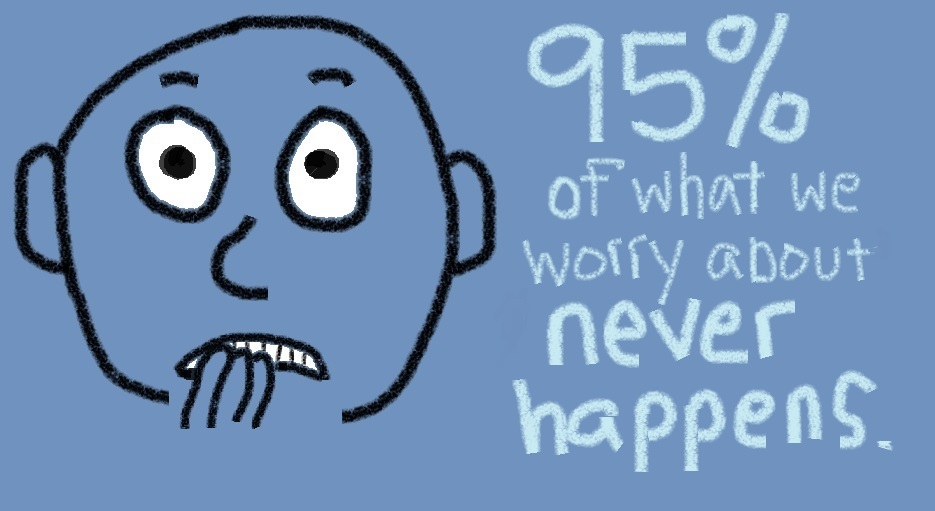
Why do we worry (endlessly, most of us) about stuff that never happens?
Because fear and anxiety are different things.
They feel the same, but they’re not.
Fear’s a reaction to real danger. Anxiety’s a reaction to danger we imagine.
Say you walk into a forest. A bear rushes out from the trees and growls at you.
What you’re feeling is fear.
He’s a real bear, and he could take a real bite out of you.
Now say you walk into a forest, and you look at the trees and think, “Wow, there could be bears in there.”
There speaks anxiety.
It’s a voice that issues from your big, oversized brain. The one that can’t stop remembering and anticipating and analyzing and scaring the shit out of you.
Such brains explain why we’re a race of endlessly, needlessly frightened creatures.
Good thing to remember.
Because there’s a big difference between fighting real bears and fighting those that lurk only in the forest of your mind.
* * *
Related:
“Background music: Control and anxiety”
and
“Nuts”
7 Comments | tags: addiction to control, anxiety and control, fear, monkey mind, pathologies of control | posted in control
* * *
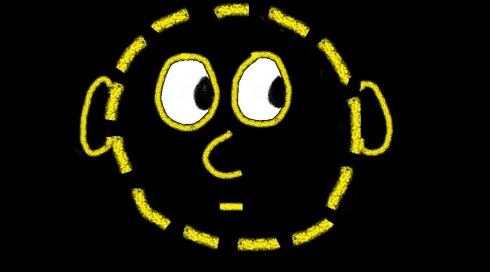
Control addicts tend to be confused about boundaries.
.
We confuse externals (what’s outside) with internals (what’s inside).
.
We tend to rearrange bits and pieces of the world around us so we can feel some feelings (safety, acceptance, contentment, connection) and avoid others (fear, rejection, frustration, loneliness).
.
We do it so much we forget our real goal is an emotional one, not rearranging for its own sake.
.
But the real goal of all controlling is to control feelings.
.
Which you can reach by means other than editing external realities.
.
Which is a helpful thing to know.
.
Because external control is so often impossible (as hurricances and elections like to remind us).
.
So it’s nice to remember that it’s not always necessary.
2 Comments | tags: addiction to control, control, control - alternatives to | posted in control
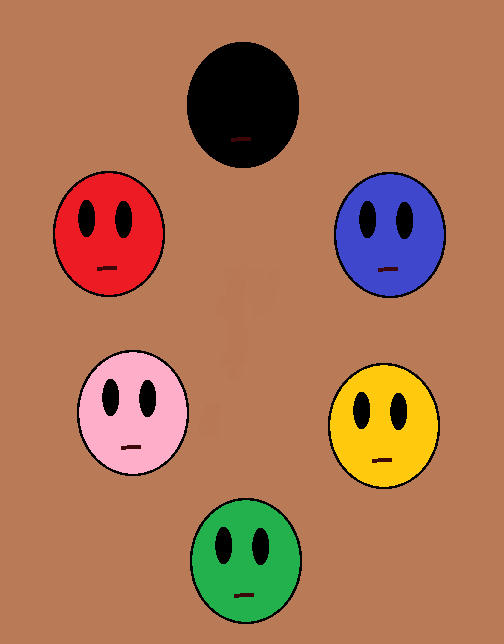
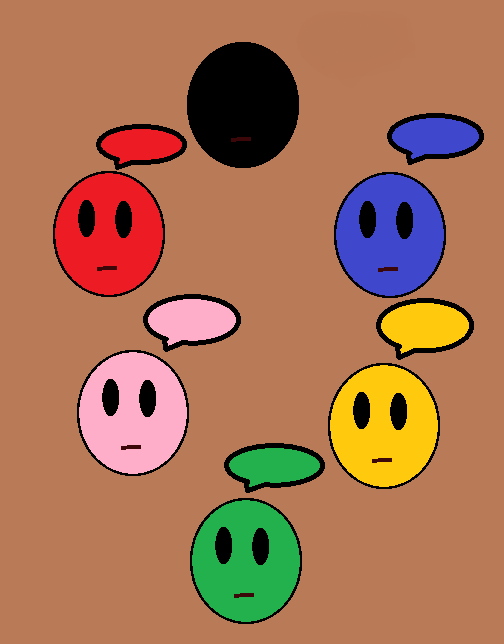
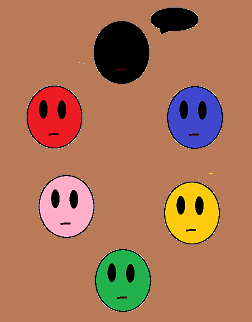
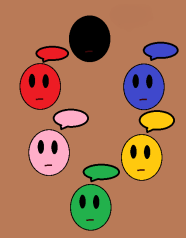
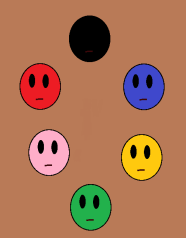
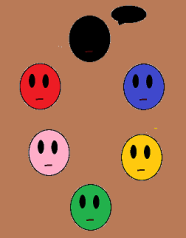 You all know me, but not each other. So let’s find out what you’re doing here.
Why did each of you join this group?
1
2
3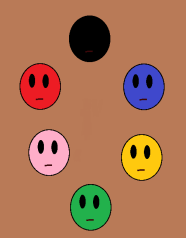 therapist 3
1
2
member 3
3
4
1=
2=
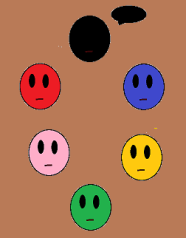 Come on, be honest. Why are you here?
1
member 4
3
3
4
2=herapist 5
a
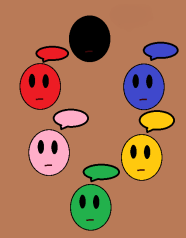
It was your idea.
It was your idea.
It was your idea.
It was your idea.
It was your idea.
1=
2
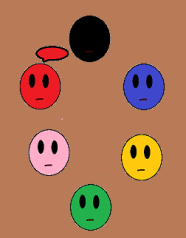
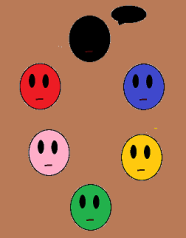 My idea? That’s the reason?
1
2
member 6
3
4
1=
1=
 a
a
Pretty much.
Pretty much.
Pretty much.
Pretty much.
Pretty much.
1=
2=
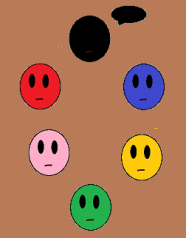 Hm.
Hm.
1
2
member 8
3
4
1=
2=
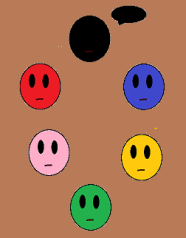 Well, needing to please your therapist isn’t very therapeutic. Maybe we should rethink this.
2
member 9
3
3
1=
1
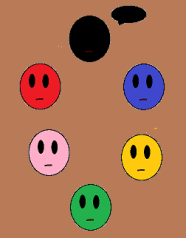 What if we cancel group? How would you feel?
1
2
member 10
3
4
1=
2=
 therapist 11
1
2
member 11
3
4
1=
2=
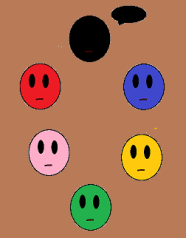 Come on, be brave. How would you feel about stopping right now?
2
2
member 12
3
4
2=
 th
th
1
2
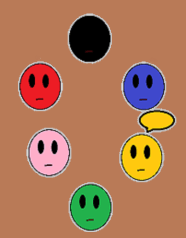
Yippee.
3
4
1=
2=
 t1herapist 14
1
2
Yes. Yippee.
14
3
4
1=
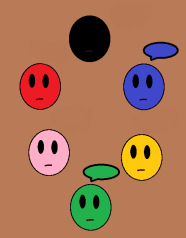 th2
th2
Yippee also.
Me too.
3
1=
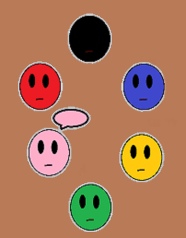 th
th
1
2
Ditto.
3
4
1=
2=
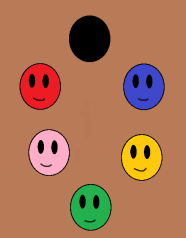 th
th
1
2
mem
3
4
1=
2=
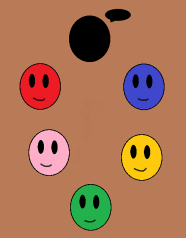 Huh. Now you’re all smiling.
1
2
member 15
3
4
1
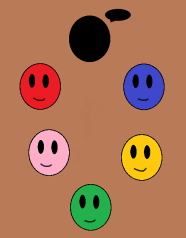 You better be careful.
1
2
member 16
3
4
1=
2=
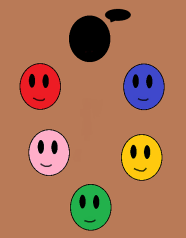 Someone might mistake you for a group.
1
2
3
4
5
6
* * *
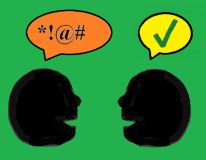 About validation
One of the most important emotional skills is the skill of validation.
It is a skill because it can be learned.
Whether it is or ever will be part of the academic or corporate measures of emotional intelligence, I really don’t know.
But I do know that if you want to have better relationships with people, the skill of emotional validation is extremely useful.
The relationship will be better because with more validation you are going to have less debating, less conflicts, and less disagreement. You will also find that validation opens people up and helps them feel free to communicate with you.
In fact, if there is a communication breakdown, if there is a wall between you and someone else, it probably has been built with the bricks of invalidation.
Validation is the means of chipping away at the wall and opening the free flow of communication.
~ From “Emotional validation: Introduction” at EQI.org.
1
* * *
1
Visited
Monkey House
yet?

No?
What are you waiting for?
What’s Monkey House? Read this.
Then click here to join the conversation. (Go to “Do you need to register a new member?” at the top.)
We’re asking, “What’s the most difficult control issue you’re facing now?“
A recent exchange:
Hi Bert and Members,
Cutting through the fear barrier of speaking out. Here goes:
My control issue: wanting validation as a person, in an individual sense.
Always, no matter what the situation, I’m pushed to the outer, disregarded, invalidated and not included, the invisible factor engulfs. As much as I try, 30+ years of trying, same result. I can do my job, very well if I may say so myself, and yet everything/everyone stays out of arm’s reach to the point of utter loneliness. 
Thanks Bert And Steve. After reading your blog for nearly 6 months, I’ve become aware of how the issue of control infiltrates so many aspect of our lives while recognizing both the healthy and unhealthy aspects of control. 
Hey, David. Thanks for cutting through.
Odd you should mention validation. That just happens to be the title of our next Monkeytraps post (due Sunday 5/13.) It’s also a subject on which we both have thoughts.
Steve: The need for validation is legitimate, inescapable, and the biggest damn monkeytrap I know, since it forces us to try — endlessly and in countless ways, not always conscious or healthy — to get what we need from other people. And as with most forms of control, the more of it you need, the less you seem to get. It’s also why having at least one reasonably healthy relationship is more or less essential to happiness.
Bert: God, I hate needing validation. I grew up hungry for it, so hungry that I used to avoid relationships just to avoid being disappointed. That didn’t work, of course, since it was like starving myself in order to avoid food poisoning. Eventually I had to take the risk again with people. A pain in the ass, people, but also the only game in town.
4 Comments | tags: addiction to control, control, control - alternatives to, control - communication and, therapy | posted in control, group therapy dynamics, pathologies of control, validation



![[] bert panel (print for edit)](https://monkeytraps.com/wp-content/uploads/2014/04/bert-panel-print-for-edit.jpg)
![[24] 181. 95% of what we worry about [E]](https://monkeytraps.com/wp-content/uploads/2014/02/24-181-95-of-what-we-worry-about-e.jpg)