This is the second of two posts about covert controlling. (You can read the first post here.)
.
3. It’s Just What I Do
Dennis keeps logging onto his wife’s computer to view porn. “And she keeps asking you not to,” I say. “Right.” “And she can always tell when you’ve done it.” “Always.” “And afterwards you two always have huge arguments.” “Yes,” he says sadly. “So why…” “I don’t know,” he shrugs. “I’m an idiot. I don’t know why I do it. It’s just what I do.”
Ellie just lunched with two friends, and she’s seething. “I hate them. They only talk to each other. Me they totally ignore. It’s like I’m not there. If I try to break into the conversation they look at me like I’m some annoying little sister. It’s always like this. I get so upset I have to go to the bathroom to cry.” This lunch, she adds, is a monthly ritual that’s been going for years. “Years?” I ask. “Why keep going? Why not just avoid them?” She shrugs helplessly. “They’d be angry,” she says. “But you don’t like them.” “Not much,” she admits. “But I can’t say no. It’s just what I…”
Frank’s wife makes all decisions for the both of them. “Everything from dinner to where to vacation to when to have sex,” he tells me. “Don’t you guys ever discuss things?” I ask. “Not really,” he says. “She tells me what she wants, then says, ‘Okay?'” “And you agree.” “Yeah.” “Ever disagree?” “Once or twice, when we were first married.” “What happened?” “She’s better at arguing than me. She gets loud, and I get nervous. So I give in. It’s easier.” “Is it really?” He sighs. “Maybe not,” he concedes. “But we’re married eight years now. Agreeing has become a habit. It’s just….”
Welcome to It’s Just What I Do.
This form of covert controlling shows up in my office every day. And each time it does I’m reminded of what Fritz Perls said about therapy clients:
“Very few people go into therapy to be cured, but rather to improve their neurosis.”
Still, It’s Just What I Do used to puzzle the hell out of me. Because I assumed that any repeated behavior must have some payoff attached to it. And I couldn’t figure out what the payoff was here.
Then I began to study the idea of control.
And I realized the payoff is all about Plan A.
.
4. Plan A
I’ve written about Plan A here before. It’s my label for everything we learn as kids about life and how to cope with it.
We each have a Plan A. We learn it mainly as kids, mainly from our parents, and mainly unconsciously. No one sits us down and says, “Now listen up. Here’s how you do life.” Instead we watch and listen to the grownups around us and absorb what they do like little sponges.
Plan A becomes our psychological default position, the place to which we revert under stress. As a coping method it may not work all that well. But it has one enormous advantage over any other plan: it’s utterly familiar.
And therein lies the payoff: the illusion of control.
Familiarity is enormously reassuring. We don’t have to analyze anything, learn new behaviors, anticipate new outcomes. Reverting to Plan A means knowing just what to do and just what will come of it.
The fact is, most of the time, most of us prefer a familiar pain to an unpredictable adventure.
Which explains why Dennis, terrified of losing his marriage, provokes the same fight again and again. And why Ellie, afflicted with chronic low self-esteem, lunches with people she hates rather than risking their disapproval. And why Frank, in treatment for crippling anxiety, tries to reduce his stress by agreeing with his wife about everything.
On some level each of them has decided they’re not ready for Plan B. Not ready for the emotional stretch, the stress of learning, the shock of fresh feelings, the unpredictability of something new.
So they cling to the familiar.
We all do. We’re anxious creatures, we humans. And our anxiety makes us resist change.
So we cling to the familiar like a child clings to a teddy bear. And chase control even what we chase is illusory.
“The most interesting thing about the control-mad people is that they always end up being controlled,” wrote Perls. “So the control-mad person is the first one to lose his freedom. Instead of being in control, he has to strain and push all the time.”
It’s just what we do.
Leave a comment | posted in control
Most controlling behavior is covert — hidden or disguised.
Why?
The reason is obvious.
Nobody likes a controller. So nobody wants to be seen as “controlling.”
At the same time, most of us can’t stop ourselves from controlling.
So as a result most controlling behavior is buried beneath a careful attempt to control other people’s reactions to the controller’s attempts to control stuff.
Got that?
Maybe some examples will help.
1. Silent Farting
 “I just know when something’s up with him,” Ben’s wife tells me. “It’s hard to say how. I just know. Something about the way he walks into a room, or turns the pages of his newspaper, or stirs his coffee. He doesn’t say anything, doesn’t even look at me. But I know a storm’s coming. It’s like I can smell it.”
This is Silent Farting.
It’s a way for people uncomfortable with expressing anger directly express it indirectly — under the radar, so to speak. They just sort of exude it, like a bad smell. The targets of their anger don’t always understand what’s happening, but like Ben’s wife, they can usually tell they’re been farted at.
Silent Farters tend to be people who in a previous life were punished for expressing anger out loud. Or grew up with abusive or chronically angry parents, which scared them into deciding that angry was not something they ever want to be.
How is Silent Farting a controlling behavior? In three senses.
The Farter overcontrols an unwanted feeling, instead of expressing it in an open and healthy way.
The Farter, by exuding anger instead of expressing it, also tries to control the reactions of others to that feeling.
Finally, Silent Farting can be a form of coercion, an attempt to intimidate by hinting at the storm that’s brewing inside. Ben’s farting has made his wife hypersensitive to his moods, and I suspect Ben likes it that way.
2. Stuff/Stuff/Blow
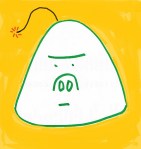 Halfway through our session Jan suddenly blurts, “You know, I’m about ready to walk out of here.”
She is crying. I’m surprised. She seemed fine a moment ago.
“Why?” I ask.
“You make me feel like shit. You sit there and imply that my relationships are inadequate and then you pressure me to do something I don’t want to do. I’ve had enough.”
Another surprise. Two weeks ago I raised the subject of group therapy, and since then referred occasionally to ways in which a supportive group might be of help.
I know the idea of group makes her uneasy, so I don’t really expect her to join. But I did think she was curious. Until now she’s responded to what I say with interested nods.
“How long have you been feeling this way?” I ask
“Since you first mentioned group,” she replies.
“Why didn’t you say so sooner?”
“I didn’t want to be rude. But now I’m fed up.”
This is Stuff/Stuff/Blow.
The Stuff/Stuff/Blower habitually conceals her anger from others, letting the pressure build until she can’t hide it anymore. Then, baboom.
The explosion usually embarrasses her, so afterwards she resumes stuffing and stuffing until the next inevitable blow.
Like Farters, most Blowers concluded early in life that expressing anger openly was somehow unsafe or unattractive. Now they bury theirs as long as they possibly can.
Unfortunately, anger is unavoidable for human beings. So for the Blower periodic explosions become unavoidable too.
It is not unusual for these explosions to be preceded by silent farting. But not all Farters are Blowers, and not all Blowers are Farters.
Personally, I’d rather work with a Blower than a Farter. Farters who never explode tend to be more scared of anger — theirs and everyone else’s — and so take longer to learn that, like most feelings, anger expressed is much safer than anger than stored up.
(To be continued.)
Leave a comment | posted in control
 There is a term some therapists like to use:
Ego strength.
It means the ability to say
This is who I am,
This is what I think,
This is what I feel,
and
This is what I want
without fear of judgment, punishment or rejection.
Essentially it refers to a person’s ability to feel and function like a self-supporting adult.
To the extent someone lacks this ability, he or she will tend to feel, inside, like a powerless child.
And to the extent either partner lacks this ability, relationships will tend to slip into what we call codependency.
Codependent relationships are characterized by anxiety, buried resentments, emotional disconnection, dishonest communication and compulsive controlling.
All common symptoms, unfortunately.
For which the only reliable cure is ego strength.
6 Comments | posted in control
 Every therapist develops a set of operating assumptions.
Held long enough, these assumptions become articles of faith.
They organize how we see things, what we value, how we define words like normal and healthy, and how we understand human beings.
Here are twelve of mine:
1. It is healthier to express feelings than to hide them.
2. Unexpressed feelings lie at the root of all emotional problems.
3. Secrets make us sick.
4. Problems in current relationships tend to echo problems in past relationships.
5. What we don’t get from our parents we will seek from our partners.
6. Being deprived in childhood of attention, acceptance, approval or affection leaves us chronically hungry for those things as adults.
7. When trying to understand some feeling or behavior, look for the underlying unmet need.
8. When deciding what you truly need, trust the body more than the mind.
9. There is no such thing as a totally grown-up human being.
10. The more control you need, the less in control you feel.
11. The more you try to control other people, the more you force them to control you back.
12. Getting more control in one place usually means giving up control in another.
Leave a comment | posted in control
*
*
One reader writes,
Thirty years I worked in the business my dad left me, building it up for my son. Now I want to retire and my son wants to do something else. What the hell have I been working for? He’s also engaged to a girl I don’t like. Whatever happened to family values?
My reply:
I don’t know you or your son. But I work with lots of families, and this sort of question comes up often. So I’ll answer from that context and you can decide if my answer is helpful.
I think a healthy family is one in which all members can get their needs met — not always, probably, but most of the time.
I think any family that requires a member to sacrifice himself or herself to the needs of the family is unhealthy.
I also think some families — they’re called narcissistic families — are set up unconsciously to meet the needs of the parents, even at the expense of the children. And if one comes from such a family, that arrangement seems normal. Parents simply expect kids to put aside their feelings and needs for Mom or Dad’s sake. To the parents this seems like love, or respect, or discipline, or “family values.”
Personally and professionally, I see it as something else.
So I suspect you, dad, need to decide if that’s the sort of family you came from and are trying to recreate now.
One question I like to ask parents struggling with this issue is, Do you want to raise a passenger, or a driver? If you want to raise a passenger, keep giving orders. If you want to raise a driver, at some point you have to let him or her take the wheel.
I should add that I think the parent’s job — like that of any good teacher, doctor or therapist — is to put himself out of a job. To raise a kid strong and healthy enough to separate, take care of himself, and not stay indefinitely tied to the parent.
If you stayed tied to your father until he died, you may well see it differently.
But there’s a big difference between staying connected to your parent by choice and staying connected because the parent refuses to release you.
Your children are not your children.
They are the sons and daughters of Life’s longing for itself.
They come through you but not from you,
And though they are with you, yet they belong not to you.
~ Kahlil Gibran
4 Comments | posted in control

A guy goes to a doctor.
“Doc, I’m in awful pain. Please help me.”
“Okay,” says the doc, “here’s some medicine. Take the blue pill in the morning, take the red pill at night.”
“I’ll take the blue one,” the guy says, “but not the red one.”
“Why not?”
“I’ve always hated red.”
This joke kept floating into my mind last week because of conversations I was having.
They were conversations with
~ an alcoholic who drinks due to loneliness, but won’t leave his isolation to attend AA;
~ a mom who craves a close relationship with her daughter, but won’t stop telling her what to do;
~ a husband who wants his wife to forgive his affair, but walks away when she tries to talk about her feelings of hurt and anger; and
~ a wife and mother exhausted from meeting everyone else’s needs, but who won’t say No to any demand made of her.
Each in considerable pain. Each avoiding some obvious step to relieve it.
Each saying I hate red.
Therapists call this behavior help-seeking/help-rejecting, and it results from a cost/benefit analysis that’s largely unconscious. On some level each of these people has decided that solving their problem would be more uncomfortable than the problem itself. They hate their pain, but they hate red more.
Pretty common, this. We all have red pills. They’re what we make New Year’s resolutions about. Things we should do but just can’t stop avoiding.
Exercise more. Watch less tv. Eat less sugar. Ask for that raise. Write that damned book.
Red-pill behavior illustrates what I call the Third Paradox*:
To get control in one place,
you have to give it up in another.
Want control of your weight? Tolerate your food cravings. Want control of your loneliness? Stop avoiding people. Want your daughter’s company? Stop bossing her. And so on.
Here’s the key:
In practice, what “give it up in another”usually means is stop avoiding some uncomfortable feeling.
Behind all controlling is the wish to control or manage feelings. Notice those examples above. The alcoholic is managing social anxiety. The mom is managing frustration with her daughter’s life choices. The husband is managing guilt over his affair.
But in backing away from those feelings they’ve backed into new problems. So solving those problems will mean learning to tolerate the feelings they avoid.
Again, we all do this. We always will. We’re all control addicts. It’s how we’re wired. No point in beating yourself up over it.
But:
If you have a problem of which you’re really really really sick and tired, you might redefine it by noticing that’s it’s really a solution as well — your way of protecting yourself from some particular emotional experience.
This sort of redefinition is the essential first step towards any solution.
So:
What red pill are you avoiding?
.
________________________________
*Click here for descriptions of the First and Second paradoxes.
9 Comments | posted in control

Tuesday morning she had her first panic attack.
Tuesday afternoon she came into session and we had this conversation:
It was awful. I felt like I was going crazy.
I know.
If you feel like you’re crazy, does that mean you are? Or does it mean you’re not?
Depends on how you define “crazy.” Some kinds of crazy have denial built into them. Delusional people don’t know they’re delusional, for example. And addicts are famous for not realizing they’re addicted. But milder forms of crazy are different. Neurotics often know they’re neurotic.
Which kind of crazy am I?
Neurotic. Which means normal.
Neurotic is normal?
Yep. Given how we’re socialized, neurotic is the healthiest anyone ever gets.
I don’t understand.
We’re trained to hide our feelings from each other, even from ourselves. This splits us into two parts, public and private. Therapists call this splitting “neurosis.”
Neurosis caused my panic attack?
Right. That was the private part exploding.
I hated that. I don’t want to be neurotic.
Nobody does.
What can I do about it?
Work your ass off in therapy.
What kind of work?
The uncomfortable kind.
It has to be uncomfortable?
Well, neurosis comes from avoiding discomfort. So recovery means facing what you’re avoiding.
Like what?
The stuff that scares you. Coming out of hiding with other people. Telling the truth. Expressing feelings. That sort of thing.
Like giving up control.
Exactly. All the alternatives to control involve tolerating some new discomfort.
Yeah, I’d rather skip that.
Sure. Most people do. Look around you. Met many healthy people lately?
Not many. Does the work get easier?
It does. I’m not sure it ever gets easy.
But people do it because…
It’s better than the alternative.
And when does it end?
Recovery work?
Yes.
If you’re doing it right, never. You just keep becoming more yourself until you die.
Never? There’s no graduation, no Emerald City you reach?
Nope. Just the yellow brick road.
1 Comment | posted in control
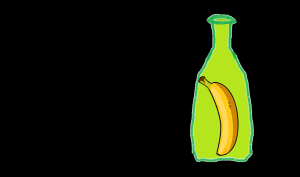
Monkey A wanders into the clearing and spots the jar under the tree. His nose wrinkles: banana. He scampers to the jar where the smell is overpowering. He sees yellow skin through the jar’s narrow neck. He reaches in, grabs and pulls, but the fruit is too big. Puzzled, he pulls harder. The banana stays stuck. He chirps in frustration, pulls with all his might. The banana stays stuck. His chirps becomes angry screeches. His little body whips around the bottle like a flag in a windstorm. He really really wants this banana. He is still wanting and pulling and screeching when the trapper’s net drops over him.
Monkey B wanders into the same clearing and smells the same banana. He reaches in, grabs, pulls. The banana stays stuck. He pulls harder. The banana stays stuck. Oh well, he shrugs. Can’t be helped. And goes his way, free.
5 Comments | posted in control
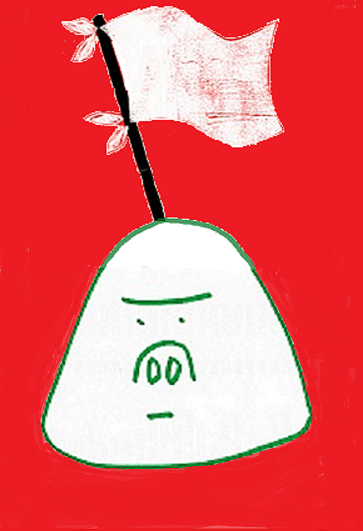
(If you’re new to Monkeytraps, Steve is a therapist who specializes in control issues, and Bert is his control-addicted inner monkey.
For this post, Steve interviewed Bert.)
Steve: So I’ve been writing about peace of mind and how control addiction makes it impossible, and how practicing alternatives to control make it easier to find. And I wanted to ask you about surrender.
Bert: What about surrender?
Steve: How you practice it, mainly.
Bert: Oh. Sure this is a good idea?
Steve: Why not?
Bert: People will know how lousy I am at it.
Steve: That’s okay. They know it isn’t easy.
Bert: I never use that word, by the way.
Steve: No?
Bert: No, that’s one of your writer’s words.
Steve: You don’t like it.
Bert: Not really. Sounds too much like helplessness.
Steve: That’s not what it means. It….
Bert: I know, I know. Surrender means winning, not losing. Letting go of what you can’t control represents the victory of awareness over denial, growth over habit, and faith over fear. Right?
Steve: Something like that. What word do you prefer?
Bert: Depends. Sometimes I think of surrender as detaching.
Steve: Meaning?
Bert: Taking a step back emotionally. Like when that client cursed at us in session yesterday.
Steve: And I told you to not take it personally.
Bert: Right. That it was just transference. And then other times I think of surrender as accepting.
Steve: “It is what it is.”
Bert: Yes. Though I hate that expression.
Steve: Why?
Bert: It’s like Have a nice day. Everyone says it, then go right back to being raging control freaks.
Steve: Any other words for surrender?
Bert: Let’s see. Sometimes I do it by consciously reframing a situation instead of trying to control it. Remember how mad I used to get at little old lady drivers?
Steve: Anyone driving at the speed limit, you mean.
Bert: Right. Well, now when I find myself behind one I just tell myself This is God reminding you to slow the fuck down. And I slow down, and I’m okay with it.
Steve: Very spiritual of you.
Bert: I think so. I use slogans too.
Steve: Which slogans?
Bert: Well, there’s the one you wrote on a Post-it and taped to your PC monitor:
99% of what we worry about never happens.
That got us through some rough times.
Steve: It did.
Bert: And the one you kept in the little plastic frame in your office. The one that made clients think you’re a little nuts:
Everything’s perfect.
Steve: I can’t count the times I tried to explain that.
Bert: Anyone ever buy it?
Steve: No. Easier to sell Everything happens for a reason.
But back to you. It sounds like you do a lot of surrendering, in one way or another. Why do you say you’re lousy at it?
Bert: Because of all the times I can’t.
Steve: Explain.
Bert: You know how we live. Rushing from chore to chore, worry to worry. Working down the To Do list with no end in sight. Feeling like everything is urgent. Lying in bed at night and trying to decide if you got enough stuff done to feel okay about yourself.
Then there’s the problem of people. All the times I just can’t be myself.
Steve: Can’t tell the truth, you mean?
Bert: Yes, but more than that. All the times I can’t just relax and stop worrying about how someone’s going to react to me.
But it’s more than that, too.
It’s all the times I can’t just relax. Can’t take, even, a really deep breath.
You know?
Steve: I know. Can’t relax if you can’t surrender. It’s a stubborn addiction.
Bert: Sometimes I’m sorry you told me I’m addicted.
Steve: Do you mean that?
Bert: No. No, I guess not.
Steve: What’s good about knowing?
Bert: Well, it does clarify things. When I feel angry or frustrated or crazy it’s usually because I’m trying to control something I shouldn’t. Calms me down, just seeing that.
Steve: Another surrender?
Bert: I suppose it is. And then, remembering I’m addicted gives me more choices than I used to have.
Steve: More choices?
Bert: Sure. Before I knew, I never even thought of surrender as an option. Now I know, even when I can’t do it. It’s something to work towards. Something to practice and get better at. And that gives me hope.
Steve: Hope’s good.
Bert: It is. It even lets you breathe a little bit deeper.
* * *
5 Comments | posted in control
Collections 1 & 2
Thirteen more here: Collected cartoons and posters
Leave a comment | posted in control

*
If I’ve learned anything here
it’s that the minute I say You
to my wife, it’s Game Over.
~ Craig
Craig belonged to one of my therapy groups, where I spend lots of time encouraging members to avoid You-statements.
You know what a You-statement is. You just read one. (Two, actually.)
It’s a statement someone makes to you about you.
They’re very popular.
We use them all the time. Especially in the heat of battle. As in “You’re wrong” or “You suck.”
But whenever we use them, they tend to be destructive.
They destroy honesty, trust and connection.
In an interpersonal relationship, reliance on You statements – or Yousage, for short – creates a subtle wall between us.
One reason is that, to the listener, You feels like an intrusion or an attack. At yet at the same time it’s so common we barely notice it, even when it’s making us uncomfortable.
The biggest problem with Yousage, though, is that it’s inherently defensive.
That’s because when I talk about You I’m not talking about me. I’m directing our conversational attention away from my thoughts, my feelings, what I want. Yousage allows me to stay hidden. And hidden feels safer.
That’s why it’s so much easier to say “You jerk” than “I’m angry at you.” Or “You look terrific” instead of “I’m attracted to you.” Or “You gave an interesting talk” instead of “I had no idea what you were talking about.”
Less vulnerable. Less honest.
So. Say you decide you’d like to grow beyond Yousage. What’s the alternative?
Well, in group I teach one called feedback. It’s a form of communication that relies on I-statements — I think, I feel, I want. The most complete feedback follows the ABC format: When you (A), I feel (B), because (C). That covers all bases. But the one essential is the I-statement at its heart.
Which means it takes courage.
But the results can be startling.
When people stop saying You and start saying I in the group room, the atmosphere changes noticeably. The energy level jumps. Suddenly everyone’s there, emotionally speaking, in a way people rarely are with each other. And then real therapy can happen.
But you don’t need a group to practice this. Just a desire to improve your communication with people to whom you’d like to feel closer.
First, try noticing how often you say You.
Then, try saying it less.
Try I instead.
Leave a comment | posted in control
 Two monkeys meet in the mountains at sundown.
Each is alone, having been separated from his tribe. Both are tired from trudging for days through the rocks.
Both are lonely.
But monkeys are wary beasts. So for a long time they stand motionless, eyeing each other suspiciously.
Finally the tireder of the pair gets tired of this too.
“Oh, screw it,” he says.
He sits down in the dirt.
The other watches him for a moment, then sits down as well.
They look around at the dirt, the rocks, the huge sky, the sinking sun. Finally their eyes meet.
“What’s your name?” asks the first monkey.
The second monkey scowls.
“What’s yours?” he replies.
They fall silent.
The sun’s lower edge touches the horizon. The air chills.
The first monkey reaches into his knapsack and pulls out a cigarette lighter. He scratches together a tiny pile of twigs and pushes the lighter into the center of it. The twigs catch. A small flame appears.
“Got anything to burn?” he asks.
The second money is leaning towards the flame, but the question stops him.
“Do you?” he answers. He places a protective paw on his knapsack.
The first monkey sighs.
The sun sinks below the horizon.
Now it is dark. Dark in the mountains is especially dark.
“Oh, screw it again,” says the first monkey. He reaches into his knapsack and brings out a small lump wrapped in dirty cloth.
“This is a secret,” he tells the other. “I never show it to anyone. It’s pretty embarrassing. But I guess it’s better than freezing to death.”
He unwraps a stinky old fish head.
A rotten smell fills the clearing. First Monkey swallows hard, then lays the fish head carefully atop the pile of twigs like an offering.
It catches fire. Flames leap up.
The smell disappears.
Now Second Monkey looks embarrassed.
“That’s not so bad,” he says finally. “I can beat that.”
He reaches into his knapsack and comes out with a medium-sized lump, also wrapped in dirty cloth.
“Really?” First Monkey smiles.
Second Monkey nods, unwraps his fish head, swallows hard and lays it on the fire.
Again a bad smell fills the clearing. The second head catches fire. Again the smell goes away.
The monkeys inch closer to the flames. They reach out and warm their paws. Overhead the moon starts its climb across the sky.
“You’ve got more of those, I hope,” Second Monkey says.
First Monkey smiles.
“I do if you do,” he replies.
They giggle.
And so the night passes, hour after hour, fish head after fish head, each one larger and more fragrant than the last, until both knapsacks are empty and the fire burns on without feeding and the sun peeks up over the mountains in the east.
“I’m Joe,” mutters Second Monkey suddenly.
“I’m Jack,” replies First Monkey. “Pleased to meet you.”
Moral:
There’s no one on this bus but us monkeys.
Leave a comment | posted in control
 The word control comes from the Latin contra rotullus.
Contra rotullus means “against the roll.”
This I learned from the Jungian psychologist James Hillman, who implies the term originally referred to fighting gravity. “Control is agency, yes, but of a restrictive kind,” Hillman writes in his book Kinds of Power. “The word comes from contra rotullus, against the roll. Since the free flow of inertia follows the path of least resistance, the easy path downhill is controlled by restraints.”
Against the roll. I found myself imagining the first “control” as some sort of ancient wheel block, a lump of wood or stone used to stop ox carts or chariots from rolling downhill.
I really liked this idea.
I liked seeing control as rooted in the idea of prevention. It confirmed my sense of how controlling functions in me and the people I know: as an attempt to avoid surprise and prevent misfortune.
Control, I realized, is defensive. We control not to make things happen, but to stop them from happening.
Hillman writes,
When we look closely at what we want when we want to be in control, we find mainly preventive desires. We want not to be bugged, not to be demeaned, not to be blocked and criticized. We want obstacles removed that compete, like other divisions in the company and other gangs in the ‘hood. Control means preventing interference. It has a conservative effect.
The most controlling people I know are obsessed with conserving, protecting and preventing. They expect bad things to happen. (Usually because bad things have already happened to them. Abuse and trauma victims are famously controlling. So is anyone who grew up in an alcoholic or otherwise dysfunctional family. Which, aside from Beaver and the other Cleavers, pretty much covers everyone.) So they fear the unpredictable, the unexpected, the unplanned. They rely on control to fend off danger and discomfort. They live, whether they admit it or even realize it, like frightened people.
Control, for all its self-assured position of command, relies on a defensive vision, and [its] traits — enforced loyalty, exactitude, suspicion of the hidden watchfulness — are paranoid traits.
Paranoia, of course, is an extreme form of craziness. Paranoids imagine the world’s out to get them. I’ve worked with paranoids. They were scared all of the time, unable to trust anyone, led lives of confusion, uncertainty and occasionally panic.
But so do control addicts.
They experience the world as dangerous, people as unreliable, relationships as competitive, emotions as scary, honesty as risky, and control as their shield against wounding by all of the above. They hate change, especially change they haven’t asked for. In therapy they’re almost always expressing resistance to something — some unfolding of events, some anticipated consequence, some expression of the innate tendencies of people around them. Often they’re anxious or angry without knowing why.
Alexander Lowen points out, “Because we are afraid of life, we seek to control or master it.” Logical, maybe. Effective? Not so much.
No, worse than that. Self-destructive. Because the War With What Is is actually a problem disguised as a solution.
Why? Three reasons.
First: Fighting reality is hard work. Try swimming against the tide of a stream or a river. Fight the flow, and see how long you last. That’s why control addicts end up stressed, strained and exhausted.
Second: The war is unwinnable. It’s not that control addicts don’t try hard enough. What they’re trying to do simply can’t be done. So they end up feeling frustrated and inadequate and depressed.
Third (and this is a big one): Control addiction is self-perpetuating. Think about it. To be scared of reality is to organize your life around fear. You tense up, go into defense mode and stay there. “As long as we are defensive, we are going to be frightened,” Lowen writes. So fear makes you defensive, which makes you more frightened, which makes you more defensive, and so on. Like any addiction. The more you control, the more you need to.
Control addiction, then, is a sort of garden-variety paranoia.
A form of everyday craziness you don’t notice much.
Why?
Because we’re all control addicts.
So everyone you know is just as crazy as you.
Leave a comment | posted in control