They are?
Imagine my surprise.

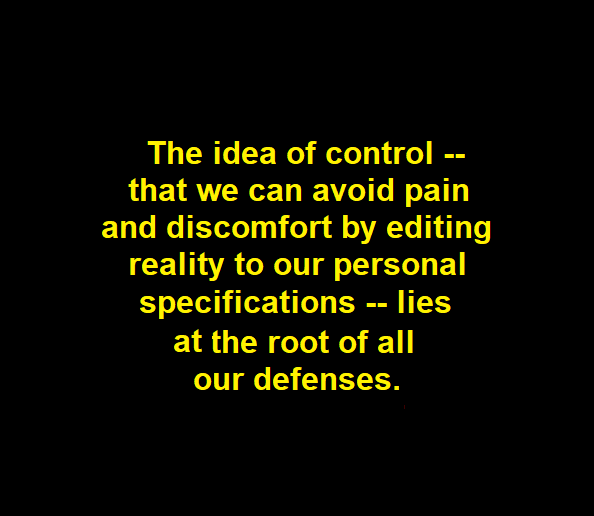
To me, control simply means being able to exchange the reality we have for the reality we want.
Just about everyone I know wants to do that.
Which means just about everyone is wishing and yearning and praying for more control.
Here’s the thing, though.
My work has taught me four basic truths:
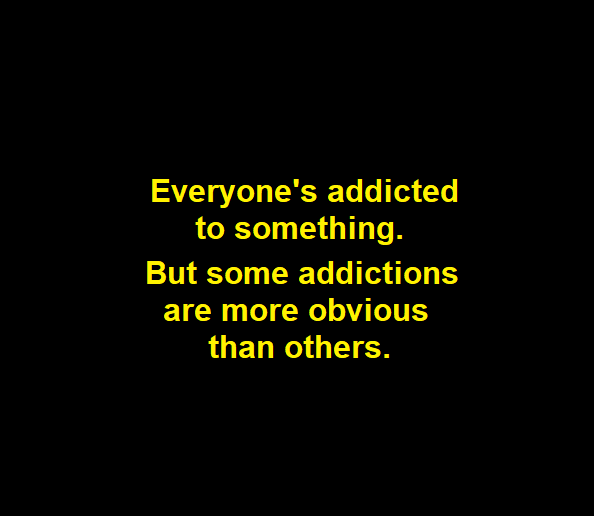
1. We’re all addicted to control. We chase it day and night, awake and dreaming, out in the world and deep in our heads, consciously and unconsciously, constructively and destructively, from birth until death.
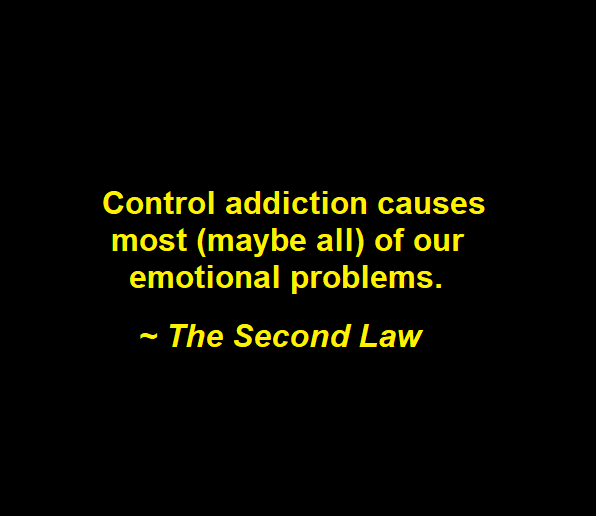
2. This addiction causes most of our emotional and relationship problems.
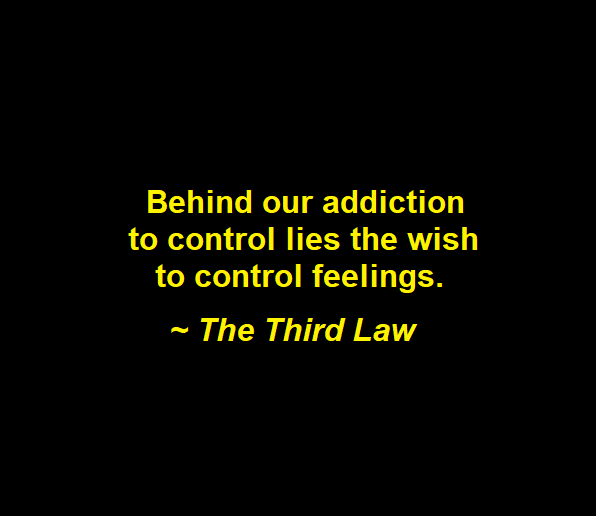
3. Behind this addiction stands the wish to control feelings.
4. There are much, much better ways to manage feelings than control.
If any of these statements rings true to your experience, you may be interested in the group I’m forming for control addicts.*
Yes, it is possible to recover from control addiction.
We should talk.
Email me at fritzfreud@aol.com and I’ll tell you more.
_____________
*Especially appropriate for adult children of alcoholic and otherwise dysfunctional families.
Leave a comment | posted in control
(This chapter is part of a self-assessment. For instructions on completing it, click here.)
[ ] I can’t believe that everything will work out even if I do nothing.
[ ] I find it hard to let others handle their own problems.
[ ] I hate asking for help.
[ ] If someone offers help I secretly question their motives.
[ ] I find it hard to relax.
[ ] I rarely play.
[ ] I keep my feelings to myself.
[ ] My feelings embarrass me.
[ ] I find it hard to listen to my body and follow its directions – to rest when tired, eat when hungry, take time off, say No, etc..
[ ] I never take mental health days.
[ ] I rarely base my decisions and choices on what feels right.
[ ] I’m afraid to be myself with you.
[ ] I’m afraid to let you be yourself with me.
[ ] It is difficult for me to believe in mutuality — that what’s good for me will be good for you and vice versa.
[ ] I find it difficult to “let go and let God.”
[ ] I get angry at God.
[ ] I sometimes wonder if God is angry at me.
[ ] I doubt there is a God.
Leave a comment | posted in control
(This chapter is part of a self-assessment. For instructions on completing it, click here.)
[ ] I pay more attention to the needs of others than my own.
[ ] I often overcommit or overextend myself.
[ ] I find it difficult to say No to requests.
[ ] If I want something done right I have to do it myself.
[ ] I feel guilty spending money on myself.
[ ] I feel guilty accepting help.
[ ] I don’t get enough rest.
[ ] I overeat, or eat too much junk food.
[ ] I prefer to deal with my problems by myself.
[ ] I rarely ask for help.
[ ] I suffer from stress-related medical problems – headaches, backaches, gastrointestinal ailments, exhaustion, insomnia, frequent colds, etc..
[ ] I look strong to others, but inside I feel helpless.
[ ] I live on the edge of feeling overwhelmed.
NEXT: About alternatives to control
Leave a comment | posted in control
(This chapter is part of a self-assessment. For instructions on completing it, click here.)
[ ] I am a “helicopter” parent – anxious, hypervigilant, and/or overprotective.
[ ] I worry that my parenting is not good enough.
[ ] If my kids are unhappy, I’m unhappy.
[ ] If my kids are happy, I worry it will end.
[ ] I take my kids’ problems and failures personally.
[ ] I’m reluctant to let my kids make bad choices or learn from their own mistakes.
[ ] I get hurt or enraged when my kids disagree with me or don’t do what I ask.
[ ] When my kids disagree with me it feels like disloyalty or disrespect.
[ ] I criticize my kids in an attempt to be “helpful.”
[ ] I blame, threaten, coerce, beg, bribe, or use guilt to get my kids to comply with my wishes.
[ ] I often feel unappreciated by my children.
[ ] My kids complain that I try to control them.
[ ] I secretly fear that my kids will reject or abandon me.
[ ] I grew up with controlling parents or grandparents.
NEXT: About self-care
Leave a comment | posted in control
(This chapter is part of a self-assessment. For instructions on completing it, click here.)
[ ] I often fear being judged or rejected.
[ ] I hate making mistakes.
[ ] When I make mistakes, I punish myself.
[ ] I worry a lot about what other people think or feel about me.
[ ] I hunger for acceptance and approval.
[ ] I question whether others love me.
[ ] I question whether I am loveable.
[ ] I worry that I’ll end up alone.
[ ] I get artificial feelings of self-worth from helping or rescuing others.
[ ] I am burdened by shoulds.
[ ] I am extremely sensitive to criticism.
[ ] I criticize myself constantly.
[ ] I take everything personally.
[ ] I blame myself for everything.
[ ] I apologize when there’s really no need to.
[ ] I dismiss or reject compliments and praise.
[ ] I have a hard time making decisions.
[ ] I can’t believe others can ever accept me as I am.
NEXT: About parenting
Leave a comment | posted in control
(This chapter is part of a self-assessment. For instructions on completing it, click here.)
[ ] I worry a lot.
[ ] I tend to expect the worst.
[ ] I spend a lot of time imagining how other people see me.
[ ] I often accept others’ view of me as my own.
[ ] I hide the parts of me I think others will reject.
[ ] I tend to obsess about problems.
[ ] I often pretend some of my most serious problems don’t exist.
[ ] I am uneasy around authority figures – teachers, bosses, cops, doctors, therapists.
[ ] Certain people or situations can trigger me into a panic.
[ ] Despite all evidence to the contrary, I tend to believe that if I try hard enough and long enough I really can get control.
NEXT: About self-worth
2 Comments | posted in control
(This chapter is part of a self-assessment. For instructions on completing it, click here.)
[ ] I have used alcohol to manage feelings.
[ ] I have used drugs to manage feelings.
[ ] I have used food to manage feelings.
[ ] I smoke or have smoked.
[ ] I often overwork or am compulsively busy.
[ ] I often get lost scrolling on my cell phone.
[ ] I use tv, video games or browsing on my computer to escape.
[ ] I am addicted to social media.
[ ] I am addicted to tv news.
[ ] I have to follow my routine or I get anxious.
[ ] I engage in other compulsive behavior that I see as problematic but cannot stop.
[ ] I understand that all addictions are an attempt to control feelings.
NEXT: About defenses
Leave a comment | posted in control
(This chapter is part of a self-assessment. For instructions on completing it, click here.)
[ ] I live in my head.
[ ] “How do you feel?” sounds like a trick question to me.
[ ] I have trouble knowing what I feel.
[ ] I have trouble expressing what I feel.
[ ] My own feelings scare me.
[ ] Other people’s feelings scare me.
[ ] I assume that negative feelings (anxiety, sadness, anger, confusion) mean I’m doing
something wrong.
[ ] I’m afraid if I let my anger out I may hurt someone.
[ ] I’m afraid if I start crying I won’t be able to stop.
[ ] I blame other people for how I feel.
[ ] My feelings make me wonder if I’m sick or crazy.
NEXT: About addictions
Leave a comment | posted in control
(This chapter is part of a self-assessment. For instructions on completing it, click here.)
[ ] I am drawn to needy or unhappy people.
[ ] Needy or unhappy people are drawn to me.
[ ] I feel responsible for the happiness of others.
[ ] I tend to anticipate other people’s needs.
[ ] It bothers me that other people don’t anticipate my needs more.
[ ] I feel anxious or guilty when someone else has a problem.
[ ] I feel compelled to help others with their problems, even when they don’t want me to.
[ ] I feel angry when my help isn’t welcomed.
[ ] I feel angry when my help isn’t effective.
[ ] I feel compelled to offer unsolicited opinions or advice.
[ ] I pay more attention to the needs and feelings of others than my own.
[ ] I feel selfish if I prioritize my needs and feelings over someone else’s.
[ ] I feel bored, empty or worthless when I’m not helping someone.
[ ] I feel safest when giving.
[ ] I feel embarrassed or unworthy when others give to me.
[ ] I end up resenting the people I caretake.
NEXT: About feelings
Leave a comment | posted in control
(This chapter is part of a self-assessment. For instructions on completing it, click here.)
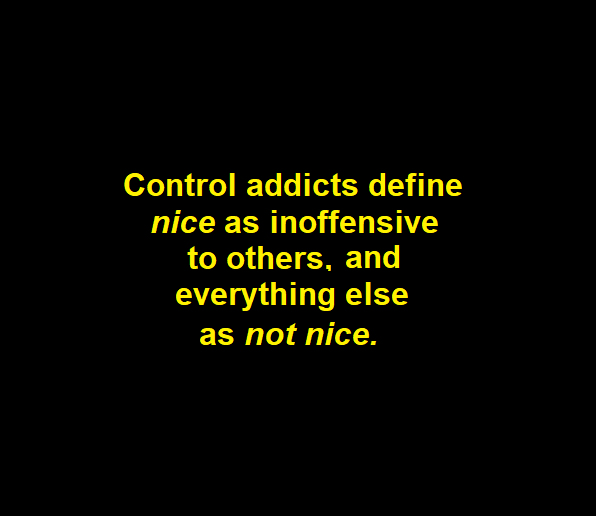
[ ] I pride myself on being a nice person.
[ ] I believe that I should always be nice.
[ ] I find it hard to reject another person no matter how much they may deserve it.
[ ] I probably go overboard in doing nice things for other people.
[ ] It’s much easier for me to acknowledge negative feelings about myself than to express negative feelings toward others.
[ ] When problems arise in my relationship I assume that I’m to blame.
[ ] I really believe that nice people get the approval, affection and friendship of others.
[ ] I don’t think it’s nice to express anger towards others.
[ ] I feel guilty if I get angry or upset with people I love.
[ ] I’m afraid that if I’m not nice to others I will be ignored, rejected or punished in some way.
[ ] I believe I should always be nice, even if it means allowing others to take advantage of
my good nature.
[ ] Being nice and doing things to please others is my way of protecting myself from
rejection, disapproval and abandonment.
[ ] I tend confuse guilt (the belief that I’ve done something wrong) with anxiety (fear of another’s anger or rejection).
[ ] Sometimes I feel like I need to “buy” love and friendship by doing nice things to please others.
[ ] Often being nice prevents me from expressing my true feelings towards others.
[ ] I believe others would describe me as being polite, pleasant and agreeable.
[ ] I think my friends should like me because of all the nice things I do for them.
[ ] It is hard for me to believe that I can be myself and still be accepted and loved by others.
NEXT: About caretaking
Leave a comment | posted in control
(This chapter is part of a self-assessment. For instructions on completing it, click here.)
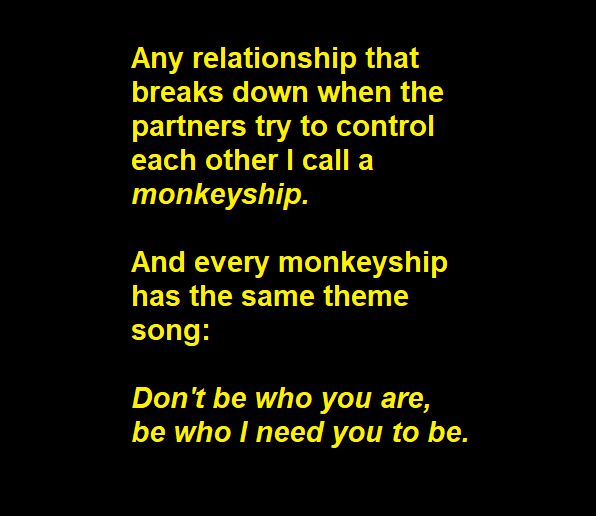
[ ] Relationships are difficult for me.
[ ] I have trouble feeling safe or comfortable with other people.
[ ] I worry a lot about what others think of me.
[ ] I find it difficult to trust or confide in others.
[ ] I am more careful than spontaneous in relationships.
[ ] I am a people pleaser.
[ ] I exhaust myself trying to meet others’ expectations.
[ ] I spend too much time with people who do not love, accept, or nurture me.
[ ] I keep letting people hurt me.
[ ] I often feel lonely.
[ ] It often feels easier to be alone.
[ ] I’m never sure how to answer the questions How do I have you without losing me? and
How do I have me without losing you?
[ ] That question makes me realize how much time I’ve spent in monkeyships.
NEXT: About people-pleasing
1 Comment | posted in control
(This chapter is part of a self-assessment. For instructions on completing it, click here.)
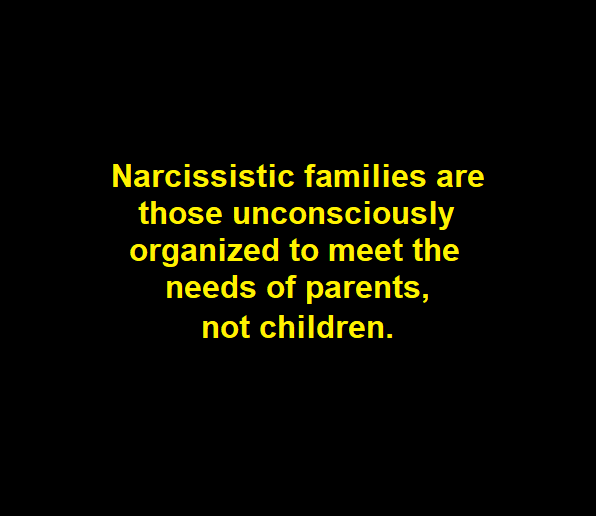
[ ] I grew up in an alcoholic family.
[ ] I grew up in a family with members who struggled with substance abuse or eating disorders.
[ ] I grew up in a family with members who struggled with mental illness.
[ ] I grew up in a family with members who struggled with chronic illness.
[ ] I grew up in a family where abuse — emotional, physical or sexual — occurred.
[ ] I grew up in a family where feelings were not expressed easily.
[ ] I learned from my family not to expect validation of my feelings.
[ ] My family was dysfunctional, but I pretend otherwise.
[ ] One or both of my parents grew up in dysfunctional families.
[ ] One or both of my parents struggled with depression or anxiety.
[ ] I felt like a disappointment to my parents.
[ ] I felt unloved by my parents.
[ ] As a child I heard more criticism than praise.
[ ] My family discouraged talking about problems.
[ ] Mine was a “looking good” family — we hid our problems from the world.
[ ] My family valued success and punished faillure.
[ ] My parents acted as if my successes and failures were their own.
[ ] My family regarded people who seek therapy as weak.
[ ] I get anxious or defensive if someone suggests my current problems are related to my family.
[ ] When I sought therapy I kept it secret from my family.
NEXT: About relationships
Leave a comment | posted in control
(This chapter is part of a self-assessment. For instructions on completing it, click here.)
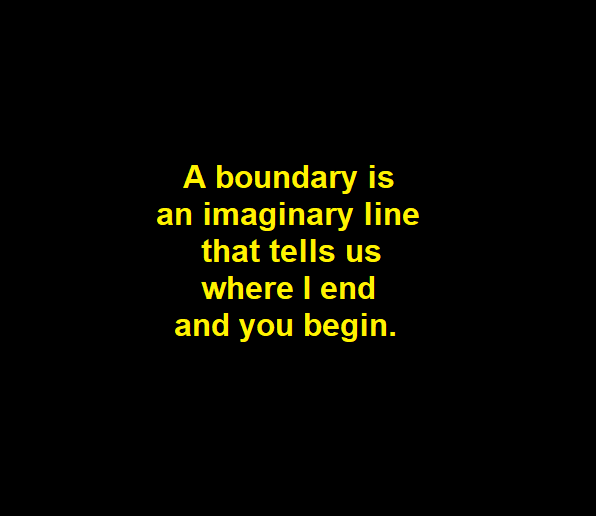
[ ] I tend to please others instead of myself.
[ ] I have trouble saying No to requests or demands.
[ ] I find it hard to not absorb other people’s feelings.
[ ] I feel controlled by other people’s anger.
[ ] I will go out of my way to avoid conflict or disagreement.
[ ] In social situations I scan for danger.
[ ] I have had sex when I didn’t want to.
[ ] I have used sex to appease my partner or avoid conflict.
[ ] It scares me to depend on other people.
[ ] I accept unacceptable behavior.
[ ] I am loyal even when my loyalty is undeserved.
[ ] I interpret rejection as implying something about me, not the rejector.
NEXT: About family
Leave a comment | posted in control
(This chapter is part of a self-assessment. For instructions on completing it, click here.)
[ ] I have struggled with anxiety.
[ ] I have struggled with depression.
[ ] I have struggled with substance abuse.
[ ] I tend to forget (or never learned) that anxiety, depression and addiction are all symptoms of emotional constipation — i.e., overcontrolled feelings.
[ ] I struggle with relationships.
[ ] I struggle with parenting.
[ ] I tend to be impatient.
[ ] I am easily frustrated.
[ ] I worry constantly.
[ ] I carry a lot of anger.
[ ] I carry a lot of sadness.
[ ] I often feel insecure or inadequate.
[ ] I don’t sleep well.
[ ] I am often tired.
[ ] I get sick easily.
[ ] I have experienced a panic attack.
[ ] People have told me they experience me as angry, irritable, critical, insensitive or nasty.
[ ] I often feel stressed, pressured or chased.
NEXT: About relationships
Leave a comment | posted in control
(This chapter is part of a self-assessment. For instructions on completing it, click here.)
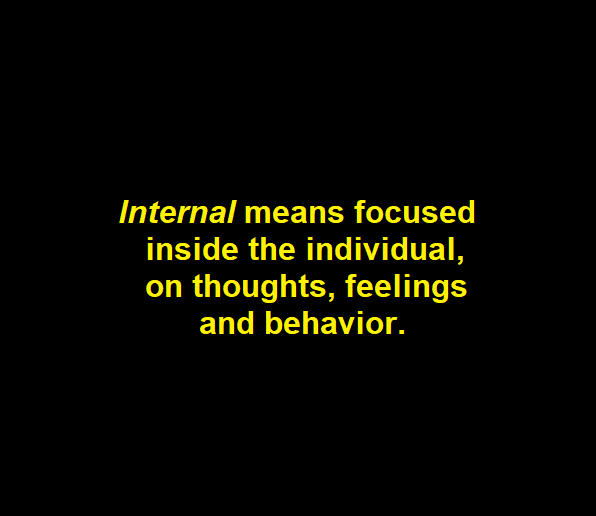
[ ] I am intolerant of my own mistakes, failures and weaknesses.
[ ] I often beat myself up.
[ ] I feel burdened by shoulds.
[ ] I have trouble forgiving myself.
[ ] I tend to be perfectionistic.
[ ] I find it difficult to be spontaneous or playful.
[ ] I often guess at what normal feelings and behavior are.
[ ] I’m secretly proud of how hard I am on myself.
NEXT: About emotional problems
Leave a comment | posted in control






