(This chapter is part of a self-assessment. For instructions on completing it, click here.)
[ ] I avoid new or unfamiliar situations.
[ ] I avoid meeting new people.
[ ] I avoid the unpredictable.
[ ] Disorder and disorganization make me anxious.
[ ] I dislike having to learn anything new.
[ ] I dislike change.
[ ] I get impatient with mistakes, failures and weaknesses in other people.
NEXT: About internal controlling
Leave a comment | posted in control
(This chapter is part of a self-assessment. For instructions on completing it, click here.)
.
[ ] I constantly compare the reality I have to the reality I want.
[ ] I am often unsatisfied or frustrated with things as they are.
[ ] I get anxious when things don’t go as expected.
[ ] I get angry when things don’t go my way.
[ ] When uncomfortable or unhappy I tend to look for someone to blame.
[ ] People close to me have suggested I am controlling.
NEXT: About external controlling
Leave a comment | posted in control
*
(This chapter is part of a self-assessment. For instructions on completing it, click here.)
[ ] I usually see control as a solution, not a problem.
[ ] I overreact to situations I cannot control.
[ ] I often complain – aloud or to myself — about my current situation.
[ ] I often find other people frustrating or disappointing.
[ ] I seem to need control in order to feel calm or safe.
[ ] I often feel restless or unsafe.
NEXT: About controlling
Leave a comment | posted in control
Learning is never
what one expects.
~ Carlos Casteneda
What follows is a series of 220 questions meant to raise your awareness of the role control plays in your life.
Subdivided by topic, they are based on the idea that the urge to control lies behind more of what we think, feel, say and do than we normally realize.
This is not a formal assessment.
There is no scoring, just some boxes to check.
Check the box at the left if you agree with the statement.
If you’re not sure, circle the box and come back to it later.
Take your time with this.
No, really.
Go away and come back to it, if you need to.
You may be surprised by what you see when you look in this mirror.
At least that’s what we’re hoping for.
How not to use this mirror
As noted earlier, adult children tend to judge themselves without mercy.
Do not use this self-assessment for that purpose.
Do not count the boxes you check and then decide that number means you are somehow broken.
Nor is this a moral inventory, or a measure of your worth as a person.
You are forbidden from using it as one more hammer with which to beat yourself up
This mirror is meant to increase awareness, clarify patterns, stimulate curiosity, and provide reassurance.
Why reassurance?
Because if, without knowing you at all, the mirror can accurately describe some of your personal experience, maybe you’re not so unique after all.
Maybe you’re not as alone as you feel.
13 Comments | posted in control

.
(Chapters of my new book, Monkeytraps for Adult Children, will resume shortly. Meanwhile here’s something I wrote a while ago but remains relevant for nearly everyone I know and everyone with whom I work.)
A psychological boundary is an imaginary line that separates you and your stuff — thoughts, feelings, needs, preferences, problems, responsibilities — from other people and their stuff.
Boundaries are essential to peace of mind and good mental hygiene.
That’s because, without boundaries, you can’t tell where your stuff ends and the other guy’s begins.
Which makes you entirely too vulnerable to live among other people.
Sort of like a nudist living among cacti.
Most people understand this, if only on the intuitive level.
What they don’t understand is how to set boundaries.
So here’s a quick guide:
1. Boundary-setting starts in your head, with a commitment to learning and practicing this important but difficult skill.
2. It does not signify lack of love or compassion, that you’ve stopped caring for or about people.
3. It does signify a decision to take better care of yourself, to treat yourself with the same love and respect you show others.
4. It also requires facing your fear that, if you show who you really are, the people in your life will judge or reject you.
5. Boundary-setting starts with reclassifying stimuli — taking triggers from the MUST FIX THIS box and moving them to boxes labeled BEYOND MY CONTROL or NOT MY BUSINESS. This redraws your personal boundary as a smaller circle that contains less for you to struggle with.
6. One way to do this is by using the three questions I write about in “The 3-question machine” and chapter 65 of Monkeytraps:
~ What am I trying to control here?
~ Have I had any luck controlling this in the past?
7. The next step is to practice redefining your boundaries out in the world. Usually this begins with saying No to something you’ve said Yes to previously.
8. Boundary-setting takes courage. (Reread #4 above.)
This is especially true if you’ve trained the people around you to see your boundaries as blurred or nonexistent.
They’ll be used to your trying to help, rescue or fix them, and may feel hurt or bewildered if you stop.
So it’s a good idea to explain beforehand what you’re trying to do and why you’re trying to do it.
9. Boundary-setting requires support. Try to find at least one person who understands what you’re trying to practice and who can provide permission and encouragement.
10. You may find that some important people in your life — like family members — refuse to acknowledge or respect your new boundaries.
This is not uncommon.
The usual reason for it is that they themselves lack healthy boundaries, and so are unable to tolerate yours.
If it happens, you may feel hurt and surprised. You may even feel discouraged about setting boundaries in general.
Don’t lose heart.
Set new boundaries where you can, with the people healthy enough to let you do it.
Each new boundary you set is like making a deposit in your emotional bank account.
Over time the deposits accrue, and you find yourself feeling stronger and more confident with everyone.
Leave a comment | posted in control
 .
.
.
(Chapters of my new book, Monkeytraps for Adult Children, will resume shortly. Meanwhile here’s something I wrote ten years ago and was inspired to update and repost by a recent therapy group discussion.)
Probably the hardest thing about recovering from control addiction is learning how to distinguish healthy from unhealthy controlling.
Since not all controlling is unhealthy.
Since sometimes it’s absolutely realistic and necessary.
Like when you’re driving on ice, or your toilet overflows, or your kid is sick.
Not situations where you want to surrender control.
On the other hand, there are times when we feel the urge to control stuff that either cannot or should not be controlled.
Like when we try to control other people, or our own feelings, in dysfunctional ways.
Times when the urge to control is at best unrealistic, at worst counterproductive.
Even self-destructive.
Times when we really need a reliable way to answer the question To control, or not to control?
Here’s one way.
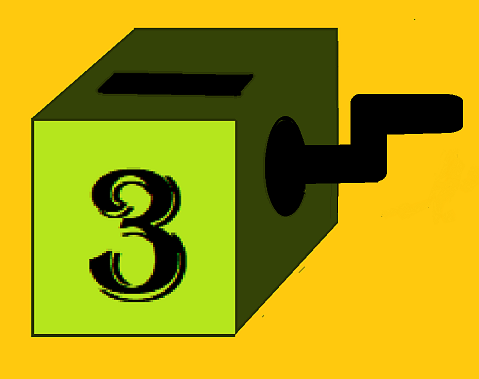
The 3-question machine
This is an imaginary machine, just a series of questions you can use to evaluate how to best cope in a given situation.
It’s mechanical in the sense that you can plug your situation into it, turn the crank and it will produce a reliable answer.
The questions are
(1) What am I trying to control here?
(2) Have I been able to control this before?
And if the answer to (2) is No,
(3) What can I do instead?
These are essential questions to ask ourselves when stressed, because they remind us that (a) stress is what usually triggers our controlling, and (b) our controlling usually produces more stress.
Not always easy to answer, though.
Because each is a trick question.
(1) What am I
trying to control?
Control addicts answer this by looking outside themselves, at externals:
I want my spouse to stop criticizing me.
I want more money in the bank.
I want my son to pass Math.
But don’t be tricked.
Remember that what we really want to control is feelings.
Your spouse’s criticism causes hurt; lack of money creates anxiety; your son’s grades are embarrassing.
So what you really want is to eliminate hurt, anxiety and embarrassment.
That’s good news, since feelings tend to be easier to manage than externals.
(2) Have I been able to
control this in the past?
Same trick here. Focus on feelings.
Say you tried to control your spouse’s criticism by apologizing, appeasing, or retaliating.
Did any of that leave you feeling less hurt or angry?
Say you tried to control your finances by working harder, worrying more, or nagging family members about their spending.
Did any of that eliminate your insecurity?
Say you tried to control your son’s grades by yelling, punishing, or standing over him while he did homework.
Did any of that reduce your embarrassment? Or just create more tension and conflict?
If your honest answer to this second question is Yes, terrific. Problem solved. Keep doing what you’re doing.
But your answer is No, it’s probably time for a less controlling solution.
(3) What can I do instead?
Here the trick is to remember that there are three alternatives to control: surrender, responsibility and intimacy.
Surrender (or detachment) means giving up the attempt to control what can’t be controlled anyway.
Responsibility means shifting your focus from externals to internals — from people/place/things to how you are reacting to them — and trying to modify your reaction.
And intimacy means being yourself with another person, and allowing them to do the same with you.
I’ve explained what these words mean here, and most fully in my book.
They’re the three healthy alternatives to unhealthy control.
1 Comment | posted in control
Codependency has a fuzzy
definition because it is a gray,
fuzzy condition. It is complex,
theoretical, and difficult to
completely define in one
or two sentences.
~ Melody Beattie
Codependency is a term which emerged in the 1970’s as a way of describing the emotional lives of people affected by someone else’s alcoholism
Originally cobbled together from the clinical terms co-alcoholic and chemical dependency, it has since seeped into everyday language as a term we throw around without ever bothering to define it precisely.
Different theorists have explained it in different ways.
(I’ve listed some of them at the end of this chapter.)*
Even therapists who work with codependency every day have trouble defining the word succinctly.
But I don’t.
I use it as a synonym for control addiction.
To me a codependent is simply someone who relies mainly on control as a way of managing their anxiety around life in general and relationships in particular.
If you’ve read this far, you understand why I see that as just about all of us.
I also see recovery from codependency as overcoming our addiction to control and finding healthier ways to manage feelings and relationships.
But what we call codependency does have many, many faces.
The next part of this book will explore them.
_________
*Definitions of codependency, in the order they emerged in the professional and popular literature:
An emotional, psychological, and behavioral condition that develops as a result of an individual’s prolonged exposure to, and practice of, a set of oppressive rules — rules which prevent the open expression of feeling as well as the direct discussion of personal and interpersonal problems.
~ Robert Subby, in Co-Dependency: An emerging issue (1984).
*
An underlying, generic disease syndrome that has various manifestations and is inherent in the basic culture as now know it and as it now functions. There are few, if any of us, not affected by this disease.
~ Ann Wilson Schaef, Co-dependence: Misunderstood-Mistreated (1986).
*
A recognizable pattern of personality traits, predictably found within most members of chemically dependent families, which are capable of creating sufficient dysfunction to warrant the diagnosis of Mixed Personality Disorder as outlined in DSM-III.
~ Timmon Cermak, Diagnosing and treating co-dependence (1986).
*
A codependent person is one who has let another person’s behavior affect him or her, and who is obsessed with controlling that person’s behavior.
~ Melody Beattie, Codependent no more (1987)
*
Codependence describes individuals who organize their lives — decision-making, perceptions, beliefs, values — around someone or something else. In relation to alcohol, codependence describes the individual (adult or child) who has become submissive to or controlled by alcohol as the central organizing principle in the family and/or the dominance of the alcoholic.
~ Stephanie Brown, Treating adult children of alcoholics: A developmental perspective (1988).
*
A codependent is a person who can’t function from his or her innate self and instead organizes thinking and behavior around a substance, process or other person.
~ Darlene Lancer, Codependency for dummies (2015).
Leave a comment | posted in control
.
Adult children are impulsive — they
tend to lock themselves into a course
of action without thinking through
alternatives or consequences.
.
Like most of the items on this list, my impulsivity came from how I tried to manage anxiety.
I was impulsive because I lacked both self-awareness (for example, that burying feelings only made me more anxious) and the ability to defer gratification.
Like a child, I grabbed for the first choice I thought would bring relief.
Boss yelled at me? Quit the job.
Friend didn’t call? Throw a tantrum.
You forgot my birthday? End the relationship.
Girfriend cheated on me? Drive into a tree.
I didn’t always act on such impulses, but I felt them disturbingly often.
More than anything else, they kept me feeling inept and inadequate.
Like a kid who just didn’t know how to do Life.
And acting out those impulses got me into one mess after another, which I then had to clean up, which created still more anxiety.
Eventually, in recovery, I learned how to calm myself down.
I learned to breathe, step back from impulses, consider options.
Most importantly, I learned that expressing feelings relieved my anxiety, and that I could process what I felt with safe people.
Only then, in my late thirties, did I begin to feel some peace of mind.
But it took decades for me to discover that there are better ways to manage anxiety than leaping without looking.
Leave a comment | posted in control
.
Adult children are extremely
loyal, even in the face of
evidence that their loyalty
is undeserved.
.
This symptom had two roots: my fear of rejection, and the habit of ignoring the evidence of my feelings.
Childhood left me convinced I was permanently flawed, so when things went wrong between me and another person I usually blamed myself.
If you hurt my feelings I’d decide I’m too sensitive.
If you ignored or neglected me I’d tell myself Stop being so needy.
If I lost my temper with you I’d worry Do I sound crazy?
And so on.
My sense of self-worth was so low that I figured I was lucky to have any relationships at all, and so needed to work extra hard to preserve them.
This habit of ignoring my internal radar kept me stuck in painful or unhealthy relationships long after a self-trusting person would have escaped.
So I’d hang onto those relationships while invalidating my own perceptions and reactions.
And tried to avoid abandonment by repeatedly abandoning myself.
Leave a comment | posted in control
.
Adult children are either
super-responsible or
super-irresponsible.
.
This is another symptom that came from how I managed my feelings and my anxiety.
Since I never learned that anxiety comes mainly from emotional constipation — burying feelings that want and need to be expressed — I blamed it on external stressors.
Like the endless To Do list that was my life.
This list chased me.
It felt, to the damaged Kid inside me, like an endless test of my personal worth.
So sometimes I tried to reduce my anxiety by finishing everything on that list.
And when that failed, by saying Fuck it and turning my back on responsibility entirely.
Neither approach worked.
Since hyper-responsibility left me anxious and exhausted.
And hyper-irresponsibility left me anxious and guilty.
So I swung like a pendulum between these two unhealthy extremes, confusing the hell out of myself and everyone around me.
Leave a comment | posted in control
.
Adult children feel different
from other people.
.
This symptom came from how I overcontrolled my emotional life.
I didn’t trust or listen to feelings, I judged them.
(Growing up in a family that judges your feelings leaves you no choice but to do the same.)
Since I judged my feelings, I never shared them with anyone else.
Since I never shared them, others didn’t share their true feelings with me.
So I never discovered that most people feel essentially the same way.
(What a concept.)
So I treated the anxiety, guilt and confusion I carried like shameful secrets.
Trapped in this closed loop of feeling > judgment > more feeling > more judgment, I was forced to conclude that I was different from everyone else.
And the wall I’d built to protect me from rejection kept me feeling terminally unique, alienated and lonely.
Leave a comment | posted in control
.
Adult children constantly seek
approval and affirmation.
.
Every child needs large helpings of four emotional foods: attention, acceptance, approval and affection.
These foods are the basic components of love.
Kids who get enough of them grow up feeling loved and lovable.
Kids who don’t grow up emotionally hungry.
I grew up hungry, and then as an adult my hunger drove me to seek feeding in the form of approval and validation.
Unfortunately, I usually sought it in self-defeating ways.
For example, since I felt unlovable, I felt unworthy of emotional feeding.
So instead of showing others my true self I hid the parts of me I thought they’d reject.
I tried to fool them into loving me.
Which, of course, never worked.
Since whatever love or approval I did extract felt meaningless.
Since I had to lie to get it.
So I remained hungry for approval and affirmation, and compelled to seek them again and again.
Trying to manipulate others into feeding me kept me from ever feeling adequately fed.
Leave a comment | posted in control
.
Adult children over-react to
changes beyond their control.
.
I spent my childhood defending against situations that were confusing and scary.
This left me experiencing the world of people, places and things as a dangerous place.
And deciding that the only way to achieve a sense of internal safety was to control those external realities.
A logical conclusion, maybe, but psychologically disastrous.
Since it left me hypersensitive to everything I couldn’t control.
And since every life is filled with the unpredictable and the uncontrollable.
So as long as I relied on control to feel secure or confident, my internal life felt not safe but fraught and chaotic.
Which only convinced me that I needed still more control.
(This is the sort of conclusion a recovering addict would call stinking thinking.)
In short, I ended up seeking emotional safety in a way that kept me frightened of reality itself.
Leave a comment | posted in control
.
Adult children struggle with
intimate relationships.
.
Intimacy means being able to be yourself with another person and allow them to do the same.
It means dropping your defenses and surrendering control.
My idea of hell.
Dropping defenses in a war zone feels suicidal and stupid.
Intimacy also requires a degree of self-acceptance I couldn’t even imagine.
Then too, intimacy requires faith — faith both in other people (I trust you not to hurt or betray me) and in me (I am basically lovable and can take care of myself).
I never developed that kind of faith.
So intimacy scared the crap out of me.
Showing my true self to another person felt like skydiving without a parachute.
It was hard for me to imagine how anyone could do it.
Or, frankly, why they would want to.
In this way I tried to manage what felt like an unbearable vulnerability.
Leave a comment | posted in control
Adult children take themselves
very seriously.
.
Childhood felt like an emotional war zone to me.
Live in a war zone long enough and you tend to internalize it and carry it around inside you.
Carrying a war zone makes you anxious.
So I evolved from being an anxious kid to being a chronically anxious adult.
And chronic anxiety makes you pretty damn serious.
It hijacks your attention, steals your energy, keeps you wary and preoccupied.
And since my worst fear was other people and their power to hurt me, I lived in fear of being disliked, judged or rejected.
I scanned constantly for signs that any of those things were about to happen.
I dreaded vulnerability and embarrassment and humiliation.
In short, I remained permanently on guard.
Play?
Dance?
Act silly?
Be spontaneous?
Take emotional or creative risks?
God, no.
I wore my seriousness like armor against rejection and other emotional disasters.
Leave a comment | posted in control






