Category Archives: control

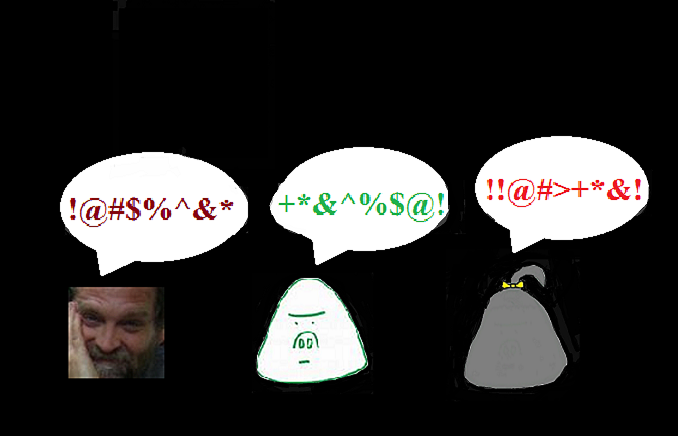
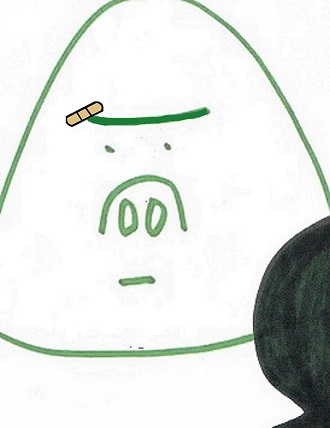
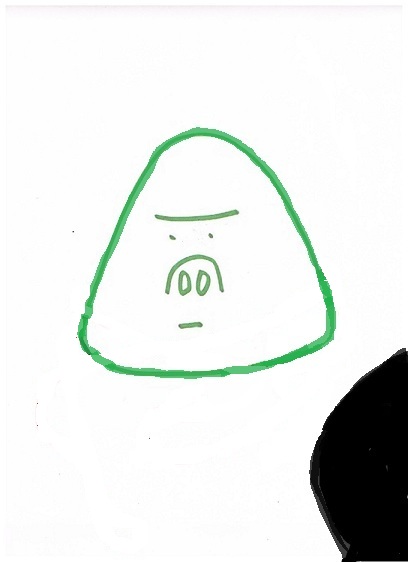
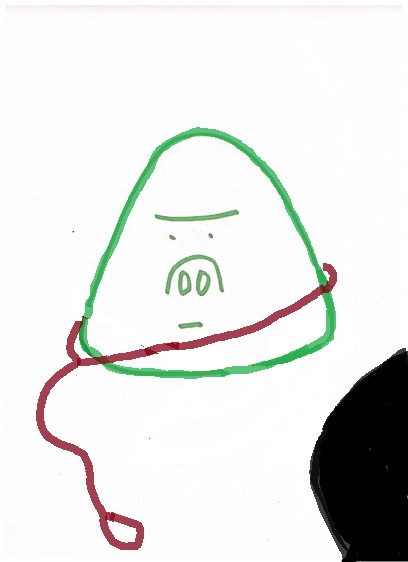
Three judges


Last week,

in a secret location,

a secret meeting

was held:

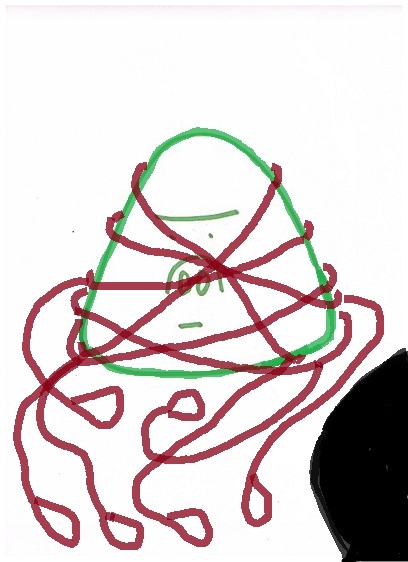
8


 *

*


*

*

*

*

  *

*

*

*

*

*

 *

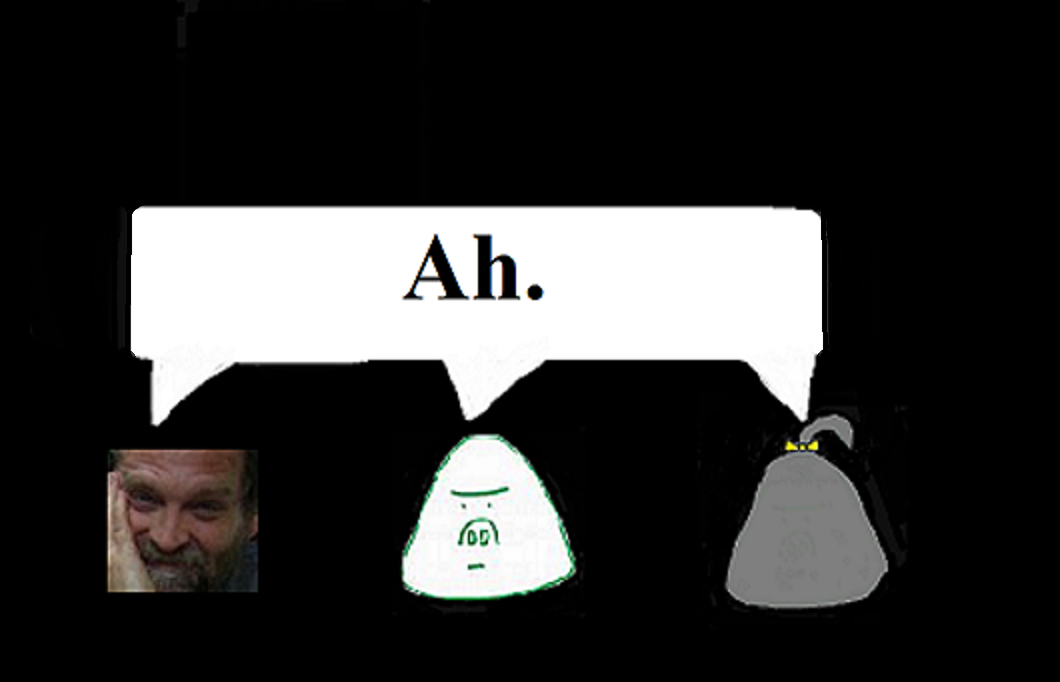
Thus ended the judging

of the first-ever

Bert Mug contest. 

7

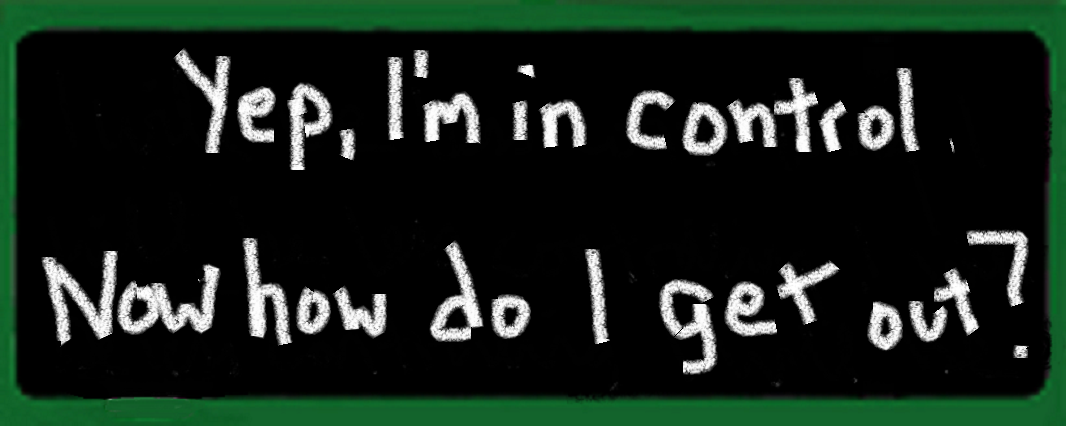
AND THE 

WINNING CAPTION 

IS:


7

Congratulations to

RL 

(of the great state of Florida)

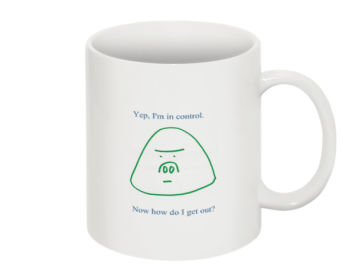
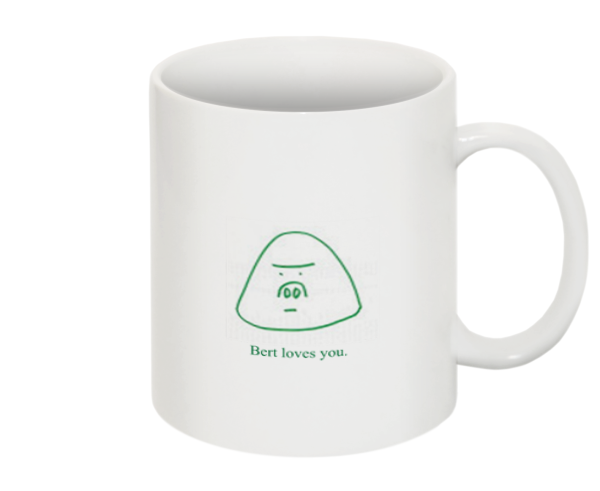
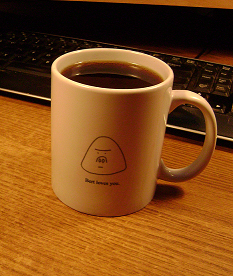
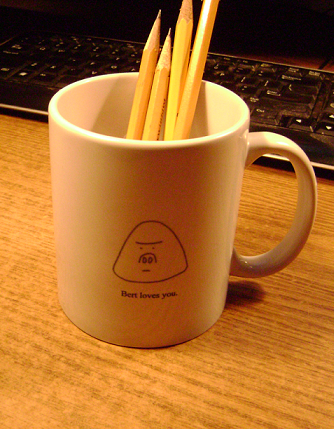
who will soon receive this:


And thanks to all of you

who sent us submissions.

*

* 

 We had great fun judging them.

 *

*

(You guys are hilarious.)


* * *


I’m a therapist with an odd specialty: control issues. I see everything as related to control.

I think we’re all addicted to it, that this addiction causes most (maybe all) our emotional problems, and that any therapy worth the name helps us redefine our understanding and relationship to control.

Today a new client asked me, “How exactly do we develop this addiction?”

“We’re born that way,” I told her. “We’re born with this big, overdeveloped brain that keeps us scared and worried and trying to control everything and everybody. Sort of like a paranoid computer run amuck. In the East they call this computer monkey mind.”

That’s only half an explanation, though. Some people are obviously more controlling than others. (Think: Mom.) Why is that, if we’re all dominated by monkey mind?

The other half of the answer has to do with Plan A.

From Psychotherapy: Beyond Plan A, by Steve, recently republished on the Recovery Help Now website.

* * *

Coming Soon:

*

Monkeytraps 101:

Bert’s Crash Course in Control

which will be sent to everyone on our mailing list.

(If  you’re not on, you can get there just by

sending us an email to fritzfreud@aol.com.

with SUBSCRIBE in the subject line.)


Session 43: Faith

I’m requesting a diagnosis.

1

2

Of what?

1

2

My marriage.

1

2


1

2

3

In your professional opinion, what’s the core problem?

1

Lack of faith.

3

Faith?  Like in God?

1

2

3

No, in relationship. 

1

2

3

Explain.

1

If every morning you swing your feet out of bed and find a solid floor to stand on, you develop faith in the floor. 

1

2

3

4 

bert-5

And if whenever you need them your important relationships are there for you, you develop faith in relationship.

1

2

3

And if they’re not…

1

2

3

You don‘t.

1

2

3

Then I haven’t.

1

2

Common problem, actually, among people who grew up in dysfunctional families.

1

2

3

My wife and I both did.

1

2

3

I figured.

1

2

3

Can you create faith in relationship?

1

2

If you want to.  It takes some work.

1

2

3

What kind of work?

1

2

You have to practice mutuality. 

1

2

3

4

Another new word.  Okay, I’ll bite.  What’s “mutuality”?

1

The belief that what’s good for one partner is ultimately good for the other.

1

2

3

Sounds like codependency.

Actually it’s the opposite.  Codependency means you try to control each other because you expect to be disappointed or hurt.

1

2

3

But mutuality means you  stop controlling, because you expect to get fed.  You have faith that whatever you give to the relationship will somehow come back to you. 

1

2

3

Yes, but I don’t really believe that.

1

That’s where the work comes in.  At first you have to fake it.

1

2

3

Until I make it?

1

Until she starts feeding you back.  After that you won’t have to fake anything.

1

2

3

But what if I feed her and feed her and she never feeds me?

1

2

Well, that would mean my theory is all wrong.

1

2

3

bert-17

1

2

And you can throw it right back in my faith. 

1

2

* * *


Session 45: Feeding Felicia

So.  I gave Felicia the cookie.

1

2

3

Ah.  Left it on her pillow?

1

2

3

And flew away, as you suggested.

1

2

And? 

1

2

3

And she came and asked why I did it.

1

2

What did you say?

1

1

2

3

“I wanted to.”

1

2

3

Good answer.

1

2

3

Apparently.  She hugged me.

1

2

3

Good job.

1

2

3

It was just a cookie.

1

No, it was a course correction.  You feel you two moving in a new direction now?

1

1

2

3

Yeah.  How do I keep it going?

1

2

3

Keep feeding her. 

1

2

3

Cookies?

1

2

3

No, no.  Emotional feeding.

1

2

3

With what?

1

Well, there are four foods we need from our important relationships.

1

1

2

3

bert10

1

2

Attention, acceptance, appreciation and affection.

1

1

2

3 

And if we don’t get that stuff regularly…

1

2

3

We starve.

1

1

2

3

Okay.  I fed her attention with the cookie.  How can I show acceptance?

1

Name something she does that she knows annoys you.

1

1

2

3

Watches reality tv.

1

2

3

Huh.  That’s a tough one.

1

2

3

Why?  What are you suggesting?

1

2

Sit and watch with her.

1

1

2

3

Holy mother of God.

1

2

3

Not for long.  Ten minutes.

1

2

3

You’re kidding, right?  “The Kardashians”?

1

2

(Shivers.) 

1

2

3

bert16

1

2

Neverthless.  Do it for the marriage.

1

2

3

I’m not sure any marriage is worth it.

1

2

Now, now.  Just once.  Treat it like an experiment.

1

2

3

Okay.  (Gulps.)  I’ll try.

1

2

Good man.  Be brave.  Be  curious.   

1

2

3

Can I be drunk?

1

2

3

4

5

6


* * *


Session 44: The cookie fairy

bert 1

1

2

3

How’s Felicia?

1

2

3

Still not talking to me

1

2

3

How long has it been?

1

2

3

Today’s the fourth day.

1

2

Does her silence still scare you?

1

2

3

4

No, not really.

1

2

3

How do you feel?

1

2

3

Kind of sorry for her.

1

2

3

How come?

1

2

3

Since we stopped dancing, she seems sort of lost.  And sad.

1

2

I see. 

1

2

4

bert-7

1

2

3

Does she like cookies?

1

2

3

Cookies?  Sure.

1

2

3

What’s her favorite?

1

2

3

Those huge ones.  Chocolate chip.

1

2

The ones big as a small pizza?

1

2

3

4

Yeah.

1

2

3

Go buy one.

1

2

3

bert-11

1

2

3

Leave it on her pillow.

1

2

3

And say what?

1

Nothing.  Make like the Cookie Fairy.  Leave it and fly away.

1

2

3

4

Won’t that confuse her again?

1

2

3

Maybe.  But in a good way.

1

2

3

It’s not appeasement?

1

2

3

No.  It’s paying attention.

1

2

3

bert-15

1

Most married people are starved for attention.  And she sounds like she needs some right now. 

1

2

3

4

It’s not the sort of thing I usually do.

1

2

All the more reason.

1

2

3

4

bert-17

1

2

You want to redefine this marriage, right?

1

2

3

4

Right.

1

2

That means trying new stuff.  Experimenting.  Taking risks.

1

2

3

But what if she rejects my cookie?

1

2

Well, if that happens… 

1

2

3

4

bert

1

2

At least you have dessert for the next two nights. 

1

2

3

* * * 


Four. New. Pages.

ALRIGHT ALREADY.


By popular demand,
and for the browsing convenience
of its loyal readers,
Monkeytraps has begun reorganizing its archives
by creating four new pages
of links and excerpts.


So if you’re a new friend of Monkeytraps,
you can now catch up on
what you’ve been missing
about these absolutely vital topics:

The idea of control
Control & feelings
Control & relationships
Control & self-care


And if you’re an old friend,
you can refresh your memory
(and strengthen your recovery)
by revisiting these favorites:

The Talk
The idea of control
How to spot monkeytraps
Bert’s mission
Bert’s Plan A
What we mean when we talk about control
Can we talk? No, damn it
Me first. / Yes, dear.
Scratch a codependent, find a narcissist
Control isn’t power
Bert’s strawberry
Gas in California


Among others.


More to come in the future, including our new

Control & Parenting page. 


To start exploring, just click on the NEW PAGE headings.


Session 42: Dancing

So, I did what you suggested.

1

2

3

With Felicia?

1

2

3

Yes.  I stopped trying to appease her.

1

2

3

therapist-2

12

3

And I asked what she’s really angry about.

1

2

How did she react?

1

2


3

She stopped talking to me.

1

2

3

Oh.  How’s that feel?

1

2

3

Not sure yet.  I don’t miss the criticism.  But the silence scares me.

1

Why?

1

2

3

It makes me think she’s even angrier at me than she was.

1

Maybe.  But probably you just confused her.

1


2

3

Confused her how?

1

2

3

You stopped dancing.

1

2

3

Come again?

1

Like most couples, you two have developed a predictable way of coping with conflict.  I call it your dance.

1


2

3

And you know this how?

You described it to me last time.  Apparently it starts when she’s unhappy about something, and expresses it with a complaint or a demand.

1


2

3

bert

To which you respond by trying to appease her. To which she responds with a new complaint or demand. And so on.

1

2

3

That does sound familiar.

1

2

How long does this dance usually last?

1

2

3

Two, three days.  Sometimes a week.

1

And how many times have you done it?

1


2

3

Hundreds.  Thousands.  It never accomplishes anything.

Well, in a way it does.  It keeps things predictable.  Discharges the tension, gives you a sense of control. 

1


2

3

But doesn’t solve the problem.

1

2

True.  Dancing just maintains the status quo. 

1


2

3

I’m sick of the status quo.  What do I do now?

1

You already did it.  You interrupted the dance.  Now it’s her move.

1


2

3

And I just wait?

1

2

3

Right.

1

2

3

And do nothing?

1

2

3

Right.  See what happens.

1

2

3

bert-18

1

2

3

How do you feel about that?

1

2

3

Like dancing.

1

2

3

4

5

6

7

* * *


Session 41: Gorilla warfare

Felicia’s pissed at me.

1

2

3

What about?

1

2

3

I’m not really sure.

1

2

3

therapist-2

1

2

3

Monday she said I don’t make enough money.

1

2

3

th

1

2

3

Tuesday she complained I’m not home enough.

1

2

3

therapist-4

1

2

3

Wednesday she called me an “uninvolved father.”

1

2

3

therapist-5

1

2

3

Thursday she called me a slob.

1

2

Sounds confusing.

1

2

3

Bet your ass.

1

2

3

How did you respond?

1

2

3

Well, let’s see. Tuesday I went in and asked my boss for a raise.

1

2

3

therapist-8

1

2

3

Wednesday I came home early with flowers.

1

2

3

therapist-9

1

2

3

Thursday I helped Junior with his science project.

1

2

3

therapist-10

1

2

3

And Friday I did two loads of laundry and cleaned the bathroom.

1

2

Did it work?

1

2

3

No.  Now she tells me I’m fat.  What’s going on here?

1

23

Gorilla warfare.

1

2

3

Don’t you mean “guerilla” warfare?

1

No, gorilla.  It’s a control thing.  Your two inner monkeys are battling it out. 

1

2

3

bert-14

1

2

Happens all the time in split-level relationships.*

1

2*What’s this?  Click here.

3

bert-14

1

One partner seeks satisfaction by complaining or making endless demands on the other.

1

2

3

bert-15

1

2

The other seeks relief by trying to appease the first.  But it never works.

1

2

3

Why not?

Because they’re ignoring the real problem, whatever that is.  Pretty common in couples who haven’t learned to talk to each other.

1

2

3

Well, I hate feeling beat up.  What can I do?

1

2

Less.

1

2

3

Meaning…

1

2

Give up control.  Stop appeasing her. 

1

2

3

She’ll get angry.

1

2

She’s already angry.  Same result, less work. 

1

2

3

Okay.  Anything else?

1

Give up control in another way.  Ask what she’s really angry about. 

1

2

3


1

She may not know at first. That’s fine. Be patient.  Be curious.  Be brave.  Keep asking.

2


3

That I can’t do.

1

2

3

Why not?

1

2

3

She might actually tell me.

1

2

3

Oh.  Well, in that case…

1

2

3

1

2

There’s always Weight Watchers.

1

2

* * *


Session 40: Controlapy

Okay, I give up.  You’ve convinced me.

1

2

Of what?

1

2

3

That control addiction is my biggest problem.

1

2

What did it?

1

2

3

Our last session.

1

2

3

therapist-3

1

2

3

Afterwards I realized that I really do feel like I’m always walking six dogs at once.

1

Good.

1

2

3


So what do we do now?

1

2

3

Controlapy.

1

2

3

What’s that?

1

2

Control therapy.  My nickname for it.

1

2

3

“Controlapy”?  That’s stupid.

1

2

Yes.  But catchy.

1

2

3

And I suppose that makes you a…

1

2

Controlapist.

1

2

3

(Sigh.)

1

2

3

therapist

1

2

3

And what does “controlapy” involve?

1

2

Learning three things.

1

2

3

bert-11

1

2

First, what control addiction is and how it infects all of us.

1

2

3

bert

1

2

Second, where you personally have problems with compulsive controlling.

1

2

3

bert-13

1

2

And finally, how to replace control addiction with healthier coping methods.

1

2

3

And you set the agenda?

1

Mostly I react to what you bring in.  But I decide which sort of learning we need to focus on.

1

2

Isn’t that, well, controlling of you?

1

2

I suppose.

1

2

3

bert-16

1

2

3

But also controlapeutic.

1

2

3

bert-17

* * *


Session 39: Leashed

There’s something I don’t understand about control addiction.

1

2

3

What’s that?

1

2

3

You say everyone is addicted to control?

1

2

3

4

Right.

1

2

3

4

Doesn’t that mean this “addiction” is really just human nature?

1

23

Well, I’m not sure what “human nature” means.  So I’d put it differently.

1

2

3

bert

1

2

It’s perfectly normal for human beings to be addicted to control.  It just isn’t healthy. 

1

2

3

“Normal” and “healthy” aren’t the same thing?

1

2

3

Oh no.  How many normal people do you know?

1

2

3

Lots.

1

2

3

4

And how many healthy people do you know?

1

2

3

4

Hm.  I take your point.

1

2

3

4

5

therapist-7

1

2

3

But I still don’t see what’s “normal” about being a control addict.

1

2

3

Do you ever worry about the future?

1

2

3

Of course.

1

2

3

4

You’re addicted.  Do you ever fret over the past? 

1

2

3

Sure.

1

2

3

You’re addicted.  Ever hide your feelings for fear of how others might react? 

1

2

3

All the time.

1

2

3

You’re addicted.  Ever worry about whether people will like or love or accept you?

1

2

3

4

Constantly.

1

2

3

You’re addicted.  Ever lie, or manipulate, or distort the truth to get what you want? 

1

2

3

4

Okay, I get it.

1

2

Ever avoid annoying people or uncomfortable situations? 

1

2

3

4

I said, I get it.

1

2

3

Ever plan?  Strategize?  Analyze?  Fantasize?  Agonize?  Dream?  Ruminate?  Obsess? 

1

2

3

4

You can stop now.

1

2

Just making my point.  Controlling is so utterly ordinary that most of the time we barely notice we’re doing it. 

1

2

3

bert-16

1

2

3

4

Until it traps us, that is. 

1

2

3

And how does it trap us?

1

2

3

4

Have you ever walked six dogs at the same time?

1

2

3

4

No.

1

2

You set out thinking that you’re walking them.  But before long you realize the dogs are walking you.

1

2

3

Meaning…

1

2

Whatever we try to control controls us.  And the more controlling you are, the more out of control you feel.

1

2

35

* * *


Win a BERT MUG!

*

This blog was launched

on March 30, 2011.


Happy birthday to us.


To celebrate,

Monkeytraps

announces its first

BERT MUG

contest.

The Bert mug. Striking, no?

*

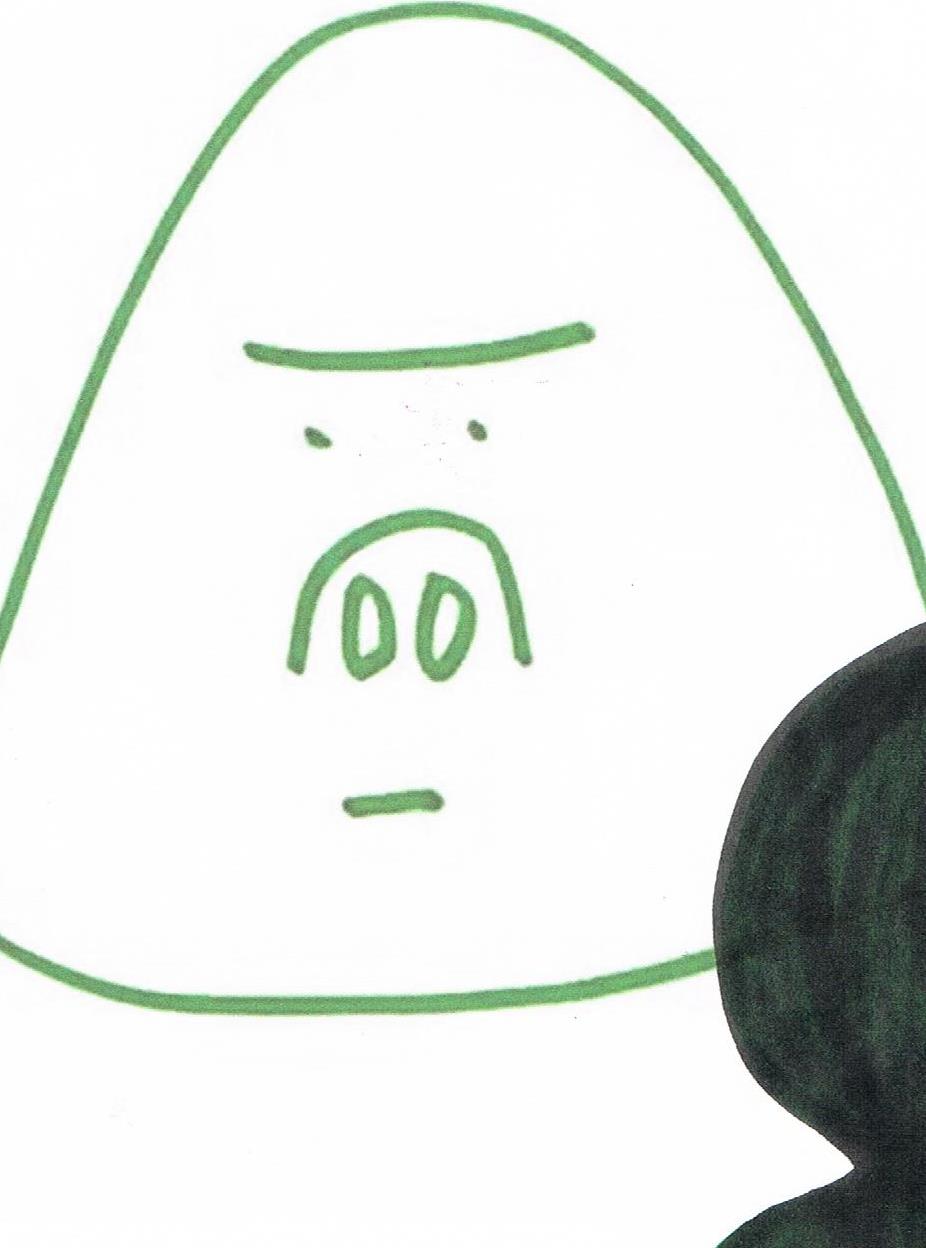
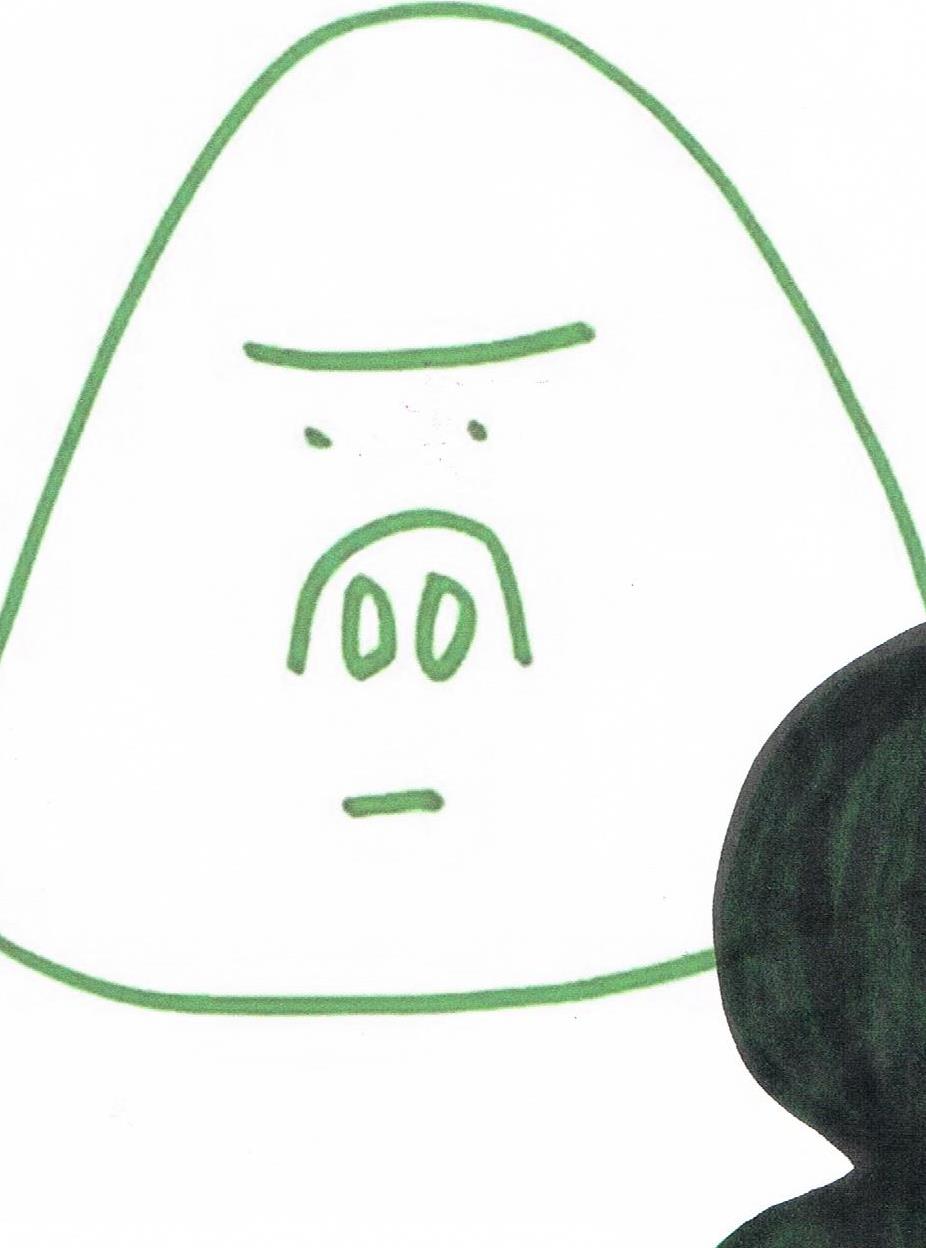
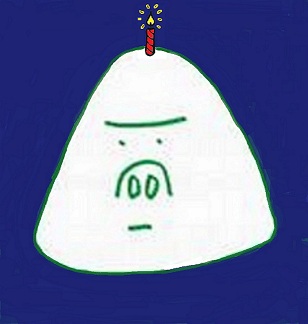
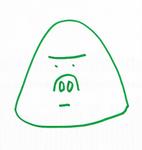
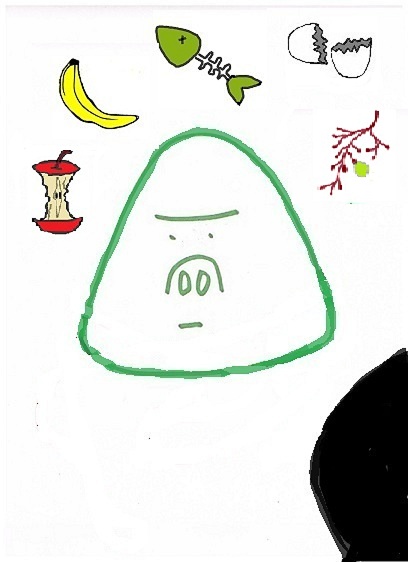
A classic collector’s item in toilet-bowl white with the iconic visage of the inimitable Bert etched in jungle-rot green.  Oh, okay.  It’s an ordinary coffee mug with a monkey cartoon on it.  But it’s free.  And we promise you’ll be the only person you know who has one.

*


*

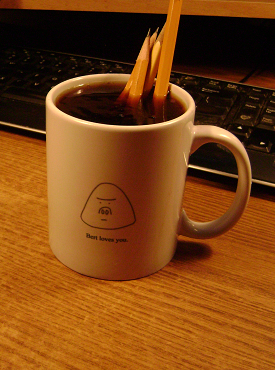
The Bert Mug has many uses:

One use.

Another use.

Not recommended.


*

 To enter the contest, just:

(1) Sign up for the Monkeytraps mailing list by sending us an email to fritzfreud@aol.com.   Include your name and the word SUBSCRIBE in the subject line.

(2) In that same email, suggest a caption for the Bert Mug having something to do with control addiction. 

It can be serious or funny, poignant or pungent, clean or dirty, silly or profound.   For example:

*

All I want is total control. 


Is that a banana in your pocket?   


I control, therefore I am. 


Hey, that’s not the reality I ordered. 


Like that. 

Entries will be judged according to what makes the judges laugh loudest, cry hardest, think deepest, or experience instant remission of all codependent symptoms. 

Just kidding.  Send whatever you think sounds cute. 

*

CONTEST JUDGES:

STEVE

Therapist, writer, cartoonist, codependency theorist, and co-author of Monkeytraps.

2


3

BERT

Inner monkey, career codependent, co-author of Monkeytraps, and the mug’s poster boy.

2


3

FELICIA

Bert’s wife, soon to appear in a series of “Bert’s Therapy” couples sessions. She asked to participate in this contest, and Bert can’t say no to her.  (Should give you an idea of what the couples sessions will be like.)  Refused to be sketched for this post (“With this hair?  Are you insane?”).


COME ONE!!

COME ALL!!

 TELL YOUR FRIENDS!!

TELL YOUR FAMILY!!

(MOM ESPECIALLY!!)

GET THE LEAD OUT!!

THIS MEANS YOU!!

YES, YOU!!


Session 38: Monkey

I have a question.

1

2

3

Shoot. 

1

2

3

What’s my single biggest problem?

1

2

Addiction to control.

1


2

3

Not depression?

1

2

Well, that’s related to the addiction.

1


2

3

Not anxiety?

1

2

Related to the addiction.

1


2

3

My overeating?

1

2

3

Related.

1

2

3

My overworking?  Fear of other people?  Fear of my wife?

1

Related.  Related.  Related. 

1

2

3

All my problems are related to control addiction?

1

2

Pretty much.

1


2

3

I sound pretty screwed up.

1

2

Actually you’re pretty ordinary.

1


2

3

How so?

1

2

We’re all addicted to control.  And it causes most of our emotional problems.

1

2

3

Explain.

1

2

There’s a part of each of us that craves control. 

1

2

3

bert-11

1

2

It’s always awake, usually scared, and constantly trying to control stuff.

1

2

3

What stuff?

Everything.  External stuff, like people, places and things.  And internal stuff, like our own feelings, thoughts and behavior.

1

2

3

Because it can’t accept reality as it is, it spends all its time fighting reality.  Which, of course, is a war it can’t win.  Which leaves us depressed, anxious and addicted.

1


2

3

bert-14

1

2

I call this part the Inner Monkey. 

1


2

3

Interesting.  But it doesn’t sound like me at all.

1

2

3

therapist-15

1

2

3

bert

1

2

3

therapist-16

1

2

3

bert-17

1

2

Have you looked in a mirror lately? 

1

2

3

* * *


Session 37: Garbage

I remember my panic attack on the first day of kindergarten.

1

2

3

therapist-1

1

2

3

I remember the bully who made me eat ants on the playground.

1

2

3

therapist-2

1

2

3

I remember dad getting drunk and fighting my uncle on our front lawn.

1

2

3

therapist-3

1

2

3

I remember running away from summer camp because I was so homesick.

1

2

3

therapist-4

1

2

3

I remember telling a girl I loved her, and her answering “Thanks.”

1

2

3

What the hell are you doing?

1

2

3

Remembering.

1

2

3

Why?

1

2

3

I don’t know.  Bad memories just come up when I feel stressed.

1

2

3

Well, stop chewing on them.

1

2

3

Why?

1

2

It’s bad mental hygiene.  You’re like a cat poking through a garbage can.

1

2

3

So?

1

2

There’s nothing nourishing there.  And you’ll just stink up your present.

1

2

3

But I’m only…thinking.

1

2

Not really.  Most of what we call thinking isn’t thinking at all.

1

2

3

What is it, then?

1

2

Random mental activity.  Automatic, aimless, illogical.  Remembering, projecting, ruminating…

1

2

3

bert-12

1

2

…obsessing, fantasizing, worrying — waste of time, mostly.  Some of it does more harm than good.

1

2

3

How?

1

2

By triggering bad feelings that have absolutely nothing to do with your current reality.

1

2

3

Oh.  That.

1

2

It’s the main reason we’re such neurotic monkeys.

1

2

Can I do anything about it?

You can train your mind.  Meditation’s the best long-term solution.  And there are short-term tricks you can learn, like Thought Stopping.  But remember two things.

1

2

3

What two things?

1

2

Your mind has a mind of its own.  And even the sanest mind is a little nuts.

1

2

3

So…

1

2

3

So chew gum, not garbage.

* * *


Session 36: Balls

bert 1

1

2

3

How are you?

1

2

3

Overwhelmed.

1

2

3

By what?

1

2

3

The usual.  Work.  Bills.

1

2

3

therapist-3

1

2

3

The marriage.  The kids.  The house.

1

2

3

therapist-4

1

2

3

Plus a hundred other things.

1

2

3

therapist-5

1

2

3

The leak under my sink.  The hole in my roof.  The racoon in my attic.

1

2

3

therapist-6

1

2

3

My car needs a tuneup.  My lawn needs reseeding.  My dog needs a vet.

1

2

3

therapist-7

1

2

3

I’m fat and should exercise.  I’m anxious and should meditate.  I eat crap and not enough vegetables.

1

2

3

therapist-7

1

2

3

And on and on and…

1

2

You do seem to be juggling a lot right now.

1

2

3

bert-9

1

2

How have you handled this is the past?

1

2

I try to keep all the balls in the air.

1

23

How’s that work? 

1

2

 3

I exhaust myself.  The balls drop.  I get depressed.

1

23

I see.  Want a suggestion?

1

2

3

Please.

1

2

3

Drop the balls now.

1

2

3

Deliberately?

1

2

Yes.  For today.  Drop all but two.

1

2

3

Which two?

1

2

First, get more rest.  Second, lean on someone. 

1

2

3

Lean how?  On who?

1

2

3

Someone who’ll give you permission to be selfish.  

1

2

3

Isn’t selfish bad?

1

2

No, selfish is essential.  Selfless is bad.  Depression’s worse.

1

2

Can I lean on you?

1

2

3

Sure.  

1

2

3

bert

1

2

3

Now go take a nap.

1

23 

* * *


The birth of Bert

(Steve speaking:)

Not long ago a new Monkeytraps reader sent me an email asking, “So where did Bert come from, anyway?” 

I took that as an invitation to repost Bert’s story of his own birth, which originally appeared here in 2011 in two parts under the clever title “Bert’s born.” 

It’s a little long.  But Bert likes to tell it because, well, it’s about him.  And as we say,  scratch a codependent, find a narcissist.

*

Steve was born in 1950.

Me, I’ve no idea when I was born. I do, however, remember my first public appearance.

It was on Steve’s first day of kindergarten.

Actually no, it was Visiting Day, the spring before kindergarten started, when kids visited for half a day to get their first taste of public education.

Steve has vague memories of the classroom — bright banks of windows, colored plastic chairs, fingerpaintings on a corkboard, voices rattling off the walls — but no clear memory of how he felt. Not hard to deduce, though, given what happened.

He panicked.

Walked in, froze up. Stood rooted to the tile floor like a stump in a stream, while the other kids bustled and flowed around him.

After a few moments the teacher called the kids over to her desk, and they clumped and moved obediently in that direction. Except Steve, who stayed rooted.

He was shy kid, inexperienced, insecure, especially in new situations. This was certainly one of those, and he found himself flooded with feelings he had not expected and could not begin to control.

At which point, Ta Da, I took over.

“Go to the corner,” I whispered.

He did.

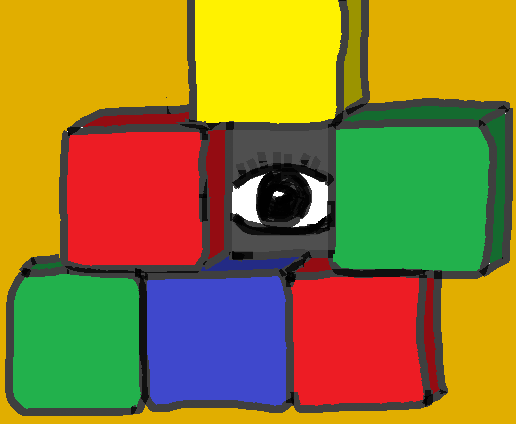
Piled there beside the coat rack was a stack of oversized building blocks, hollow wooden cubes painted bright colors.

“Take down on the blue one,” I told him.

He did.

“Put it on the floor.”

He did.

“Sit on it,” I said.

He did.

“Now don’t move,” I said.

He did, staring blindly ahead.

The teacher came over. Nice lady, print dress. Soft voice. Steve never saw her face because he was staring at her shoes, which were brown.

She said something to him. He shook his head. She said something else. He shook his head again. She waited a moment, then walked away.

We spent the rest of the morning together there in the corner. First we sat perfectly still and tried to be invisible, convinced that if we moved or even breathed loudly someone would notice. After thirty minutes it became clear the nice teacher was content to ignore us, and we began to relax. The roaring in our ears died away. Our hands warmed up. We looked around at the room. We watched the teacher playing with the kids. We watched the kids playing with each other.

After another hour this got boring.

I noticed him eyeing a triangular block, off to one side. It was yellow.

“If you put that behind you,” I whispered, “you could lean back on it.”

The idea of reaching for the block and becoming visible scared him all over again, so we argued about it for a while.

I can’t remember how I changed his mind. But eventually he bent his upper body sideways, grabbed the yellow block and slipped it behind him. Then he leaned back and waited for someone to notice.

Nobody did.

He found this interesting.

Maybe this place was more tolerable than he thought.

Ten more minutes passed.

“You could put your feet up,” I whispered.

He stood and reached for another block.

                                   *

The next block Steve reached for was red. He placed it on the floor in front of the blue one, sat down and put his feet up on it. Feeling highly visible, even daring, he waited for the room to react.

The room ignored him.

“More,” I muttered.

He found a yellow block next, and put it beside the red one. Then he found a green one and put it on the other side.

He made a line of blocks, a little wall. Then sat nervously down to await developments.

None developed.

No one in the classroom noticed, or if they did, they didn’t let on.

He went on building. He made a second tier of blocks, and then a third. When he was done the little multicolored wall rose to his waist and enclosed a small triangular space that felt oddly safe and protected. He sat back down and examined the wall happily. It felt like some sort of achievement.

I think Steve wants to add something here.

Coming to mind is a passage from a Hemingway story. It’s about a traumatized war veteran making camp in the Michigan woods. “Nick was happy as he crawled inside the tent. He had made his camp. He was settled. Nothing could touch him. It was a good place to camp. He was there, in the good place. He was in his home where he had made it.”

Yes. It was that sort of achievement. No small thing, creating safety for yourself in a dangerous world.

That’s about it for my story. Nothing else interesting happened. We stayed behind the wall until we went home.

So why did I tell you this?

Well, I’m introducing myself. As I told you last week, I’m Steve’s inner monkey. The part that seeks control. The part that tries to protect him by changing reality, transforming it into something more like what he wants, or needs, or prefers. You just saw me at work.

But I’m also introducing the subject of this blog, which is not a simple one. Control is a slippery fish.

I’ll let Steve have the last word on that:

For a long time after I began examining control I didn’t distinguish between the simple impulse to control and the addiction to controlling. I saw it as a problem, not a solution. A confused attempt to avoid discomfort or pain. Trying to change realities beyond their control seemed to be the main way people made themselves (and others) sick, exhausted and miserable.

But it’s more complicated than that. Controlling is defensive, sure. But it’s adaptive too. Building that block wall may have cut little Steve off from the class, but it also gave him a way to stay in the room.

So controlling can be both irrational and necessary, avoidant and creative. A problem and a solution.

As Bert says, a slippery fish.

* * *


The meaning of control

“A blog about control,” it says at the top of this page.

So what are we talking about here?

What is control, anyway?

What does the word mean? What does the idea mean?

We must think we know. We use it often enough.

This morning, for the hell of it, I Googled “control.” Google replied with 225,000,000 items. That’s million.

I tried the same thing at Amazon.com. Amazon coughed up 168,459 books with control in their titles.

So what is this thing that so fascinates us?

Good question.

There’s an old story about blind men brailling an elephant. One feels the elephant’s side and says, “Ah, I get it. An elephant is just like a wall.” Another feels the elephant’s leg and says “Ah, I get it. An elephant is just like a tree.” Another feels the trunk and decides an elephant is just like a snake. Another feels the tail and decides an elephant is like a rope. And so on.

Control is an elephant. Big, big elephant. Many parts, many contradictions. After fifteen years of studying it I sometimes still feel like a blind man, groping my way towards the truth, one wrinkly body part at a time.

Join me.

                                                                              ***

control: The capacity to manage, master, dominate, exercise power over, regulate, influence, curb, suppress, or restrain.     ~ Judith Viorst

That’s fairly broad, as definitions go. My definition, which you won’t find in any dictionary but stands behind everything I write here, is broader:

                    The ability to dictate reality.

Dictate as in  direct, determine or define. 

Reality as in, well, everything. Everything under the sun. All the nuts and bolts of the world as we experience it, both the external world (of other people, places, and things) and the internal world (of our own thoughts, feelings and behavior).

By control, then, I mean nothing less than the ability to edit reality, transform it into whatever we need or want or prefer.

And by controlling I mean everything we do towards that end, whether or not what we do is effective, or healthy, or if we even know that we’re doing it.

First question: Is control the best word for what I’m describing?

I don’t know. But I’ve tried and can’t think of a better one.

The Buddhist term attachment probably comes closest to what I mean. As does a Tibetan word Pema Chrodron writes about, shenpa. But control is so much more important in English (Google lists only 16 million items for attachment) it seems the best label for what I’m interested in describing here.

Next question:

What are the most important parts of this elephant?

Well, the first two things you notice about control are

(1) It’s enormous.

and

(2) It’s invisible.

“Some things you miss because they’re so tiny,” Robert Pirsig writes. “But some things you don’t see because they’re so huge.”

Control is one of those invisible huge things.

The urge to control explains a ridiculously wide range of behaviors. Often we think of controlling as bossing, bullying or nagging, or a controlling person as someone like Hitler, Donald Trump or Mom. But that’s like mistaking the trunk for the whole elephant.

We’re controlling whenever we scratch an itch. Comb our hair. Mow our lawn. Salt our soup. Spank our child. Balance our checkbook. Change channels. Stop at a red light. Vote. Punch someone’s nose. Flatter someone. Seduce someone. Lie. Disguise our true feelings. Get drunk. Worry. Dream.

You get the idea.

We’re all controlling, and we’re controlling all the time.

We chase control all our lives, waking and sleeping, out in public and deep in the secretest crannies of our mind. We chase it consciously and unconsciously, creatively and destructively, wisely and stupidly, from birth until death.

We can’t help it. Control-seeking is the default position of our species.

At the same time, because it’s such a given of human experience, we barely notice we’re doing it.

Control isn’t like a tool we pick up and put down. It’s more like breathing, or blinking, or the way your knee jerks when the doctor taps your patellar tendon. Constant, automatic, involuntary.

Nor is the wish for control like a faucet we can turn on and off. The need to control flows through us continuously, saturates all our behavior and feelings, infuses everything we desire and fear.

It not only drives our behavior, it structures our thinking. What is most of our thinking, if not an attempt to somehow change some circumstance, shift some piece of reality closer to what we’d prefer? What else do you call problem-solving, planning, analyzing, fantasizing, worrying, obsessing?

The idea of control makes up the psychological sea in which each of us swims.

And most of the time we barely notice we’re wet.