Tag Archives: control

Bert’s therapy

Finally the heat broke, so I went out for a walk. 

It was the sort of day that reminds you of summers in childhood, of how life felt without the permanently clenched fist in your midsection.  Lawns bright with sunlight.  A solid blue sky you want to swim in.  Breeze like a kiss.

So I’m walking along, enjoying all this, listening to the Corrs through my earphones, and I feel a tap on my shoulder. 

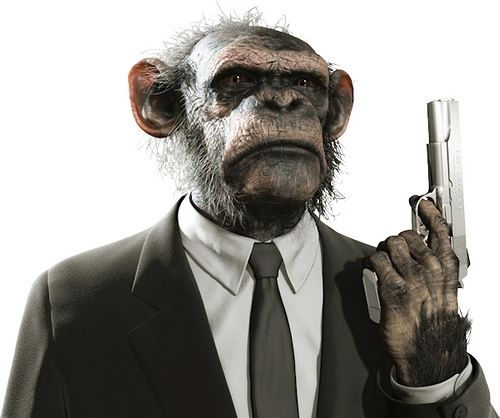
Bert sidles up next to me.

I need some therapy, he mutters.

I sigh.  For just one hour I’d have liked to have skip the whole neurotic thing.

But your monkey’s your monkey.

“Sure,” I tell him.  “Walk along with me,” and I pull out my earphones. 

* * *

What’s up?

I’m discouraged.  Depressed, maybe. 

How come?

You know.

Tell me anyway.  Part of the therapy.

Well, I’m really tired.  That heat wore away at me like sandpaper. 

I know.

And I’m sick to death of this insurance audit.  What’s it now, six months?      

Something like that. 

I’m sick of not having money.  Or a vacation.  It really hurt to skip Vermont again this year.

I know.  For a day or so I thought you might lose it.

Me too.

What else.

The house is a mess.

As usual.

Still bothers me.

I know.  What else.

The block’s back.

Yeah, I noticed.   What’s up with that? 

I got discouraged by the lack of comments.

Hm.

What’s that mean?

Nothing.  I’m listening.   Go on.   Is there more?

Well.

What?

I’m sixty.  (Sighs.) 

Yes, we are.

Sixty fucking years old.

I know.

Thought it’d be easier by now.

I hear you.  I feel you, as the kids say. 

So.  What would you tell a client like me?

Good question.  Let me think.

You get people like me?

All the time. 

So what do you tell them?

Well, first I guess I try to reframe things.  Help them see what they’re not seeing.

And what am I not seeing?

How lucky you are.

Excuse me?

Your marriage works.  Your kids love you.  You’re a pretty good therapist. 

Am I?

You help most of the people who come to you.  

I guess.

You like what you do for a living.  You own your own home.  You’re not sick, or crippled, or divorced, or in Afghanistan.

True. 

You worry about money, but your bills get paid. 

Eventually.

Right.  The house embarrasses you, but it’s your house.  Remember what renting was like? 

True.

And you have options.  Writing is still an option.  You’re a step closer to writing for money than you’ve ever been.    And you managed to start Monkeytraps in the face of all this other crap.

That’s true too.  So why don’t I feel better?

Oh, that’s easy.  You’re tired.

That’s it?

It’s important.   “Fatigue makes cowards of us all.”

You and your quotes.  Who said that?

Vince Lombardi. 

So what do I do?

Rest.

How?  I have work to do.

Find a way.

That’s what you’d tell a client?

Pretty much, yes. 

Sounds too simple.

Simple, yes.  Easy, no.  For one thing, it takes courage.   You’d have to give up controlling all the crap you just mentioned.

(Silence.)

You’d have to let go of the bills and the practice and the house and the blog.  In your head, I mean.  And have faith that the sky won’t cave in.   

(More silence.)

And you’d have to act like you deserve a rest.  Which you’re not at all sure that you do. 

No, I’m not. 

I know you’re not.  Do it anyway.

How can I?

No choice.  You have to save yourself.  If you don’t, who will? 

Hmpf.  

Too late to get parented.  It’s all your job now.

(He frowns.  I wait.  He scratches his head.  I wait some more.  Now his eyes open.  He looks at me.)

Hey.  I know why I hate this.

Why?

It’s an AFGO.

Yes, it is.

Another fucking growth opportunity.

Yep.

I hate them.

Yeah.  Me too.  Anything else?    

(He squints at me, like he suspects a trick question.  Shakes his head.  Leaves.)

(I put on my earphones, turn up the Corrs, and resume trying to swim up into the solid blue sky.)


Paranoid? Moi?

Bert replies to “War with what is”:

Didn’t like that last post.

Why?

Too long.  Too many quotations.

Yeah.  I tried to shorten it.  Ran out of time.

And I’m afraid you may have pissed people off.

How so?

Are you kidding?  You called them crazy.

I did?

Look at your freakin’ last line.

“Because everyone you know is just as crazy as you.”  Oh.  Well, I didn’t mean that literally.   Figure of speech.   

Really.  Do you tell your clients they’re crazy?  Even when they are?

Not directly, no.

Be diplomatic, moron.  You’re a social worker.

I’ll try to remember.

(Pause).  You don’t think I’m paranoid, do you?

Well, sure. 

You do?

A little.

I’m not paranoid.  I’m careful.

That’s what they all say.

All my controlling is absolutely necessary.

They all say that, too.

How is it not necessary?

Most of what you’re scared of isn’t real. 

Bullshit.

Like just now.  You were worrying I pissed people off.

So?

People you don’t even know.   You act like you can read their minds.

I know some of them.

Not the point.  The point is you have no evidence that they’re pissed off, outside your fevered imagination.   You’re projecting all over the place.

It feels real.

Projections do.  Doesn’t mean they are.

Another example.

Friday night, at the wedding.

I was fine at the wedding. 

You didn’t dance.  Cait wanted you to, but you avoided it.

But I don’t dance.  

I know.  Why not?

 I look silly.

The family says you look fine.  They like it when you dance.

I’m still afraid I’ll look silly.

Why is that?

People will judge me.

How do you know?  Has anyone ever said you look silly when you dance?

No.

Has anyone ever watched you dance and laughed at you?

No.

Mocked you?  Threw food?

No.

Then how can you be sure anyone has ever thought that? 

I just know.

No, you don’t.  You can’t, unless you ask them.  You can’t even be sure they would notice you.  But let’s take it a step further.  What if you did ask, and they did say you looked silly.  “Yes, Steve, I watched you dance, and yes, you looked like a jerk.”  What then?

I don’t follow.

Why would it matter?  Ninety percent of the people at that wedding were total strangers.  You’ll never see them again in your whole life.  If  they notice you dancing, and if they think you look silly, who gives a crap? 

(No answer.  His brow is furrowed in pain.  This means he’s thinking.)

So as I see it there are two problems here.  One is, you scare yourself with your own projections, which are pure fantasy.  Remember: “We see things not as they are, but as we are.” 

Again with the quotations.  Who said that?

Anais Nin.

Was she at the wedding?

No.  The other problem is you think you need to control other people in order to feel good about yourself.   Emerson had a good line about that.

I’ll bet he did.

“Why should the way I feel depend on the thoughts in someone else’s head?” 

Good question.  Why should it?

It shouldn’t.  But it does.  Because we’re monkeytrapped.  All of us, control addicts.  It’s just how we’re wired.

Yes, but:  Remember that button people wore back in the sixties?  “Even paranoids have real enemies.”

True enough.  But it’s a problem when you can’t distinguish real enemies from imaginary ones. 


War with what is

Previously I compared control to an elephant, a large one with many parts, and myself to a blind man.   

I’m still trying to braille my way to a grasp of control, one wrinkly body part at a time.   

Here’s another piece of the beast:   

(3) Control is paranoid.

Control comes from the Latin: contra rotullus.   

This I learned from the Jungian psychologist James Hillman, who in his book Kinds of Power  implies the term originally referred to fighting gravity.   

“Control is agency, yes, but of a  restrictive kind,” Hillman writes.  “The word comes from contra rotullus, against the roll.  Since the free flow of inertia follows the path of least resistance, the easy path downhill is controlled by restraints.”  

Against the roll.  I found myself imagining the first “control” as some sort of wheel block, some lump of wood or stone used to stop ox carts from rolling downhill.   

I really liked this idea.   

I liked seeing control as rooted in the idea of prevention.  It confirmed my sense of how controlling functions in me and the people I know: as a bulwark against surprise and misfortune.   

Control, I realized, is defensive.  We control not to make things happen, but to stop them from happening.    

Hillman writes,   

When we look closely at what we want when we want to be in control, we find mainly preventive desires.  We want not to be bugged, not to be demeaned, not to be blocked and criticized.  We want obstacles removed that compete, like other divisions in the company and other gangs in the ‘hood.  Control means preventing interference.  It has a conservative effect.    

The most controlling people I know are obsessed with conserving, protecting and preventing.  They expect bad things to happen.  (Usually because bad things have already happened to them.  Abuse and trauma victims, for example, are famously controlling.  As is anyone who grew up in an alcoholic or otherwise dysfunctional family.  Which aside from Beaver and the other Cleavers pretty much covers everyone else.)  So they fear the unpredictable, the unexpected, the unplanned.  They rely on control to fend off danger and discomfort.  They live, whether they admit it or even realize it, like frightened people.  

Control, for all its self-assured position of command, relies on a defensive vision, and [its] traits — enforced loyalty, exactitude, suspicion of the hidden watchfulness — are paranoid traits.   

Paranoia, of course, is an extreme form of craziness.  Paranoids imagine the world’s out to get them.  I’ve worked with paranoids.  They were scared most of the time, unable to trust anyone, led lives of confusion, uncertainty and occasionally panic.   

But so do control addicts.   

They experience the world as dangerous, people as unreliable, relationships as competitive, emotions as scary, honesty as risky, and control as their shield against wounding by all of the above.  They hate change, especially change they haven’t asked for.  In therapy they’re almost always expressing resistance to something — some unfolding of events, some anticipated consequence, some expression of the innate tendencies of people around them.  Often they’re anxious or angry without knowing why.   

Yoga teacher Stephen Cope:  

Each of us has our own silent War With Reality.  Yogis came to call this duhkha.  Duhkha means, literally, “suffering,” “pain,” or “distress.”  This silent, unconscious war with How It Is unwittingly drives much of our behavior:  We reach for the pleasant.  We hate the unpleasant.  We try to arrange the world so that we have only pleasant mind-states, and not unpleasant ones.  We try to get rid of this pervasive state of unsatisfactoriness in whatever way we can — by changing things “out there.”   By changing the world.   

Alexander Lowen points out, “Because we are afraid of life, we seek to control or master it.”  Logical, maybe.  Effective?  Not so much.   

No, worse than that.  Self-destructive.  Because the War With What Is is actually a problem disguised as a solution.    

Why?  Three reasons.   

First:  Fighting reality is hard work.  (Try swimming against the tide of a stream or a river.  Fight the flow, and see how long you last.)  So control addicts end up stressed, strained and exhausted.   

Second:  The war is unwinnable.  It’s not that control addicts don’t try hard enough.  What they’re trying to do simply can’t be done.   So they end up feeling depressed and inadequate.     

Third (and this is a big one):  Control addiction is self-perpetuating.  Think about it.  To be scared of reality is to organize your life around fear.  You tense up, go into defense mode and stay there.  “As long as we are defensive, we are going to be frightened” (Lowen).  So fear makes you defensive, which makes you more frightened, which makes you more defensive, and so on.  Like any addiction.  The more you control, the more you need to.    

Control addiction, then, is a sort of garden-variety paranoia.   A form of everyday craziness you don’t notice much.  

Because everyone you know is just as crazy as you.    


A gazillion dandelions

Bert’s on my case about the blog. 

“Too theoretical,” he sniffs.   “Too metaphorical.  You should write about real life.”

“I’m doing the best I can,” I reply.

“I know,” he sighs. 

Then brightens. 

“Hey, give me a turn.  I could tell stories.”

“Not sure I’m ready for that.”

“Come on.”

“No.” 

“Who’s the coward here, anyway?”

“Not yet.”

“Okay,” he sighs.  “But if you’re not careful you’ll lose them.”

“Shut up, Bert.”

“I’m just saying.”

Then this morning something happened and I decided maybe he was right and I should give him his chance.

So here it is, Bert’s first post: 

It’s 94 today and humid.  Went walking anyway.  Have to, heat index notwithstanding.   I need to get my weight under control.

So I’m walking down the street, heat rising off it in waves, and a cop car passes and pulls to the curb fifty yards ahead of me.  Then a second cop car arrives from the opposite direction and does the same thing.

Two cops get out in their blue uniforms and their heavy black belts.

Poor guys, I think.  In this heat.

They cross the street to where a couple stands on a lawn, arguing.

The guy is yelling at the woman.  The woman yells back, waving her arms.  Two little girls stand under a tree in pink sleeveless tops, holding hands and crying. 

Inside me thoughts and impulses spring up, boink boink boink, like cartoon dandelions invading a summer lawn:

(1) I want to about-face and walk back down the street.  Avoid upset.  Reduce anxiety. 

(2) I can’t about-face.  What if someone notices.  What’s his problem?  

(3) I want to go to the two kids.  Sit on the grass.  Calm or distract them somehow.  They stop crying, I’ll feel better.

(4) Can’t do that either.  Dad might punch me.  Mom might scream.  Cops might whip out their handcuffs.   

 (5) I hear my own thoughts.  I get mad.  Handcuffs?  Steve.  Chickenshit.  Seriously.

(6) I get mad at whoever called the cops.  (In full projection mode now.)  Mind your own business, Sir or Madam.  Leave these people alone.  Also, I’m trying to take a walk here.

(7) It occurs to me Sir or Madam is probably scared too.  Why they called.  Calling’s just their version of the about-face I wanted to make.  Officers, please remove this.  Now I regret I got mad at them.

(8) I think of the cops.   What’s it like, standing there, trying to calm angry people in this heat?  Are they trained for this?   How?  Instruction manual?  Rehearsal in a steam room?  And are they screened adequately?  Do more people get shot by police in the summer? 

(9) I notice I’m writing all this down in my head.  Make them see what a control addict sees.

(10) I about-face, walk home to type it out before the heat melts what I’m thinking.

Moment to moment control issues bloom, boink boink boink, like a gazillion dandelions.


PS: The ice underneath

Last time I wrote about how the idea of control simultaneously (a) plays a huge role in our lives and (b) is invisible to most of us.  Later I realized that one of my favorite metaphors perfectly captures this weird duality.   Here:  

Peary relates that on his polar trip he traveled one whole day toward the north, making his sleigh dogs run briskly.  At night he checked his bearings to determine his latitude and noticed with great surprise that he was much further south than in the morning.  He had been toiling all day toward the north on an immense iceberg drawn southwards by an ocean current.   ~ Jose Ortega y Gassett

Here’s why the idea of control fascinates me.   It’s an emotional iceberg,  constantly carrying each of us southwards — away from where we want to go or think we’re headed.  Its size and invisibility make it easy to overlook.   But ignoring it is dangerous.   Hardly matters how hard you mush towards your goal when the iceberg is moving you in the opposite direction. Conclusion:  Lost?  Stuck?  Exhausted?  Stop mushing.  Examine the ice underneath.


Red thread

                                                                                                                                                               My last post described my workshop epiphany, how on the brink of public humiliation I discovered something I didn’t know I knew: that what self-help books call codependency is actually addiction to control.

Here’s the rest of the story:

After the workshop I go back to doing therapy with clinic clients.  Mine is a typical outpatient caseload, filled with the sorts of problems every therapist faces: anxiety, depression, addictions, bad relationships, parenting problems.

But something’s different now.

Have you ever bought a new car — say, a Honda — and take it out on the road, and wherever you drive you see other Hondas?  Suddenly the world is filled with Hondas you never noticed before.

This is happening to me.  Suddenly my caseload is filled with control addicts.

The clients haven’t changed, I have.  It’s like I put on new eyeglasses.  My vision has refocused or sharpened or something, and now I can’t help seeing how relentlessly, compulsively and self-destructively controlling they all are.

They? I mean We. Everyone.

Controlling, I find, is the universal addiction.  It’s everywhere I look.  Not just in my codependent clients, but every client.  Not just in clients, but in colleagues, and friends, and family, and on the nightly news, and in whatever I read or watch on tv or in the movies.  And, of course, in myself.  (I’ve discovered Bert.)  Like a red thread in a carpet, the idea of control snakes through every problem, every motive, every personality, every life.

Why is this?  Originally I’d assumed that dysfunctional families create codependency.   But now I find the red thread running everywhere, which must mean either that (a) all families are dysfunctional (which is arguable) or (b) the urge to control is  hardwired into us, rooted in some deep part of our brain that can’t help rejecting what life hands us and trying to replace it with what we prefer.  Or (c) both.  Or (d) something else entirely.  I don’t know.

I spend the next fifteen years studying the idea of control.

I hunt for books on control (there aren’t many), then for books on related ideas like desire and addiction and power.  I buy lots of books.  I start reading everything with a highlighter in my hand, scribbling big yellow Cs alongside the parts that relate to control.  Half my books start to look pee-stained.  I buy more books.  I start typing out control-related passages I like and collect them in a computer file which as of today runs to 117 pages.   I become interested in Buddhism, which turns out to be all about control addiction.  (Buddhists call it attachment.)  I try meditating.  I hate it.  Well, not hate it exactly, but resist it like hell, to the point I’m unable to sustain a regular practice.  (Thanks, Bert.)  I buy books on discipline.  Also more highlighters.

I reshape my approach to therapy around the idea of control.  I teach my clients to notice when they’re monkeytrapped and how to escape.  I write articles for them about control addiction and ways to recover from it.  (We teach what we want to learn.)  The therapy seems to work, for some at least.  I am struck by how many clients tell me, as they become less controlling, “It’s so much easier.” 

I decide to write a book.

I get blocked.  My own control addiction prevents me from writing about addiction to control.  (Thanks again, Bert.)  The block lasts for months, then years.  I buy books about writing and the creative process, which turns out to have lots to do with (surprise) surrendering control.  Some of the books are wonderful.  I learn a lot.  The block continues.

But I am able to use what I’m learning to help my clients, parent my kids, manage my marriage, cope with a monkey-driven culture, and understand myself a bit better.  (I’m not always thrilled with what I understand.  Still. Better to know than not know, I figure.)  I still project and worry, but now the worrier in me has an Off switch which actually works, oh, maybe half of the time.  Unfortunately not the time I spend writing.  I finally start this blog in hopes that daily writing and feedback from readers will jump-start the book.

What have I learned from all this?

Well, my view of control remains a work in progress.  But I have reached four pretty firm conclusions:

(1) We are all addicted to control.

(2) This addiction causes most emotional problems.

(3) Behind all controlling is the wish to control feelings.

(4) There are better ways to handle feelings than control.

Since they seem true of everyone I meet, and seem to operate pretty invariably, I’ve come to think of these conclusions as the four laws of control.

Soon I’ll start writing here about what they mean and how they operate.


Corduroy

I  got interested in control accidentally.   I was giving a talk and suddenly realized I didn’t know what I was talking about.

I was a new social worker, six months out of grad school, working for a clinic attached to a rehab on the end of Long Island.  My new boss decided I was the best one to run the weekly Family Education Series, basically a crash course in alcoholism and how it screws up families.  And tonight the topic was codependency.

I knew the topic well enough.  I’d worked as an alcoholism counselor and treated hundreds of codependents.  I could diagnose one in the first five minutes of a conversation. 

But when it came time to prepare this talk I found I couldn’t define the word.  At work we talked about codependency without ever stopping to explain what we meant.   And when I looked into my half-dozen books on the subject I found each defining it in a different way.  One was:

A specific condition characterized by preoccupation and extreme dependence on another person, activity, group, idea, or substance. [1]

Another:

An  emotional, psychological, and behavioral condition that develops as a result of an individual’s prolonged exposure to, and practice of, a set of oppressive rules. [2]

A third:

A multidimensional (physical, mental, emotional and spiritual)condition manifested by any suffering and dysfunction that is associated with or due to focusing on the needs and behavior of others. [3]

A fourth:

A recognizable pattern of personality traits, predictably found within most members of chemically dependent families, which are capable of creating sufficient dysfunction to warrant the diagnosis of Mixed Personality Disorder as outlined in DSM-III [4],

which sent me off to yet another book to learn what the hell that meant.

Finally I came to codependency maven Melody Beattie, who explained that a codependent is simply

a person who has let another person’s behavior affect him or her, and who is obsessed with controlling that person’s behavior. [5]

Fine definition.  Until I noticed it describes just about everyone.

Having no idea which definition would be best to offer my workshop, I cleverly decided to present them all.

So here I am, having just done that.  I’ve distributed a handout with the five definitions on it, and read them aloud, and am now looking at a roomful of confused faces.

A man in a brown corduroy jacket raises his hand.  I nod back.

“So what the hell is codependency?” he asks.

Everyone laughs.

I laugh too.  (Inside I’m thinking Shoot me now.)  Then I shrug and hear myself say, “Addiction to control.”

I am surprised at myself.  I’ve never thought of it this way before. 

But Corduroy starts asking questions, and I find I have answers, and it’s all making a new sort of sense.  I explain that I see codependents as traumatized people convinced their survival depends on controlling the effects of “their” alcoholic’s illness.  So they do things like hide booze and avoid dad at certain times of the day and lie to his boss about why he missed work or to the neighbors about why he fell asleep in the driveway.  From all these experiences they come to depend on control as a way of coping generally, and set about applying it to everything and everyone in their lives, to the point where it makes them sick. 

“Sick how?” Corduroy frowns. 

Mainly anxious and depressed, I tell him.  But also worried, and tense, and irritable, and unable to relax or have fun, or identify and express feelings, or trust anyone, or like themselves.  And self-medicating with food or work or helping other people or whatever else they can think of. 

And now Corduroy is nodding thoughtfully, and so are others in the room, and I know I’m onto something.

(To be continued.)

___________________ 

[1] Sharon Wegscheider-Cruse, ChoiceMaking: For co-dependents, adult children and spirituality seekers (Health Communications, 1985).
 
[2] Robert Subby, Lost in the shuffle: The co-dependent reality, quoted in Whitfield (see below).
 
[3] Charles Whitfield, Co-dependence: Healing the human condition (Health Communications, 1991).  
 
[4] Timmen Cermak, Diagnosing and treating co-dependence (Johnson Institute, 1986).
 
[5] Melody Beattie, Codependent no more (Harper/Hazelden, 1987).


Hey. You. With the banana.

Welcome to monkeytraps.com.

Thanks. What’s a monkey trap?

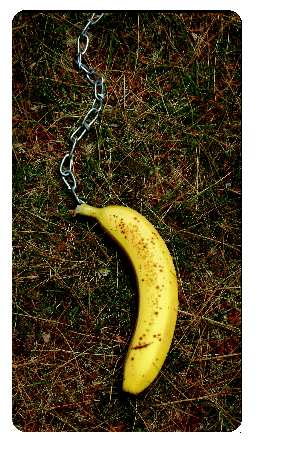
Wikipedia defines it as “A cage containing a banana with a hole large enough for a monkey’s hand to fit in, but not large enough for a monkey’s fist (clutching a banana) to come out.  Used to catch monkeys that lack the intellect to let go of the banana and run away.” A bit harsh towards monkeys, but you get the idea.  Other versions use heavy bottles or anchored coconuts to hold the banana.

And this is what you’re blogging about?  Catching monkeys?

No. It’s a metaphor.

For what?

Psychological traps.  The sort we all get stuck in.

More specific, please.

A monkeytrap is any situation that pulls you into holding on when you really need to let go.  I know I’m in one whenever I find myself trying to control something that can’t or shouldn’t be controlled.

Such as?

Well, feelings are monkeytraps.  So are relationships.  So are stressful situations of all sorts.  Anything that scares us or confuses us or makes us uncomfortable. Come to think of it, life itself is pretty much one monkeytrap after another.

Cheerful.

Realistic, I think.

And you’re writing about this because?

I’m a shrink.  Twenty years of doing therapy have convinced me that just about every emotional problem is rooted in some sort of monkeytrap.  Anxiety, depression, addictions, relationship problems, parenting problems, all of them usually turn out to be caused by someone holding onto something when they really should let go.

Too much control makes us sick?

No.  Too much controlling.  Control itself, that’s usually an illusion.

Beg your pardon?

I know.  Radical thought.  But think about it.  What in your life can you finally, absolutely control?

Um.

Exactly.   We spend our lives grabbing for it anyway.  Control is like a mirage that vanishes when you walk up to it, or a train you chase but never catch.  Most of the time we don’t even know we’re chasing it.   “Ideas we have, but don’t know we have, have us,” James Hillman said.  Control is just such an idea.    

Like an addiction.

Exactly.  We’re all addicted to control.  I know I am.

How can you tell?

Because the opposite of control is the ablity to accept the reality you’ve got instead of trying to replace it with the one you want.   (The reality you want, that’s the banana.)  It means being able to relax, and do nothing, and trust that everything will work out okay.  I’m not able to do that much.  You?

No.  Who is?

Nobody I know.  I’ve known some people who could do it occasionally.  I’ve never known anyone who could do it all the time.  I doubt any human being can.  We’re the monkeys who simply must control things, or die trying.  It’s one of the reasons I avoid the term “control freak.”   There’s nothing freakish about controlling.  What’s freakish is being able to stop.  

Why is that?

Why is one of the questions I hope to explore in this blog.  I have some ideas about it.  I have ideas, too, about how to better understand and deal with this universal addiction.  I created monkeytraps.com as a way to road test those ideas.

Road test how?

Unpack them in public, ask readers to think and talk about them.  Start a conversation about all this.

Okay.  Anything else I should know?

Lots.  But I’m trying to keep these things bite-sized, and I just passed my 500-word limit.  So come back tomorrow.  (Or whenever I do this next.  Sign up below, I’ll let you know).  Bring your banana.