
Tag Archives: control
Impasse
I’m stuck.
Part of me says Yes, do it. Do it now.
Another part says No, I can’t. Or No, I’m scared.
Gestaltists call this stuckness impasse: the point at which you stop yourself from moving forward because you’re afraid you won’t survive the attempt.
Scared, for example, of ending the marriage. Quitting the job. Starting the business. Writing the book. Expressing the feeling. Telling the truth.
Such stuckness always involves old fears, triggered in some part of me that hasn’t grown up.
That part so clearly remembers being dependent, helpless and/or scared of punishment that it hasn’t discovered I’m grown up now, and in charge of my own life.
“We are continually projecting threatening fantasies onto the world,” Fritz Perls wrote, “and these fantasies prevent us from taking the reasonable risks which are part and parcel of growing and living.”
The surprising thing about an impasse?
It’s almost always imaginary. It doesn’t exist in reality.
Push back against the fear and it tends to vanish, like a nightmare does when you turn on the bedroom light.
Labels
In times of crisis she calls herself names.
“I’m so stupid,” she’ll say. Or “I’m crazy.”
But when I offer her a diagnosis – suggest she has an anxiety disorder, say – she rejects it:
“I don’t like labels.”
Puzzling. What are stupid and crazy if not labels?
It reminds me of something many addicts say when I suggest medication:
“I don’t want to need a pill to make me feel good.”
I hear this regularly from people already dependent on pot, street drugs or alcohol.
How explain this inconsistency?
To some people, accepting a diagnosis or medication feels like a loss of control.
I sympathize. Nobody likes to feel defined or directed by somebody else.
But resisting diagnosis and treatment usually leaves such people feeling neither freer nor stronger.
Just crappier.
Not more in control, but more helpless.
Another reminder of what I call the First Paradox.
The greater your need to feel in control, the less in control you’re likely to feel.
Harbor
Six women, crying.
All moms or grandmothers, and all worried about a kid.
One kid is gay and her parents are rejecting her. One’s being fed junk food and left alone all day with tv. One (a big one) is a germophobe whose marriage is in jeopardy. One (another big one) drinks too much. And the last flies into rages when he can’t get his way.
Anxiety, frustration, guilt and helplessness slowly fill the group room like a swimming pool.
And behind each story is one question: What can I do about this? And the same frightened answer: I can’t do anything.
“Okay,” I say finally. “Ready for some good news?”
They look at me.
“Not the answer you’re looking for, probably. And not where you’re looking for it. Not out there, among the people you love and want to rescue and the problems you hate and want to solve.”
I get up from my chair and go to a mobile hanging in one corner. It’s my Seafood Mobile, all fish, crabs and starfish. I flick a tuna with my finger. The whole mobile bounces.
“This is a family,” I say. “See what happens when one member’s in trouble? The trouble migrates throughout the system. Affects everyone. Got that?”
They nod.
“Now watch.” I hold the tuna between my thumb and forefinger. The mobile calms down. “This is what happens when one member stabilizes or heals. That healing migrates throughout the system too.”
I sit down again.
“You’ve no control over these problems. But you also have more power than you know. You can be the calm fish. You can help stabilize the system.
“Remember when you were kids? Remember the adults that helped you the most? They weren’t the anxious, angry or desperate ones. Not the ones who scolded or punished or rescued.
“They were the ones who reassured you, encouraged you, praised you, helped you feel good about yourselves. Who modeled calmness, acceptance, or faith. Who helped convince you – because they really believed it – that Everything Will Be Okay.”
“That’s what you can bring to your families.
“Your kids and grandkids are each in their own little rowboat. You can’t row it for them. Can’t stop the storm or calm the waters. You don’t have that kind of control.
“But if you learn how to calm yourselves without controlling, you can offer them a safe harbor. Model faith that Everything Will Be Okay. And provide an emotional space where they can pull in, drop oars, catch their breath, regain hope.
“Not a small thing.”
The big lie
In Mein Kampf (1925) Adolf Hitler explains the propaganda technique known as The Big Lie.
Most people, he writes, never think to fabricate “colossal untruths,” and so never expect others will have the gall to do so. This makes them gullible — so gullible that
Even though the facts [disproving the lie] may be brought clearly to their minds, they will still doubt and waver and will continue to think that there may be some other explanation.
Some families promulgate Big Lies, too.
I know this because there’s one lie with which therapists struggle every working day.
I wrote about it here not long ago (All my fault).
The lie is,
A family’s problems are
caused by the children.
This lie is usually told by parents, who may believe it themselves. (Often because their parents taught them to.)
Some deliver it directly. I wish you were never born. Or Why do I drink? You’re why I drink.
That’s rare, though. More often the lie is delivered indirectly. If I wasn’t pregnant, do you think I’d have married your father?
And sometimes it’s delivered nonverbally, with not words but behavior.
A sigh. A sniff. A look. Averted eyes. Angry or rejecting body language. Even comments meant to be overheard. That kid will be the death of me.
How can children defend against this?
They can’t.
Kids are like sponges. They absorb whatever poison they’re soaked in.
So if you’re a parent it’s worth taking time to examine how you explain, in the privacy of your mind, your own family’s pains and problems.
Because, accurate or cockeyed, your conclusions will probably become your kids’ conclusions.
And in some cases, the lie they end up living.
Outside, inside
* * *
Control addicts tend to be confused about boundaries.
.
We confuse externals (what’s outside) with internals (what’s inside).
.
We tend to rearrange bits and pieces of the world around us so we can feel some feelings (safety, acceptance, contentment, connection) and avoid others (fear, rejection, frustration, loneliness).
.
We do it so much we forget our real goal is an emotional one, not rearranging for its own sake.
.
But the real goal of all controlling is to control feelings.
.
Which you can reach by means other than editing external realities.
.
Which is a helpful thing to know.
.
Because external control is so often impossible (as hurricances and elections like to remind us).
.
So it’s nice to remember that it’s not always necessary.
Your problems
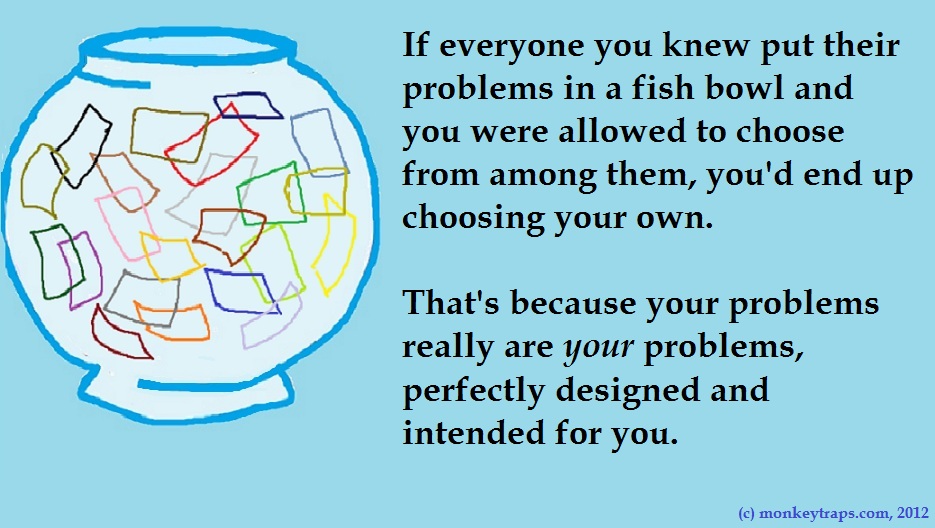
.
.
* * *
Our problems persist
because of our attachment
to the familiar:
.
We keep doing the same things
in the same way.
.
Want to improve your
problem-solving?
.
Stretch yourself.
.
Develop tolerance
for new experiences.
.
You can start here,
with this short video,
“29 Ways to stay creative”
(1:50):
.
.
While you’re watching,
ask yourself,
“Which of these
would stretch me?”
.
Pick one.
(Something easy.)
.
Now go practice.
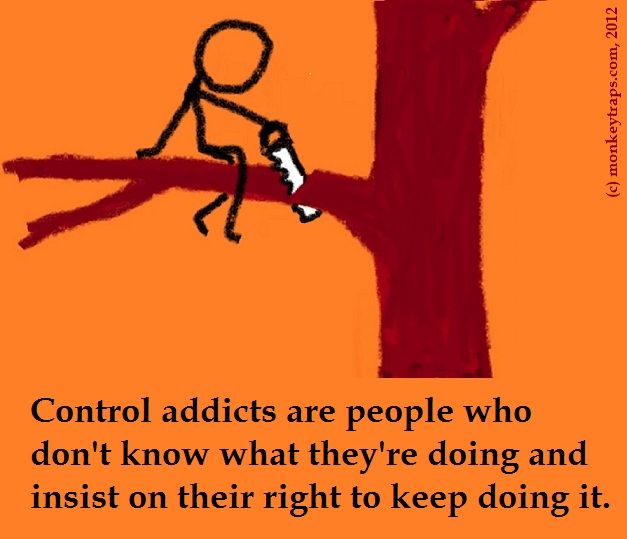
Control addicts
.
* * *
.
.
 Here are the three things you need to know about shame:
We all have it.
We’re all terrified to talk about it.
The less we talk about it the more we have it.
~ From Part 1 of a PBS interview of Dr. Brene Brown (4:56).
*
Q: You say that shame leads to disconection. So how do we reconnect?
A: You know, it’s funny.
One of the ironies is that shame fills us with this fear of disconnection.
But it is our imperfection that connects us to each other. It is the fact that our shared humanity is imperfect.
I think if we can find the courage to talk about our lives honestly, and our struggles, not only does that free us, it gives other people the freedom to be more authentic and real as well.
I don’t think connection is possible without authenticity.
 ~ From Part 2 of a PBS interview of Dr. Brene Brown (5:31).
The Tribe: Validation
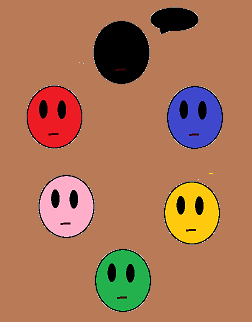
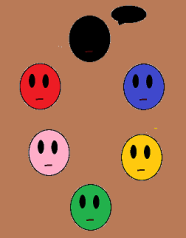 You all know me, but not each other. So let’s find out what you’re doing here.
Why did each of you join this group?
1
2
3 therapist 3
1
2
member 3
3
4
1=
2=
 Come on, be honest. Why are you here?
1
member 4
3
3
4
2=herapist 5
a
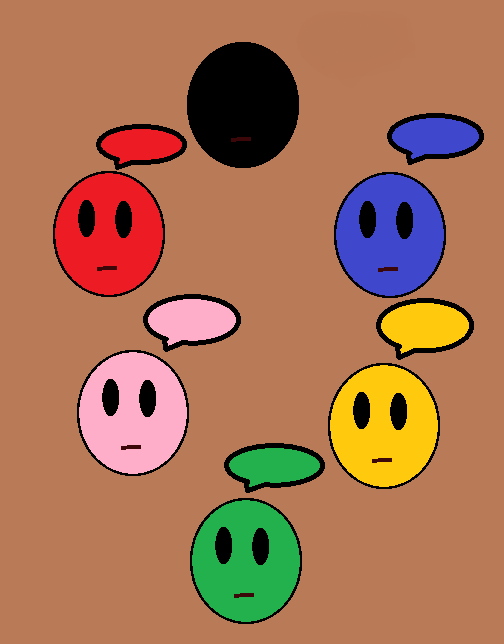
It was your idea.
It was your idea.
It was your idea.
It was your idea.
It was your idea.
1=
2
 My idea? That’s the reason?
1
2
member 6
3
4
1=
1=
 a
a
Pretty much.
Pretty much.
Pretty much.
Pretty much.
Pretty much.
1=
2=
 Hm.
Hm.
1
2
member 8
3
4
1=
2=
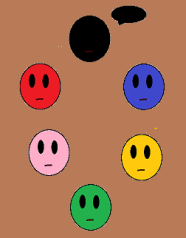 Well, needing to please your therapist isn’t very therapeutic. Maybe we should rethink this.
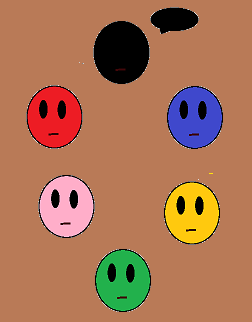
2
member 9
3
3
1=
1
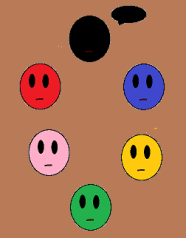 What if we cancel group? How would you feel?
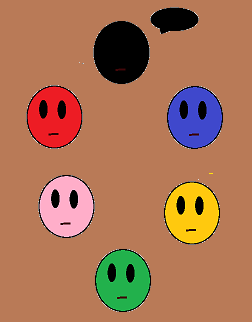
1
2
member 10
3
4
1=
2=
 therapist 11
1
2
member 11
3
4
1=
2=
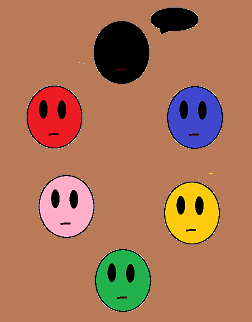
 Come on, be brave. How would you feel about stopping right now?
2
2
member 12
3
4
2=
 th
th
1
2
Yippee.
3
4
1=
2=
 t1herapist 14
1
2
Yes. Yippee.
14
3
4
1=
 th2
th2
Yippee also.
Me too.
3
1=
 th
th
1
2
Ditto.
3
4
1=
2=
 th
th
1
2
mem
3
4
1=
2=
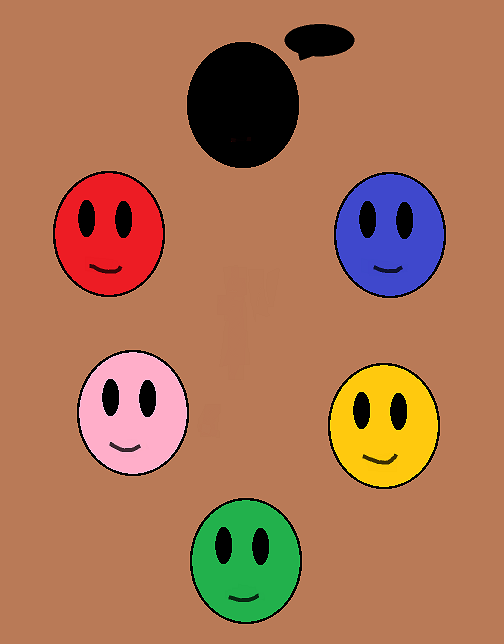
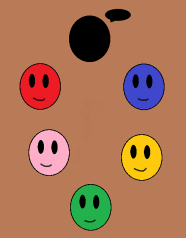 Huh. Now you’re all smiling.
1
2
member 15
3
4
1
 You better be careful.
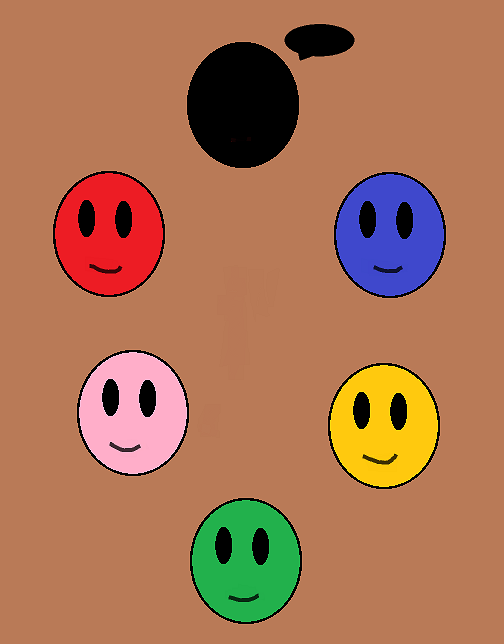
1
2
member 16
3
4
1=
2=
 Someone might mistake you for a group.
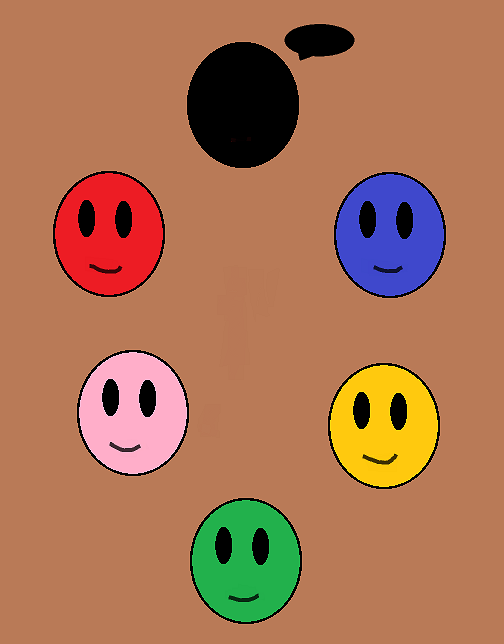
1
2
3
4
5
6
* * *
 About validation
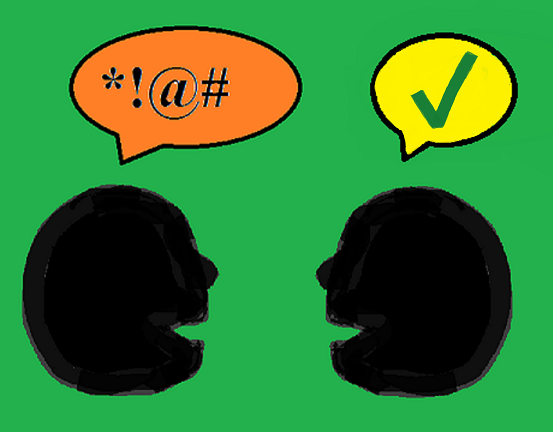
One of the most important emotional skills is the skill of validation.
It is a skill because it can be learned.
Whether it is or ever will be part of the academic or corporate measures of emotional intelligence, I really don’t know.
But I do know that if you want to have better relationships with people, the skill of emotional validation is extremely useful.
The relationship will be better because with more validation you are going to have less debating, less conflicts, and less disagreement. You will also find that validation opens people up and helps them feel free to communicate with you.
In fact, if there is a communication breakdown, if there is a wall between you and someone else, it probably has been built with the bricks of invalidation.
Validation is the means of chipping away at the wall and opening the free flow of communication.
~ From “Emotional validation: Introduction” at EQI.org.
1
* * *
1
Visited
Monkey House
yet?
No?
What are you waiting for?
What’s Monkey House? Read this.
Then click here to join the conversation. (Go to “Do you need to register a new member?” at the top.)
We’re asking, “What’s the most difficult control issue you’re facing now?“
A recent exchange:
Hi Bert and Members,
Cutting through the fear barrier of speaking out. Here goes:
My control issue: wanting validation as a person, in an individual sense.
Always, no matter what the situation, I’m pushed to the outer, disregarded, invalidated and not included, the invisible factor engulfs. As much as I try, 30+ years of trying, same result. I can do my job, very well if I may say so myself, and yet everything/everyone stays out of arm’s reach to the point of utter loneliness. 
Thanks Bert And Steve. After reading your blog for nearly 6 months, I’ve become aware of how the issue of control infiltrates so many aspect of our lives while recognizing both the healthy and unhealthy aspects of control. 
Hey, David. Thanks for cutting through.
Odd you should mention validation. That just happens to be the title of our next Monkeytraps post (due Sunday 5/13.) It’s also a subject on which we both have thoughts.
Steve: The need for validation is legitimate, inescapable, and the biggest damn monkeytrap I know, since it forces us to try — endlessly and in countless ways, not always conscious or healthy — to get what we need from other people. And as with most forms of control, the more of it you need, the less you seem to get. It’s also why having at least one reasonably healthy relationship is more or less essential to happiness.
Bert: God, I hate needing validation. I grew up hungry for it, so hungry that I used to avoid relationships just to avoid being disappointed. That didn’t work, of course, since it was like starving myself in order to avoid food poisoning. Eventually I had to take the risk again with people. A pain in the ass, people, but also the only game in town.
Session 15: Predictable
 bert 1
1
2
3
4
So, you’re married?
1
2
3
4
 Yes.
Yes.
1
2
3
4
And her name’s Felicia, you said.
1
2
3
4
 That’s right. But I call her Babe.
1
2
3
4
Bert and Babe. Cute. And you have a son?
1
2
3
4
 Yes. Bud.
1
2
3
4
And a daughter?
1
2
3
4
 Brittany.
1
2
3
4
Sensing a pattern here.
1
2
3
4
 We have a dog, too.
1
2
3
4
Named…
1
2
3
4
 Bonzo.
1
2
3
4
Of course.
1
2
3
4
 Excuse me?
1
2
3
4
Just curious. Favorite color?
1
2
3
4
 Brown.
1
2
3
4
Favorite sport?
1
2
3
4
 Baseball.
1
2
3
4
Favorite music?
1
2
3
4
 Blues.
1
2
3
4
Composer?
1
2
3
4
 Bach.
Bach.
1
2
3
4
Holiday?
13
4
 My birthday.
1
2
3
4
Favorite meal?
1
2
3
4
 Burgers.
1
2
3
4
Favorite coal?
1
2
3
4
 Bituminous.
1
2
3
4
(Sigh.)
1
2
3
4
 What’s wrong?
1
2
3
Has anyone ever described you as predictable?
1
1
1
1
 Bite me.
* * *
(Bert’s therapy) Session 2: Felicia
So. Your wife sent you.
…………….
[1]
[2]
[3]
Yes.
Why?
……….
[1]
[2][3]…………………………………………………………………………………………………………………………………………………………………………………………………………………………………………………………………………………………………………………………………………………………………………………………………………………………………………………………………………………………………………………………………………………………………………………………………………………………………………………………………………………………………………………………………………………………………………………………………………………………………………………………………………………………………………………………………………………………………………………………………………………………………………………………………………………………………………………………………………………
.
She says I have control issues.
What’s she mean?
[1]
[2]
[3]
 I have no idea.
She doesn’t say what bothers her?
……………………….
[1]
[2]
[3]
Nope. She’s a bit crazy, my wife.
I see. What’s her name?
….
[1]
[2]
[3]
Felicia.
Maybe we should ask Felicia in to tell us herself.
……………………….
…..
[1]
[2]
[3]
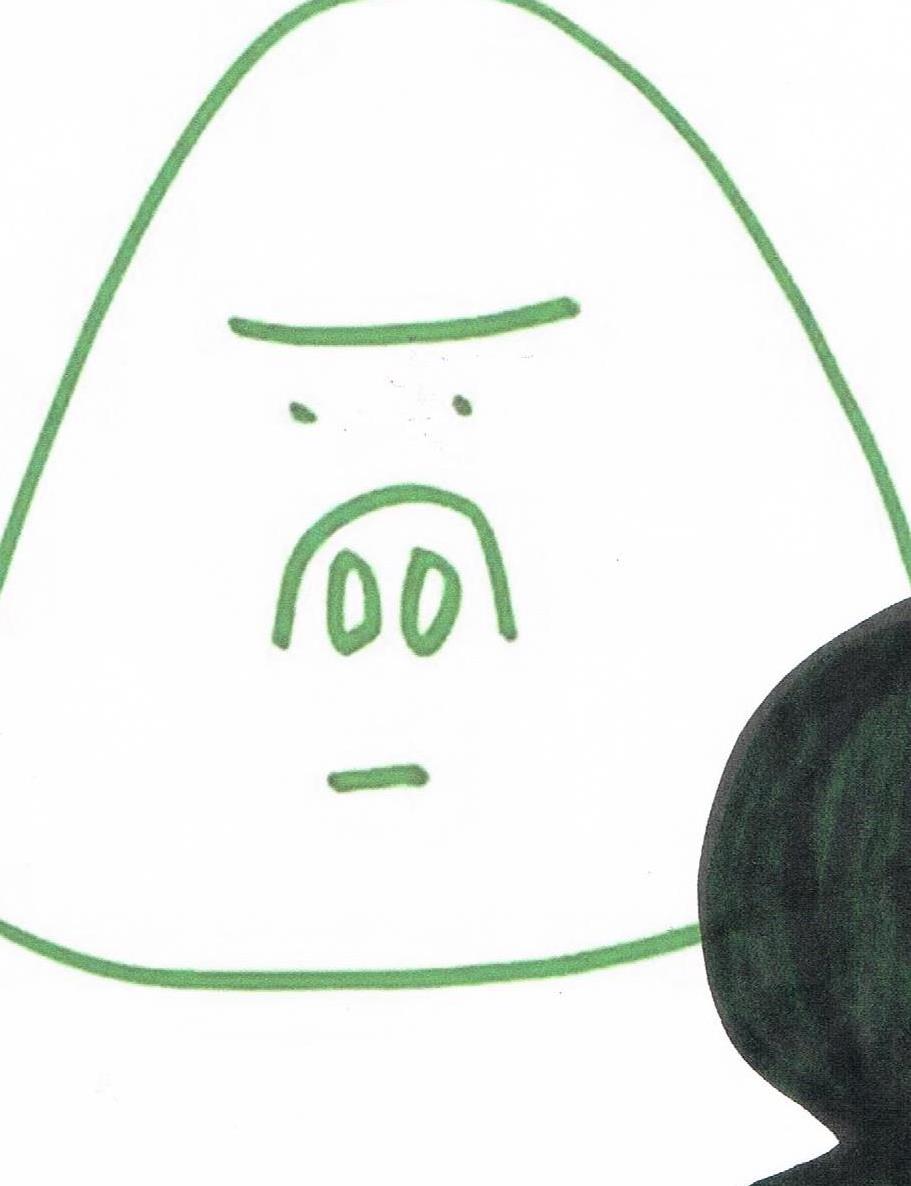
How would you feel about that?
[1]
[2]
[3]
. . . . .
[1]
[2]
[3]
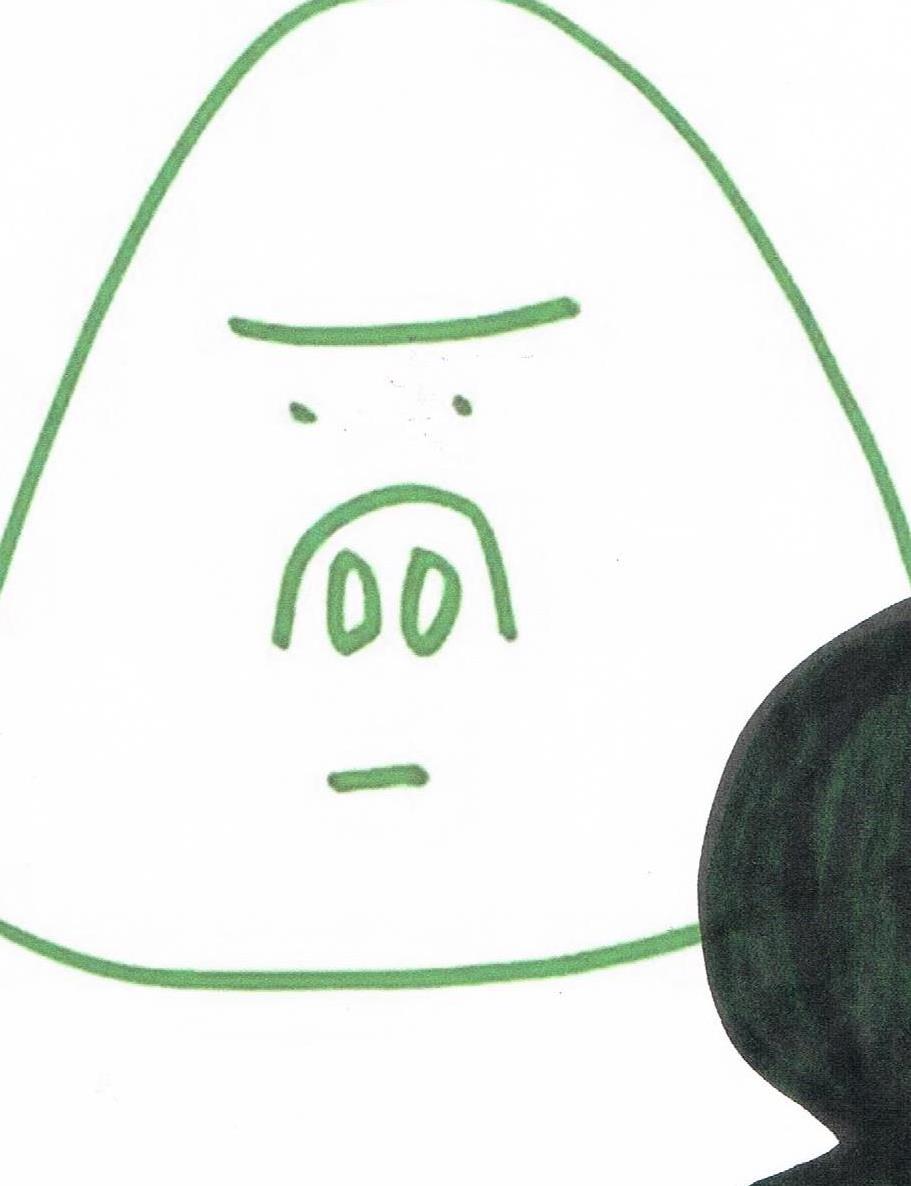
I’ll tell you everything.
Dark in there
 Years ago I had a friend named Richie whose favorite expression was head up your ass.
As in “Boy, that guy has his head up his ass.” Or “Relax, Steve. Get your head out of your ass.”
Colorful. But I never quite understood what it meant.
(Probably I got hung up on the visual. You know, trying to imagine what it might look like. You know.)
Anyway, Richie came to mind this morning. My wife and I were sitting on the deck with our coffee, and I was thanking her for keeping me afloat, emotionally speaking.
“If not for you,” I said, “I’d have lost my marbles years ago.”
She was pleased. “That’s good to hear,” she said. “Often I feel like I’m failing, because so much of the time you seem distant or worried or unhappy.”
“Oh,” I said, “that’s just me with my head up my ass.”
Apparently at some point over the years I reached my own understanding of what Richie’s trademark phrase meant: Self-preoccupied. Obsessive. Living in my head. Disconnected from other people. Disconnected from reality.
I’m like most other men in this way. Most women I know handle stress by sharing it, bringing it to their relationships; most guys carry it off into isolation. Where a woman gets on the phone, a man retreats into his cave.
I’m a cave-dweller from way back.
In grade school I decided that people were untrustworthy and best kept at a distance. The cave into which I retreated then was my own skull — dark, kind of cramped, but way less scary than the big fearsome uncontrollable world. I furnished my cave with books and movies and tv shows and long convoluted conversations with my own puzzled fascinating self.
I lived there through adolescence and into early adulthood.
Eventually, when I had to leave the cave to make a living, I looked around for some way to do so which would allow me to stay mostly in hiding.
I became a therapist.
Looking back on that choice now, I see two things that made therapy appealing. The first was knowledge. I loved the idea of becoming a magus, a magician of the mind, possessor of arcane understanding and skills that would enable me to transmute (and so rise above) the common run of human misery.
The second was invulnerability. Doing therapy seemed a terrific way to get really close to people without having to risk criticism or rejection or abandonment. To make contact without making contact, so to speak.
Guess what?
It worked.
Well, sort of.
I’ve spent decades doing this work. I still enjoy it. I think I’m reasonably good at it. I know there are lives that I changed, even a couple I saved.
But I’m also coming to see what being a therapist has cost. There are parts of me which, constrained by my professional role, never developed as I’d have liked them to. Spontaneity. Creativity. Emotional honesty. The courage to be vulnerable, take risks, make real contact.
But that’s how it is with defenses. You strap them on, thinking they’re armor, and then one morning wake up feeling like canned tuna.
Defenses are indispensible, of course. Without them we’d go nuts, or at the very least become paralyzed by our own fears and anxieties.
But defenses can also be monkeytraps: attempts to hold on when we really should let go. And six decades of living (not to mention two of doing therapy) have taught me to see cave-dwelling as just another futile grab at the illusion of control, another attempt to escape the wet weather of emotional life by hiding in the rocks.
So it sort of worked, and it sort of didn’t. In any case, I find myself tired of living dry and in the dark.
So now I creep out of the cave occasionally. One step at a time. With clients, for example, I let more of myself show than I used to. And with family. And with this blog.
It’s scary. I like it anyway. I’m learning to actually enjoy the weather.
It’s wet and sloppy out here, but it’s dark in there.
Parable
 Two monkeys meet in the mountains at sundown.
Each is alone, having been separated from his tribe. Both are tired from trudging for days through the rocks.
But monkeys are wary beasts. So for a long time they stand motionless, eyeing each other suspiciously.
Finally the tireder of the pair gets tired of this too.
“Oh, screw it,” he says, and sits down in the dirt.
The other watches him for a moment, then sits down as well.
They look around at the dirt, the rocks, the huge sky, the sinking sun. Finally their eyes meet.
“What’s your name?” asks the first monkey.
The second monkey scowls.
“What’s yours?” he replies.
They fall silent.
The sun’s lower edge touches the horizon. The air chills.
The first monkey reaches into his knapsack and pulls out a cigarette lighter. He scratches together a tiny pile of twigs and pushes the lighter into the center of it. The twigs catch. A small flame appears.
“Got anything to burn?” he asks.
The second money is leaning towards the flame, but the question stops him.
“Do you?” he answers. He places a protective paw on his knapsack.
The first monkey sighs.
The sun sinks below the horizon.
Now it is dark. Dark in the mountains is especially dark.
“Oh, screw it again,” says the first monkey. He reaches into his knapsack and brings out a small lump of something wrapped in cloth.
“This is a secret,” he tells the other. “I never show it to anyone. It’s embarrassing. But I guess it’s better than freezing to death.”
He unwraps a stinky old fish head.
A rotten smell fills the clearing. First Monkey swallows hard, then lays the fish head carefully atop the pile of twigs like an offering.
It catches fire. Flames leap up.
The smell disappears.
Second Monkey now looks embarrassed.
“That’s not so bad,” he says finally. “I can beat that.”
He reaches into his knapsack and comes out with a medium-sized lump, also wrapped in cloth.
“Really?” First Monkey smiles.
Second Monkey nods, unwraps his fish head, swallows hard and lays it on the fire.
Again a bad smell fills the clearing. The second head catches fire. Again the smell goes away.
The monkeys inch closer to the flames. They reach out their paws. Overhead the moon starts its climb across the sky.
“You got more, I hope,” Second Monkey says.
“I do if you do,” replies First Monkey.
Both giggle.
And so the night passes, hour after hour, fish head after fish head, each larger and more fragrant than the last, until both knapsacks are empty and the fire burns on without feeding and the sun peeks up over the mountains in the east.
“I’m Sid,” mutters Second Monkey suddenly.
“I’m Barry,” replies First Monkey. “Pleased to meet you.”
Moral:
Nobody on this bus but us monkeys.
Listening for instructions
 Each weekday morning my wife’s alarm goes off at six o’clock. Usually I ignore it. Today it wakes me immediately and totally.
I swing my legs out of bed and sit up. I sniff the air.
I groan.
My bedroom smells of bananas.
Oh good, he whispers. You’re up.
“I’m not up,” I mutter. “Dead man walking. Give me a minute.”
I stumble off to the bathroom.
Out in the kitchen Mr. Coffee gurgles at me, implying there may be hope after all. I fill my cup (ah, sweet nectar of life) and let the gravity of habit pull me down the stairs to my office, to my cluttered desk and my cluttered mind.
Are you up now? Bert asks.
***
So. Last time you said something about listening for instructions.
Yes.
I have no idea what that means.
I know.
It means turning your attention inward. Listening to your body.
Why do that?
It’s where the feelings live.
Oh. Well, I already do that.
The hell you do.
(Startled:) Why so cranky?
If you were listening I wouldn’t be here now. I’d be upstairs in bed.
Oh. (Defensive:) But we have work to do.
Sure. There’s always work to do.
And that’s why you’re cranky?
No. I like working. Cranky is how I feel when I stop listening.
Oh. (Pause.) Most people I know are cranky, on some level.
Right.
Why is that?
Most people don’t listen. They’ve been trained not to. Actually they’ve been trained to act like they have no bodies at all.
Trained how?
As kids. We learn early on to stop listening to our bodies, to follow rules instead. To eat on schedule, sleep on schedule, poop in the right receptacle, and so on.
You’re saying that’s bad?
I’m saying it’s the thin edge of the wedge.
What wedge?
The wedge that eventually separates us from who we are. We stop listening to our internal voices — feelings, instincts — and as we get older the distance between us and the voices gets wider and wider. School widens it bigtime. Work widens it further. Eventually most of us forget how to listen. And end up permanently cranky.
On some level.
Yes. Not always a conscious one.
Does this wedge have a name?
Socialization.
Is there an alternative?
To socialization? Maybe, if you go live on a mountaintop by yourself. If you live with other people you get socialized.
I remember how shocked I was during my training when a supervisor told me that the healthiest anyone ever gets is neurotic. I didn’t understand. Or maybe I did and didn’t want to believe it.
What’s that mean, “neurotic”?
Split. Split by the wedge of socialization, into controller and controlled. Divided against yourself.
So. What’s the answer?
Answer? To what?
To the problem of neurosis.
You’re not listening. There’s no “answer.” Neurosis is inevitable.
I’ll ask it another way. How do I achieve happiness?
Same answer.
What? Unhappiness is inevitable?
Pretty much. What was it Freud said? Something about the goal of analysis being to transform neurotic misery into ordinary unhappiness.
But then Buddha said the same thing two thousand years ago. “Life is suffering.” The first Noble Truth.
Are you trying to bum me out?
No, no. This is actually good news.
How can you say that?
Look. Most of us don’t know what the hell we’re doing, or why we’re doing it. We have this idea that we’re supposed to be Happy, and if we aren’t, well, we must be screwing up somehow.
It’s a sort of secret perfectionism. We keep comparing how we feel to how we want to feel, and when the two don’t match we decide something’s wrong.
Nothing’s wrong. Life just hurts.
And we have to live with it. Like we live with bad weather.
Right. And there is great relief in giving up this perfectionism.
Where does listening to the body come into all this?
It’s something to rely on instead. It replaces chasing some mythic Happiness with the more achievable goal of getting our simplest needs met. Tired? Rest. Hungry? Eat. Sad? Cry. Like that.
Does sound simple, all right.
Simple, but important.
I’ll give you an example. Let’s say a client comes into my office all twisted up over some problem or other. And he’s looking to me for magic. To make the problem vanish somehow, so he can feel better.
What do you do?
I offer him a cup of water.
That’s it?
No. I push my hassock over to him and tell him to put his feet up on it. I may suggest he take off his shoes.
Then I put a pillow behind his head on the sofa and invite him to lean back.
Then I tell him to breathe. Just breathe.
Then what?
Then I wait.
And what happens?
He feels better.
This works?
Almost always. Takes about five minutes, for most people. Some take longer.
Of course some people won’t even take the water, or put their feet up.
Why?
It scares them. Listening to feelings means not controlling them. And they think they need to stay in control.
Why?
Usually they’ve been traumatized. These are the seriously scared ones, the ones that never relax.
(Silence.)
What’s the matter?
Nothing. I’m thinking I’d like to stop now.
Stop talking?
Yes.
Really. Why?
I’m a little tired.
(Smiling:) May be hope for you yet.
The illusion of control
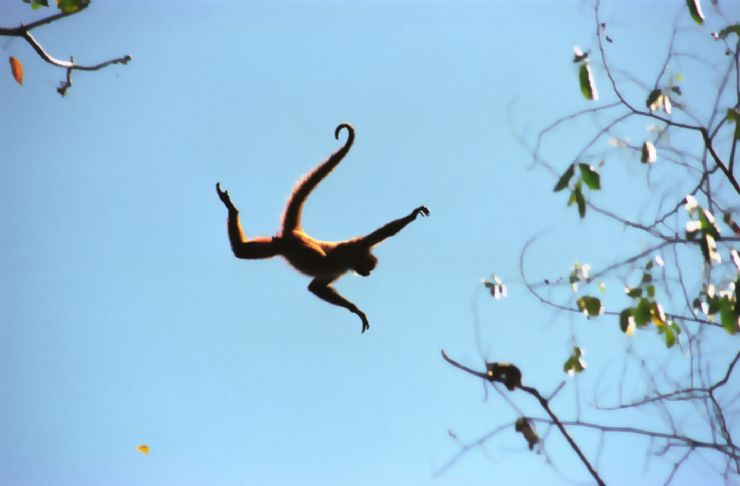 The heat’s back today, and it’s too hot to walk.
But there’s good news too. The aging AC in my building finally expired, transforming my office into a sauna with sofas. So I had to stay home.
Like a snow day, but with sweat.
Anyway, I’m sitting here at my desk with a fan at my elbow, reading chirpy blogs filled with excellent advice about how to transform my neuroses and finances, when I hear footsteps.
Guess who? Bert growls.
***
Oh, please. Take the day off, can’t you?
I want to chat.
What about?
About the other day. After we talked I felt better.
Great. You’re welcome. Go take a nap.
Planning on it. First I have a question.
Of course you do.
Patience, please. Your monkey’s your monkey.
(Sigh.) What’s your question?
Why did I feel better?
Come again?
Nothing changed. All the stuff I was complaining about stayed exactly the same. I felt better anyway. Why? What did you do?
I helped you detach from the illusion of control.
Oh. (Pause.) What the hell does that mean?
You were attached to an idea that was making you unhappy. I just helped you move your attention elsewhere.
What idea was I attached to?
That you had to solve your problems.
But I did have to. I still do.
Not in order to feel better. For that you had to detach.
“Detach,” meaning…
Let go of.
How does that help?
How does it help to put down any load you’re carrying?
Oh. Okay. But the problems are still there.
Right. So?
I still have to solve them.
Let’s say you do that. What then?
I don’t follow.
You’ve solved all your problems. What do you do now?
That’s silly. Nobody can solve all their problems.
Exactly. At best we exchange old ones for new ones. And to believe anything else is an illusion.
The illusion of control.
Right.
And you believe that? Control is an illusion?
Most of the time, yes.
But wait. Some problems are solvable, right?
Sure.
So we can have some control.
I’d say it differently. I’d say there are times when we’re able to stop chasing control. That’s not the same as actually having it.
You lost me.
Yes, that happens.
(Pause.) Let me ask it another way. Why do you believe control is an illusion?
Why do you think?
I don’t know. Anyway, I’m not convinced it is.
Oh? Have enough control, do you?
No. Of course not. But that doesn’t mean it’s not possible.
Right. You just have to try a bit harder.
Right.
Do you know anybody who has enough control?
I’ve never asked. But I doubt it.
Me too. So why assume control is possible?
Well, it must be.
Because?
(Silence.)
Look. The idea of control is what might be called a necessary fiction. It’s a myth, a story we tell ourselves in order to go on.
Go on living.
Yes. It gives us a sense of security and a sense of direction. And it really is necessary, because facing our lack of control is terrifying for most people. But it really is a fiction too.
But why? Why can’t I ever have control?
Do you remember the four laws?
Yes and no. I mean I do, but I keep forgetting them.
Yes, that’s normal. The third law is
3. Behind all controlling is the wish to control feelings.
Yes, I remember now.
And that’s why control is mostly an illusion.
Why?
Because feelings are mostly uncontrollable.
Wait. That’s not true. If it were, we’d all run amuck. I’d punch out everyone that makes me angry, or seduce every woman I find attractive, or…
You’re confusing feelings with behavior.
Sure, behavior is controllable. Sure, we can choose to express our feelings or hold them in. We can split ourselves into controller and controlled.
What I’m saying is, ultimately feelings are stronger. Ultimately emotional life is beyond our control. No one stays in control of their emotional life.
But you know this. You sit with me in that consulting room every day. You know what happens to people who rely on control.
They get sick.
Right. Anxious, depressed, addicted.
Divorced.
That too.
So what’s the alternative?
To controlling your emotional life?
Yes.
You know that too.
Remind me.
Can you control the weather?
Of course not.
Is that a problem?
No.
Why not?
Because I can handle the weather. I know how to respond to it. It rains, I wear a raincoat. It snows, I wear galoshes. It’s hot and the office AC crashes, I stay home with a fan in my face.
Exactly. Feelings are like weather. Not a problem when you learn how to respond to them.
Respond to. Not control.
Right.
Which means…
Well, it starts with listening to them. Listening for instructions, I call it. Which I’m about to do.
How?
By ending this conversation. We just passed 800 words.
Oh. Crap. Lost some readers, I imagine.
That’s okay. The ones who are interested will come back.
Can I come back?
I expect you will, whether or not I give you permission.
(To be continued.)
Steve & Bert

COMING SOON: An expanded 2nd edition

CLICK HERE TO ORDER MONKEYTRAPS (THE BOOK)

Follow the conversation:
-
-

-
-
BERT’S IN THERAPY. To listen in, click on his nose.


