Category Archives: control
1. I carry a guilty secret.
2. Because I feel guilty, I share my secret with no one.
3. Because secrecy fosters guilty feelings, I can’t help but feel guilty.
4. I carry a guilty secret.
~ From the forthcoming Monkeytraps in Everyday Life: A Guide for Control Addicts
Leave a comment | posted in control
1. Realize that, because you let other things take priority, you do not take adequate care of yourself.
2. Resolve to take better care of yourself, when you have time.
3. Let other things take priority.
4. Repeat step 1.
~ From the forthcoming Monkeytraps in Everyday Life: A Guide for Control Addicts
1 Comment | posted in control
Dysfunctional families are those whose members can’t get their needs met.
It’s easy to grow one.
Just institute a few simple rules:
1. Don’t talk about problems. It just makes everyone uncomfortable.
2. Don’t express feelings openly. Same reason. Why upset people?
3. Don’t communicate directly. Whenever possible, use another family member as a messenger. Children are especially useful for this.
4. Harbor unrealistic expectations of each other. Especially of kids, who’ll try their best to meet them anyway.
5. Don’t be selfish. Hide or minimize your own preferences, feelings and needs. Expect others to do the same.
6. “Do as I say, not as I do.” For example, demand honesty while remaining defended. Or condemn substance abuse with a drink in your hand.
7. “It’s not okay to play.” Be serious all the time.
8. Don’t admit mistakes, limitations or weakness. Pretend that perfection is a reasonable goal.
9. Never apologize. It’s a sign of weakness. (See rule #8.)
10. Blame. It’s so much safer than responsibility.
~ From the forthcoming Monkeytraps in Everyday Life: A Guide for Control Addicts.
1 Comment | posted in control
1. Decide you don’t accept yourself.
2. Decide that the way to accept yourself is to get others to accept you.
3. Make every effort to get others to accept you, carefully hiding any parts of you they may find unacceptable.
4. When you win acceptance by others, dismiss this as meaningless, since they don’t know the real you.
5. When you are rejected by others, take this as confirmation that you are unacceptable.
6. Return to step 1 and repeat.
~ From the forthcoming Monkeytraps in Everyday Life: A Guide for Control Addicts
1 Comment | posted in control
1. Decide you aren’t productive enough.
2. Create an unrealistic To Do list.
3. Convince yourself you must complete this list in order to feel productive.
4. Try and fail to complete this list.
5. Decide you aren’t productive enough.
6. Repeat until (a) sickness, (b) death, or (c) you develop realistic expectations.
~ From the forthcoming Monkeytraps in Everyday Life: A Guide for Control Addicts.
1 Comment | posted in control
Control is the child’s basic tool.
As kids we have no power, no ability to take care of ourselves. We need big people, like parents, to do that.
And we use control to make sure those big people do their job.
We learn this before we have language. We learn it the first time we cry and mom picks us up and feeds or rocks us or changes our diaper. “Hey,” we realize. “What I do affects what she does.”
And the urge to control is born.
We spend childhood learning thousands of ways to control big people:
Want mom to love you? Don’t talk back.
Want dad to be proud of you? Get straight A’s.
Want teacher’s approval? Do your homework.
Want to avoid being bullied? Appease the tough kid.
This is how we navigate through early life.
For a kid, there’s no other way.
Of course, at some point we’re supposed to develop some power — the ability able to stand up for and take care of ourselves.
But many of us don’t. Many of us (especially if we’ve been abused or traumatized) stay stuck in kid mode.
We keep relying on control to get our needs met and manage relationships. We keep seeking approval and avoiding conflict. We hide who we are, bury our true feelings, and try our damnedest to be whatever we think others want us to be.
Most of the time we do this without even realizing we’re doing it.
And that’s the basic problem of all control addicts.
They’re stuck with the tool of a child to cope with the life of an adult.
2 Comments | posted in control
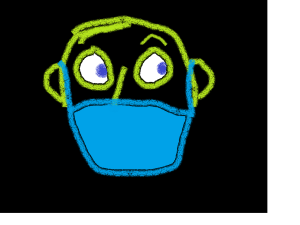 Compulsive controlling — a.k.a. codependency, a.k.a. addiction to control — operates much like an infection, one we pass back and forth between us.
Say we’re friends, and I’m not honest with you about what I feel or what I really want. It may be over something insignificant, like where to have dinner or which movie to see. Maybe because I want you to like me, or agree with me, or I’m afraid of your disappointment or anger. Or maybe I just grew up in one of those families that taught me to lie even when lying was unnecessary. Whatever.
I may fool you for a while, but eventually you come to know this about me. This is inevitable. It’s hard not to sense when someone is in hiding.
So you respond in kind. You stay in hiding, too. You avoid being honest with me about what you think or feel or want.
And all this seems innocuous at first. We spend so much time hiding from other people that it becomes our default position, the place where we feel most comfortable and safe. Why not lie and pretend I want Italian instead of Chinese? Why not hide opinions that might cause conflict or hurt feelings?
So I rationalize my fear and dishonesty, and maybe you do too.
And maybe we transfer this to our other relationships.
Maybe I stay in hiding with other friends, and teach them to see me as you do. And you do the same. And we and they become part of a network of half-real, half-hidden connections where true feelings and motives are never permitted to come into the light.
This network is permeated by the whole array of half-conscious maneuvers people employ in the absence of honest communication — denial, projection, minimization, transference and the rest. And the truth of who we are gets buried under progressively deeper and more tangled layers of obfuscation.
I’ve seen this happen. I’ve seen it spread from one codependent individual to infect entire families, and then everyone who comes in contact with their members. It comes to feel so normal to the people in these networks that they have no idea why they feel anxious and alone so much of the time. I’ve been part of this myself.
It’s because we need connection so much.
And because fear of losing it is infectious.
And so is dishonesty.
And so is addiction to control.
Leave a comment | posted in control
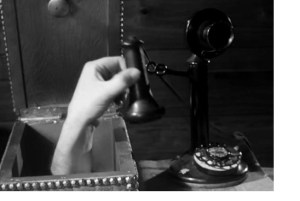 My favorite part of The Addams Family (ABC, 1964-66) was the character named Thing.
Thing was a disembodied hand that lived in a upholstered leather box.
It scrambled across tabletops like a spider and performed small services for members of the family, like answering the phone or playing castanets.
“Thank you, Thing,” Morticia Addams would coo.
In recent years I’ve created my own version of Thing.
Mine’s not a hand.
Mine’s a whisper in my head.
There have always been whispers in my head, as I’m sure there are in yours. One is the bully Gestaltists call Top Dog, always ready to judge, prod or criticize. Another is the whiny Underdog, forever complaining (It’s too hard) or making excuses (I try my best) and promises (I’ll do it tomorrow).
For decades these guys were my constant companions, engaged in endless battles of Should vs Can’t that Fritz Perls called “the self-torture game.”
So the topdog and underdog strive for control. Like every parent and child, they strive with each other for control. The person is fragmented into controller and controlled. This inner conflict, the struggle between the topdog and the underdog, is never complete…. There is no end to the self-torture, to the self-nagging, self-castigating. It hides under the mask of “self-improvement.” It never works. (Gestalt Therapy Verbatim, 1969).
Thing’s voice is different.
Thing’s voice is soothing.
Thing forgives my mistakes, limitations and sins.
Thing reassures me, encourages me, and reframes problems in ways that let me be gentle with myself.
Thing gives me permission to listen to feelings and give myself what I need.
Thing is the voice of a parent I never had.
I began hearing it only later in life. Partly it’s the voice of my own therapist, who years ago encouraged me to stop self-torturing. Partly it echoes my wife and children, who love me as I am. And partly it’s the voice I myself use with clients when trying to teach them self-compassion, self-forgiveness and self-care.
It was nice to discover, after years of self-torture, that I could grow my own Thing.
Thing is good company.
I wish we’d had more time together.
I wonder who’d I be now if we had.
Oh well. Better late than never.
Thank you, Thing.
Leave a comment | posted in control
I work with lots of parents.
They tend to fall into two groups.
One group focuses on behavior. The other focuses on feelings and needs.
The first group talks about expectations, rules, discipline, misbehavior, respect for adults, grades, appearance, accomplishments and success in the future.
The second group is more apt to ask questions and to be confused.
The first group tends to be convinced. It pretty much knows what it wants from its kids, and how it wants them to be.
The second group tends to be curious. It’s still trying to learn how its kids tick, how they feel and what they need.
The first group is apt to say things like “I don’t like that s/he does that.”
The second group is apt to say things like “Why does s/he do that?”
My job with the second group is to teach empathy – to draw on their own emotional experience as a guide to future parenting. I do this mainly by helping them remember what worried, scared, overwhelmed and comforted them when they were their kids’ age. Also by learning to listen to themselves now, to their own feelings and needs, and to respect what they hear.
My job with the first group is get them to join the second group.
2 Comments | posted in control
In group. “I have insomnia,” Teacher says. “Every morning I wake up at three.”
“Since when?” I ask.
“Last week.”
“Do you know why?”
“Sure. Testing starts soon. I lie there worrying about how my students will do.” She frowns. “The thing is, the damn tests are ridiculous, and I know it Everyone knows it. And I know I’m a good teacher. And yet I can’t stop worrying about how my kids will do on these meaningless tests and what sort of evaluation I’ll get. And I get so mad at myself for losing sleep over this. I feel so stupid.”
“Me too,” blurts Store Manager. “I know I’m a good manager. My boss tells me I’m the best they have. But whenever it’s review time I get crazy. I’ve never had a bad review, not one, and yet each time I worry this will be the first.”
“God that’s familiar,” says Wife. “I feel like that whenever my inlaws visit. I keep imagining my mother-in-law is judging how I cook, how I keep house, how I raise my kids, how I wear my hair, for gods sake. And yes,” she turns to Teacher, “it keeps me up the night before they visit.”
“Does she criticize you?” Teacher asks.
“Never. She loves me. And I know that.” Wife shakes her head.
“Steve, what the hell?” Teacher asks. “Are we stupid, or crazy, or what?”
“None of the above,” I say. “You just have more than one part.
“You have an adult part and a kid part. The adult part knows you’re a good teacher or store manager or that your mother-in-law really does loves you. But the kid part, she’s hungry.”
“For what?” Store Manager frowns.
“Approval.”
“But why?”
“Because you didn’t get enough when you were kids,” I say. “Kids who get enough absorb it. They store it up. Then later they can give it to themselves. Kids who don’t get enough enter adulthood insecure and hungry. They usually hide their hunger, even from themselves. But it plays like background music behind everything they do. Secretly they seek approval everywhere they go. And when they think they’ll get the opposite, they panic.”
The three are quiet.
“Okay,” Teacher says finally. “So what do we do?”
“You start feeding yourself,” I say. “First, admit your need for approval — to yourself.
“Second, take it to people you love and trust. I suspect they have no idea how hungry you are. Let them know, like you just did here.
“Third, be brave. Ask them for what you need. Ask for reassurance and validation and encouragement. Do you guys ever do that?”
They shake their heads.
“Isn’t that codependent?” Teacher says.
“No. Hiding your need, that’s codependent. So is lying awake worrying about it. So is knocking yourself out to be the perfect teacher or manager or daughter-in-law. Perfectionism is what kids do to get approval.
“But owning a need, and asking for help? That’s healthy. That comes from the grownup part.”
Leave a comment | posted in control
Since this week I have grandparenting on my mind, I thought I’d republish this, my first post on the subject.
So now I’m a grandpa. Which is odd, considering how inside I continue to feel like an adolescent. But it does make for some interesting experiences.
Here’s one:
I’m babysitting Wyatt, who’s five months old. He’s in his ExerSaucer, wobbling back, forth and sideways, drooling and gurgling at the brightly colored plastic sea creatures hanging around him.
I’m only half paying attention. As usual, I’m lost in my own thoughts.
Then I notice he’s silent.
I look over and find him staring at me.
Just staring.
I stare back. The moment lengthens. He holds eye contact. Doesn’t move. Doesn’t blink. Doesn’t get bored or embarrassed or nervous, as an adult would. Just stares. Smiling at me.
I smile too, but he’s making me nervous. This moment of raw contact feels uncanny, like something beyond normal human experience. I feel an urge to end it, to look away, or joke, or take a picture with my cell phone, or create some other distraction.
Instead I stare back.
And the thought comes, It’s like looking at God.
Years ago a client surprised me by abruptly asking “What’s a therapist’s job?” A simple question, the sort that catches you flatfooted. I felt really stupid. I had to think.
Eventually I told her that I saw my job as similar to Michelangelo’s. Michelangelo reputedly defined the sculptor’s job as freeing the statue from the stone.
“By the time we’re adults,” I said, “we’re all crusted over with fears and defenses. The therapist’s job is to scrape away the fears and defenses and free the person trapped inside.”
The person inside. The natural, unafraid, undefended part. The God part.
Sunday school taught me to think of God as resembling Charlton Heston in a bathrobe. That was a long time ago. Lately I’ve come to think of God as something more like The Force in Star Wars — a sort of energy which animates and organizes things, makes grass sprout and wounds heal and babies grow, holds things together and makes sense of life’s pain, loss and chaos.
And when it comes to people, I think of God as the part of them that gets buried in the course of getting educated and socialized. The part therapy tries to unearth. The spontaneous, curious, fearless, loving part we all carry around inside us. The God part.
The part that’s staring at me now.
~ April, 2013
Leave a comment | posted in control
Maybe it’s coincidence. But Thursday I had my first granddaughter,

and then yesterday I felt the urge to go update my profile on Psychology Today — specifically, the paragraph describing my Tuesday night women’s group, which now reads:
Most women are trained to be codependent — i.e., to take better care of others than of themselves — as a way of winning approval and love. This group is for mothers, daughters, wives and single women tired of losing themselves in relationships and ready to make their own needs and happiness a priority. We focus on giving up compulsive controlling of other people and replacing it with emotional support, healthy self-acceptance, and realistic self-care.
One benefit/curse of becoming a grandparent is that you take the long view of things. You look at this hatchling, and then you look down the metaphorical road and anticipate what she’ll experience. Projection being what it is (the product more of fear than of hope), I imagine Callie struggling with the same stuff as the women I know, the mothers, daughters, wives and single women trying to grow past their conditioning and give birth to themselves.
After two decades of working with women I’ve decided I hate what we do to them. I hate what we do to men, too. In Monkeytraps (the book) I wrote,
Most men are raised to function as machines. Most women are raised to function as hostages.
Men are taught to sacrifice their emotional selves. Women are taught to sacrifice their independence and autonomy.
Men are expected too be tough, brave, and self-reliant. Women are expected to be endlessly accepting, sensitive and giving.
Men are taught to stuff their feelings and work hard. Women are taught to stuff their feelings and give until it hurts.
It’s a crock of shit, this training.
But it’s so universal and so unconscious that we all get infected by it and grow up emotionally lopsided. Then we spend our lives blaming ourselves for being inadequately machinelike or inadequately giving.
The luckiest people I know have someone in their life telling them (ideally, while they’re young) not to believe the lies. That men and women are meant to be just that, human men and women, not machines or bottomless wells of self-sacrifice.
That it’s our right to not grow up lopsided.
And that, if we have grown up that way, it’s our right to work on undoing our lopsidedness.
If not for our sake, then for the sake of hatchlings yet to come.
3 Comments | posted in control, metaphor for
Now up:
The Monkeytraps Podcast,
Chapter 4: Chameleon (1:37),
Chapter 5: A Controlling Person (2:04),
Chapter 6: Internal and External (2:18),

x
* * *
Missed something, or
want to hear it again?
Visit the
Monkeytraps Podcast’s
homepage on Stitcher Radio
(click on logo)

where you’ll find all previous
and subsequent chapters.
x
Leave a comment | posted in control
 In session, with a couple. He does not want to be here. But she’ll end the marriage unless he comes. I ask questions, make little jokes, try to engage him. But it’s slow going until he finally says out loud how he sees things.
“It’s like we live back to back,” he mutters.
This triggers an earworm. You know, when you get a song stuck in your head and can’t stop hearing it? Except my worm isn’t a song. It’s a bit of nonsense rhyme from my childhood.
Back to back
They faced each other,
Drew their swords
And shot each other.
The worm plays over and over while I listen to them talk.
It plays until I figure out what the hell it means.
Then I do, and the meaning comes all at once. And I interrupt the couple to tell them.
I say,
What you said about living back to back? I really like that.
It’s a great metaphor for marriage.
Because that’s how we all start out:
Living back to back.
Not looking at the person we married.
Where are we looking? Elsewhere.
Maybe at the past, at old relationships or the marriage of our parents. Maybe at the future, what we expect or want or need things to be. Maybe at our own pathology, our anxiety or anger or grief or unhappiness. The stuff we hope the marriage would heal, the way medicine heals illness.
But not at our partner. Not the real person we married, as he or she is right here, right now.
We think we are. But the person we marry is not the the person we dated. And marriage is not the dating relationship, saturated with fun and sex and all sorts of idealizations and projections.
All that’s temporary. And eventually we realize that.
And we realize our partner isn’t who we thought he or she is.
And maybe we realize that we aren’t who we thought we were, either.
That’s where the real marriage begins.
Turning to face the real person we married, and the real person we are, that takes time.
That takes courage.
That takes serious love.
But that, in the end, is the work of marriage.
It’s the work of moving — slowly, patiently, with understanding and acceptance — from living back to back to living face to face.
11 Comments | posted in control, metaphor for
Now up:
Monkeytraps Podcast,
Chapter 3: Pictures (1:48),
x
x
* * *
Missed something, or
want to hear it again?
Visit the
Monkeytraps Podcast’s
homepage on Stitcher Radio
(click on logo)
where you’ll find all previous
and subsequent chapters.
Leave a comment | posted in control






