
Chapter 33: Change
.
Adult children over-react to
changes beyond their control.
.
I spent my childhood defending against situations that were confusing and scary.
This left me experiencing the world of people, places and things as a dangerous place.
And deciding that the only way to achieve a sense of internal safety was to control those external realities.
A logical conclusion, maybe, but psychologically disastrous.
Since it left me hypersensitive to everything I couldn’t control.
And since every life is filled with the unpredictable and the uncontrollable.
So as long as I relied on control to feel secure or confident, my internal life felt not safe but fraught and chaotic.
Which only convinced me that I needed still more control.
(This is the sort of conclusion a recovering addict would call stinking thinking.)
In short, I ended up seeking emotional safety in a way that kept me frightened of reality itself.
Chapter 32: Intimacy
.
Adult children struggle with
intimate relationships.
.
Intimacy means being able to be yourself with another person and allow them to do the same.
It means dropping your defenses and surrendering control.
My idea of hell.
Dropping defenses in a war zone feels suicidal and stupid.
Intimacy also requires a degree of self-acceptance I couldn’t even imagine.
Then too, intimacy requires faith — faith both in other people (I trust you not to hurt or betray me) and in me (I am basically lovable and can take care of myself).
I never developed that kind of faith.
So intimacy scared the crap out of me.
Showing my true self to another person felt like skydiving without a parachute.
It was hard for me to imagine how anyone could do it.
Or, frankly, why they would want to.
In this way I tried to manage what felt like an unbearable vulnerability.
Chapter 31: Seriousness
Adult children take themselves
very seriously.
.
Childhood felt like an emotional war zone to me.
Live in a war zone long enough and you tend to internalize it and carry it around inside you.
Carrying a war zone makes you anxious.
So I evolved from being an anxious kid to being a chronically anxious adult.
And chronic anxiety makes you pretty damn serious.
It hijacks your attention, steals your energy, keeps you wary and preoccupied.
And since my worst fear was other people and their power to hurt me, I lived in fear of being disliked, judged or rejected.
I scanned constantly for signs that any of those things were about to happen.
I dreaded vulnerability and embarrassment and humiliation.
In short, I remained permanently on guard.
Play?
Dance?
Act silly?
Be spontaneous?
Take emotional or creative risks?
God, no.
I wore my seriousness like armor against rejection and other emotional disasters.
Chapter 30: Relaxing
.
Adult children have trouble
relaxing or having fun.
.
As a kid I never knew what to expect.
Would Dad come home drunk or sober? Happy or angry? Would he hug me or hit me? Would Mom reassure me or remind me of what I’d done wrong? Would my parents get along tonight, or yell and break things?
Living with this uncertainty made me hypervigilant.
I learned to constantly scan for threats, signs of unrest, tension, anger, conflict, or some other trouble.
I did that for so long that I lost the ability to not do it, to drop my defenses and relax or just play.
So eventually I found myself living on the edge of fight or flight, chronically braced against disaster.
And in this way tried to control my anxiety about living in an unpredictable universe.
Chapter 29: Judging
.
Adult children judge
themselves without mercy.
.
Childhood taught me to expect others to judge, criticize or reject me.
This was so painful that I learned to anticipate it and do it to myself before anyone else could.
Why?
Because it felt safer to abuse myself before you did.
It felt like my choice, so I could feel less victimized and helpless.
Like quitting a job before they can fire you, or ending a relationship before you can be dumped.
And this self-judging saved me, I thought, from being surprised or disappointed when you finally did it.
(It never occurred to me that you wouldn’t.)
In this way I tried to control the pain I believed always came with relationships.
*
(Missed any chapters? Go to monkeytraps.com and scroll down.)
Chapter 28: Lying
.
.
Adult children lie when
it would be just as easy
to tell the truth.
.
The truth always made me uneasy.
By the truth I mean what I really thought and felt, how really I saw you and myself, and what I really wanted and feared.
Revealing any of that felt dangerous.
You might not like my truth.
You might judge or reject me because of it.
It felt much safer to conceal or distort it.
I concealed and distorted for so long that it became automatic, a habit, my default position.
And in this way I tried to control my fear of other people.
Chapter 27: Projects
.
.
Adult children have trouble
following projects through
from beginning to end.
.
This symptom grew out of my low tolerance for emotional discomfort.
No one enjoys discomfort.
But I really hated it, because I was uncomfortable most of the time, and because I had no idea how to make myself comfortable.
I had never learned to detach, or vent, or seek support, or help, or advice.
So I tried to reduce my discomfort by interrupting what I was doing.
Whenever things got difficult or confusing or stressful or scary, I walked away from them.
I called this avoidance “taking a break.”
And since every project turns uncomfortable at some point — requiring we do things we’d rather not do — I ended up not finishing anything.
Then too, if I ever did complete a project, I’d have to decide what to do next.
And that was uncomfortable too.
(What if I decided wrong?)
Thus for years my garage remained a disaster, my graduate degree incomplete, my book unwritten, and I never lost those last fifteen pounds.
And in this way tried to control my chronic state of discomfort.
Chapter 26: Normal
.
.
Adult children guess at
what normal is, then
try to imitate it.
.
When I was a kid I didn’t feel normal.
Or whatever it was I thought normal felt like.
What I felt was inadequate, scared, confused, lonely and emotionally hungry.
I felt this way all the time.
And I assumed these feelings were unique to me.
I assumed other people didn’t go around secretly frightened and hating themselves.
I was also convinced that, if you knew that I felt this way all the time, you would consider me abnormal.
And we all know how the world treats abnormality.
So I hid my feelings and pretended to be like everybody else.
And in this way tried to control how you saw me and how you treated me.
Chapter 25: How monkey mind makes monkeytraps
We are what we think.
All that we are arises
with our thoughts.
With our thoughts
we make the world.
~ Buddha
We can now understand how monkey mind creates monkeytraps.
It does it by seeding our consciousness with worst-case scenarios, watering those seeds with anxiety, then searching frantically for solutions to these imaginary problems.
It creates a frightening fantasy world, and then struggles to control the people, places and things that inhabit that world.
Monkey mind is all about bringing scary stuff under control.
Remember the laundry list I mentioned earlier? Those thirteen symptoms common to untreated adult children?
We can see it, now, as nothing more than one monkeytrap after another.
Let’s take a deeper look at the internal dynamics behind that list.
Chapter 24: Monkey mind
We are locked into our minds,
but we do not really know them.
We are adrift and struggling,
buffeted by the waves of our minds,
having not learned how to focus.
~ Mark Epstein
Ever tried to meditate?
If so, what you experienced was the normal state of this anxious brain we inherited.
It’s that ceaseless river of thoughts and feelings, fears and fantasies Buddhists call monkey mind.
Research suggests we have more than 6,000 thoughts per day, many of them clustered around the same topics.
Think of each thought as a branch on a tree, and the mind swinging from thought to thought, minute by minute, hour by hour, all day long.
What if I get sick? Will I have enough money? Is my boss mad at me? Is my boyfriend cheating on me? Do I look fat in these clothes? Did my joke offend someone? What does X think of me? Are they talking about me behind my back? What if my tire blows on the expressway? What is X gets reelected? Did I turn off the stove?
If you have a normal human mind you know exactly what I mean.
Being caught up in this flood of paranoid chatter is enormously stressful. It keeps us anxious, tense, on guard, and exhausted.
That’s because most of the time we’re unable to remember that These are just thoughts.
We respond to them, emotionally and physically, as if they were events in the real world.
It’s like watching a horror film and forgetting it’s just a movie.
The Stoic philosopher Seneca said,
We suffer more from imagination than from reality.
Psychologist Eric Maisel writes,
We are not mad, most of us, but our minds nevertheless resemble lunatic asylums. It is real bedlam in there.
And from novelist Leni Zumas:
Shut up, she tells her monkey mind. Please shut up, you picker of nits, presser of bruises, counter of losses, fearer of failures, collector of grievances, future and past.
They are all describing monkey mind.
So was Mark Twain when he wrote,
I’ve lived through some terrible things, some of which actually happened.
Chapter 23: Prehistoric Velcro
The belief in personal control may be
essential to one’s sense of competence
and is basic to human functioning….
When one’s belief in control is threatened,
the result is severely incapacitating.
~ psychologist Ellen Langer
.
So how did we get so confused?
Why do human beings end up chasing control when what we really need is power?
Yes, the socialization process and family conditioning drive us into compulsive controlling.
But our conditioning did not start there.
It began millennia ago, when we were an at-risk species struggling to stay alive in a hostile environment, and control-seeking was essential to our survival.
Psychologist Rick Hanson offers a description of how this happened.
“Imagine,” he writes, “some of our earliest mammal ancestors, little rodent-like creatures scurrying about in the shadows of the last dinosaurs.”
The ones that became absorbed in the pleasant sensations of a good meal, warm rocks, and sweet-smelling flowers CRUNCH got eaten because they missed the sound of a slither nearby.
The ones that lived to pass on their genes were nervous and jumpy, quick to notice potential threats and to remember painful experiences.
That same circuitry is active in your brain today in the amygdala, hippocampus, and related structures.
It’s hard-wired to scan for the bad, and when it inevitably finds negative things, they’re both stored immediately plus made available for rapid recall.
In contrast, positive experiences… are usually registered through standard memory systems, and thus need to be held in conscious awareness 10 to 20 seconds for them to really sink in.
In sum, your brain is like velcro for negative experiences and teflon for positive ones.
We are descendents of the “nervous and jumpy” ones that lived, the ones that emerged from this dangerous prehistory both gifted and burdened with a brain whose normal state is essentially paranoid – a brain which constantly remembers old threats and anticipates new ones, an anxious brain obsessed with defending us against potentially dangerous people, place and things.
We are, as Hanson says, hard-wired to scan for the bad.
And we simply cannot stop scanning.
Chapter 22: The paradox of control
.
The most interesting thing about
the control-mad people is that they
always end up being controlled.
~ Frederick S. Perls
.
The second important difference between control and power lies in how they operate in the real world.
Power is straightforward, but
control works paradoxically.
People who depend on control to feel safe and happy don’t feel safe or happy much of the time.
That’s because, even when you get control, you can’t keep it for long.
Chasing control is like chasing a train you can never catch.
In fact, I have noticed three paradoxes of control in my work with clients.
The first paradox:
The more control you need,
the less in control you feel.
The second paradox:
The more you try to control
other people, the more you
force them to control them back.
The third paradox:
To get control in one place,
you must give up control
in another.
These paradoxes are the main reason control addicts tend to be frustrated, anxious and unhappy.
I’ll explore them in more detail later.
For now, it’s enough to point out that, unlike control, personal power is something you really can develop and practice.
Like a muscle which, when you exercise it, grows stronger over time.
And unlike control, power, as we’re defining it here, really can make you happy.
Chapter 21: Outside, inside
Those who focus on the outside
become clumsy on the inside.
~ Confucius
As both a therapist and recovering control addict I’ve learned two more important differences between control and power.
The first of these differences lies in where they focus their attention:
Control focuses outward, while power focuses inward.
What’s that mean?
It means that control focuses on the environment, on other people, places and things.
But power focuses, not on the environment, but on how I react to it — on my own thoughts, feelings and needs.
The more controlling I am, the more preoccupied I become with what’s happening around me, and the more I lose touch with myself.
Becoming powerful, though, is all about listening to the self, and learning to understand and accept what I hear.
So where control addiction pulls me into a hypervigilant war with external reality, developing personal power leads to growing self-awareness, self-acceptance, and self-care.
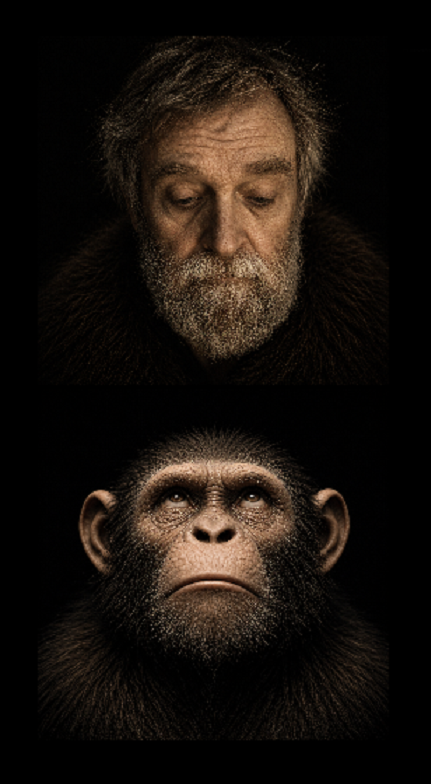
Steve & Bert
NOW AVAILABLE: An expanded 2nd edition
Follow the conversation:
-
-

-
-


